
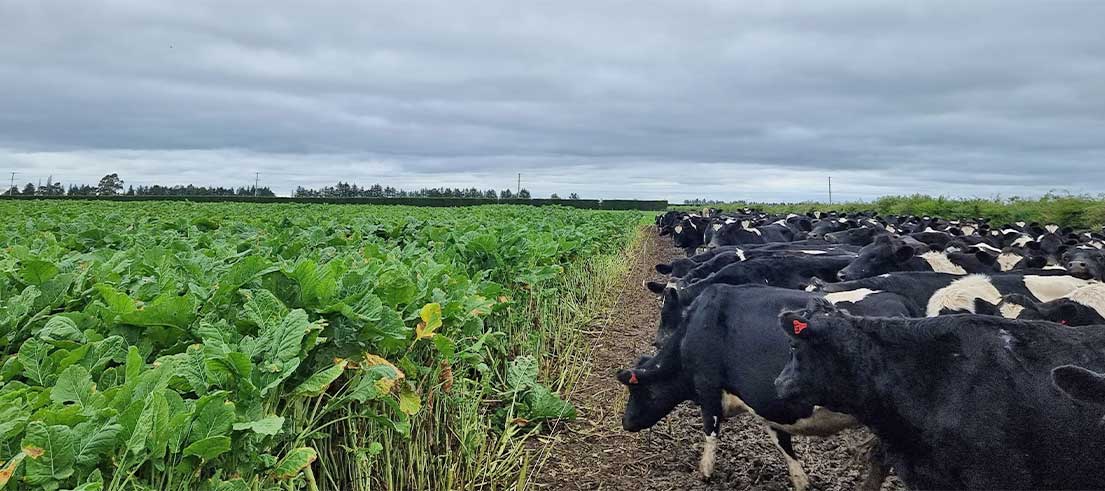
Top tips for late season winter grazing
Winter grazing season is now almost over, and with most of your winter paddocks grazed, it’s important to minimise stock movement over bare earth to protect your soil integrity and prevent sedimentation and nutrient loss.
Here are some of our top tips to get winter grazing right:
- Set up portable water troughs and shift your feeders: Shifting troughs and feeders will enable you to back-fence your paddock and avoid excessive pugging.
- Plant a catch crop: Catch crops like oats do a great job at mopping up leftover nutrients in the soil before they can enter groundwater, and can make a useful source of feed or income come harvest time.
- Manage your critical source areas: Make sure any critical source areas (CSAs) in your winter grazing paddocks are fenced off and not grazed, harvested, or cultivated.
- Maintain buffers from waterways: Make sure a buffer of grass or crops of at least five metres is maintained from all rivers, lakes, wetlands and drains while you graze. High-risk areas may need an even wider buffer.
- Graze strategically: Graze towards a waterway or other CSA, starting at the far end of the paddock. This way more vegetation is maintained between stock and risk areas for longer. Make sure to back fence stock off the land that has already been grazed to minimise pugging and damage to your soil. If you have grazed a CSA, you can mitigate any potential sediment or nutrient loss by placing a straw bale at the lowest point to act as a filter.
- Plan for bad weather: Make sure you have a Plan B and know how to carry it out if bad weather means it’s needed. Having a run-off paddock ready is often a good mitigation plan.
- Document your tactics: All the environmental risks you have identified this season should be documented in your winter grazing management plan in preparation for next season. It's useful to keep notes on how you carried out your plan, as well as any changes you made that could benefit you next season.
Industry guidance and support
We want to help you get winter grazing right – and so do industry bodies, government agencies and other support groups.
If you need any support or guidance with winter grazing, there's a wealth of resources and contacts you can use:
- Read the Regional and Unitary Councils guide to intensive winter grazing
- Contact Rural Support Trust for a chat
- Read DairyNZ's winter grazing guidance
- Check out the winter grazing section of the Beef+Lamb website
- Read the Ministry for the Environment's guidance on managing critical source areas when winter grazing
- View the Intensive Winter Grazing Module Template on the MPI website