
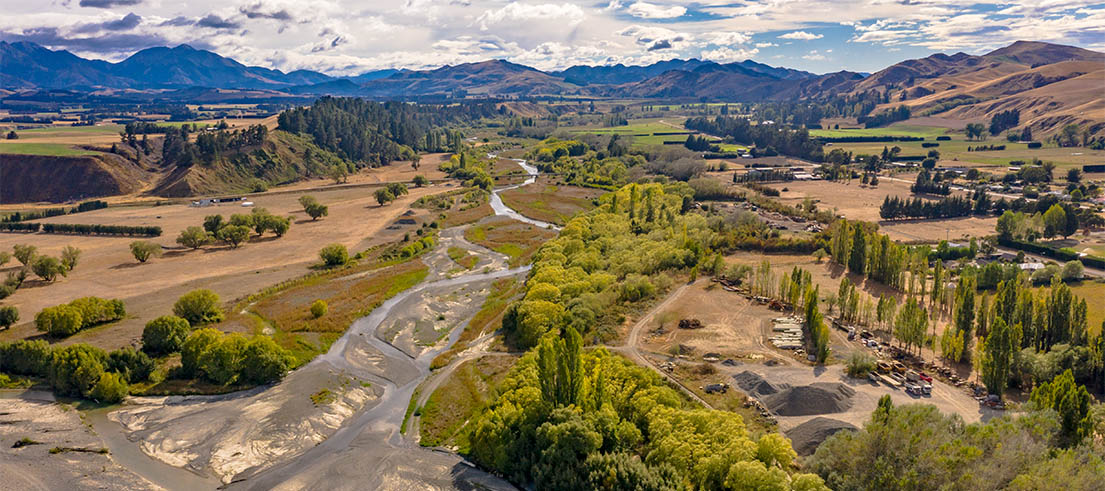
We’re backing biodiversity in Hurunui
‘In with skinks, geckos and black-fronted terns - out with rats, stoats and deer’ is the motto of this round of Action Plan funding for the Hurunui Waiau Uwha Water Zone.
We're partnering up with local groups, agencies and landowners to back five local environmental projects that support the goals and vision of the Canterbury Water Management Strategy.
The projects awarded funds this year are all focused on increasing biodiversity in the district through protecting our native flora and fauna from predation and invasive species.
Each initiative builds on collaborative work already going on, focusing on improving biodiversity values where the community believes it’s needed the most.
Protecting the black-fronted tern/tarapirohe
Hurunui’s braided rivers are home to precious native river birds like the black-fronted tern, a nationally endangered species that breeds on the open shingle islands and banks of our braided rivers.
Easily disturbed from their nests and highly vulnerable to predation from cats, rats and stoats, the tern’s continued survival rests on efforts to protect, enhance and preserve its breeding sites.
Since 2017, we've been collaborating with the Department of Conservation (DOC) to improve their breeding success on the Waiau-Uwha River through access to better nesting sites. This also has benefits for other endemic braided river birds that call the river home such as the black-billed gull - not to be confused with the black-backed gull/Karoro which is actively controlled in the area to stop its predating on terns and other native river birds.
In this funding round, we’ve granted $13,500 to DOC to support their work to build up river islands and clear vegetation. This creates less-vulnerable breeding sites that give chicks a better chance of survival.

Black-fronted tern/tarapirohe
Keeping deer out of conservation land in Ferniehurst
We've granted $17,100 to go towards deer fencing material to protect 27.5 hectares of native bush at Ferniehurst Station.
Funded first via our Soil Conservation and Revegetation (SCAR) Programme, this top-up funding will allow the area to be fully excluded from feral deer.
Deer pose a major threat to native vegetation, especially in areas that have already been excluded from stock.
Their browsing significantly reduces a forest’s ability to regenerate naturally and sustain a healthy ecosystem for native birds and other endemic wildlife.
Once fenced, the land will be retired into a QEⅡ covenant.
- Learn more about the Soil Conservation and Revegetation (SCAR) Programme.

Deer damage on young Kahikatea seedling
Wilding conifer control and cultural reconnection at Lake Sumner
In partnership with Te Rūnanga o Kaikōura Ltd, this project will invest $23,000 to control wilding conifers at The Lakes Station, a large property nestled under the Southern Alps beside Lake Sumner.
Rūnanga will also facilitate a visit for the contractors undertaking the conifer control work to the mouth of Lake Sumner, where they will hear from a Kaumātua about the cultural significance of the lake and the historical route once travelled by Māori through to the West Coast.
- Learn more about wilding pines, the wilding pine control programme and what you can do if you have some on your property
- Canterbury wilding pine control update
- Find out about the National Wilding Conifer Control Programme (NWCCP)

Wilding pines at Lake Sumner
Kanuka Planting to protect lizards at Hanmer Springs
We’ve granted $11,000 to Te Tihi o Rauhea Hanmer Springs Conservation Trust to maintain the habitats of four at-risk or threatened lizard species on Te Tihi o Rauhea/Conical Hill.
This iconic hill, better known for its zig-zag walk through pine forest, is also home to:
- Rough gecko (Threatened-Nationally Endangered)
- Pygmy gecko (At Risk-Declining)
- Southern Alps gecko (At Risk-Declining)
- South Marlborough grass skink (At Risk-Declining)
Kanuka is the key focus of this project as it is the favoured habitat of rough geckos.
It's also a threatened species itself, and a host plant for the rare native dwarf mistletoe.
The project will re-establish areas of kanuka on the hill and link and buffer existing shrubland habitat where it already exists.

Kanuka stand at Conical Hill, Hanmer Springs
Trapping pests to protect biodiversity on covenant land
We’ve allocated $10,000 for the purchase of automatic (AT220) possum and rat traps for landowners with QEII covenants in Hurunui Waiau Uwha Water Zone in partnership with the Hurunui District Landcare Group (HDLG).
Our biodiversity and land management staff will be working together with HDLG staff to allocate and install the new traps.
Keeping on top of the possum and rat population is critical to the success of native species surviving on covenant land, as they rob the nests of native birds and strip native trees. Senior Land Management and Biodiversity Advisor Sam Thompson says this is a great opportunity to do some targeted control of pests at already identified high value sites.
“Protecting the biodiversity we already have in the district is our first and top priority,” he said.
The traps will be distributed to local landowners in the coming months.

The AT220 automatic trap
Looking to the future
The projects allocated funding this year are all working to protect the diverse, rare and precious habitats in the Hurunui Waiau Uwha Water Zone.
We’ll check in with them in a year’s time to evaluate the impact of our investment and consider where to next as we work towards the vision of the Canterbury Water Management Strategy:
“To gain the greatest cultural, economic, environmental, recreational and social benefits from our water resources within a sustainable framework both now and for future generations.”
Find out more about how we are working to achieve the vision and goals of the Canterbury Water Management Strategy in Hurunui.