
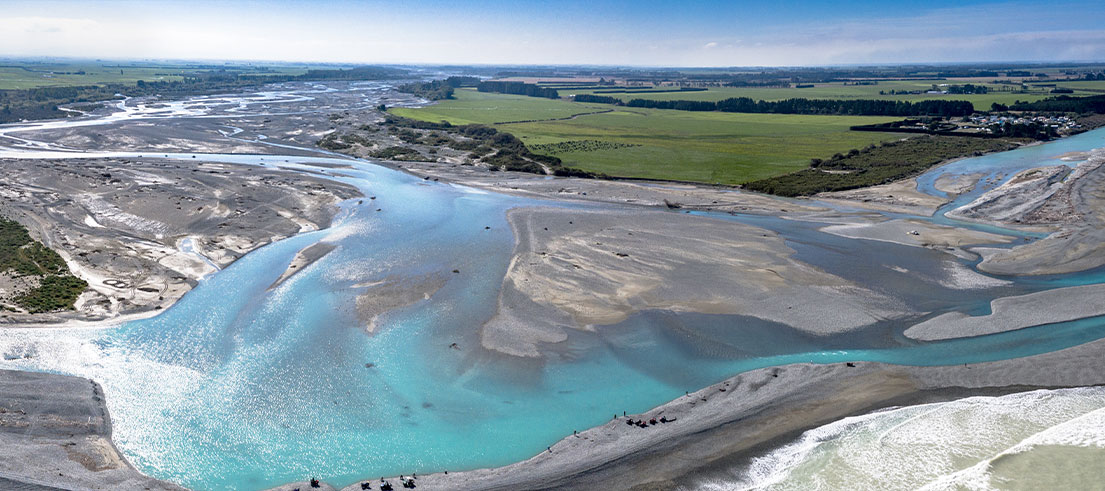
Flood resilience ramps up - key projects underway to boost our defences
We are beginning a major summer programme of flood resilience projects, co-funded through the second round (Tranche 2) of the Government’s Regional Infrastructure Funding (RIF), administered by Kānoa – Regional Economic Development and Investment Unit.
The RIF programme helps regions strengthen critical infrastructure and better prepare for natural hazards, with funding split 60:40 between central government and local community investment through regional council rates.
Strengthening flood protection across Waitaha Canterbury
With more than 78,000 km of rivers and streams, Waitaha Canterbury is no stranger to severe flooding, highlighting the need for robust flood management infrastructure, like stopbanks, floodgates, and weirs.
Improving this infrastructure protects:
- homes
- businesses
- productive land
- critical infrastructure like roads, railways, and medical centres.
As the regional council, we monitor and maintain 59 river and drainage schemes and, within these schemes, we build and maintain $850 million of flood protection infrastructure along 2000kms.
In Waitaha, the RIF Tranche 1 funding has already been a game-changer, allowing us to accelerate projects that can take decades to achieve under current local funding models.
Progress under Tranche 1
Announced in Budget 2024, Tranche 1 provided $9.5 million to accelerate three flood resilience projects originally scheduled for later years in the Long-Term Plan. These projects are being delivered now, and are tracking on time and on budget.
Rangitata flood and resilience works
Amount allocated: $3 million
Project overview: Work continued across the Rangitata River catchment to improve capacity, strengthen flood defences, and support long-term adaptation planning. Key progress included:
- flood protection planting near the railway breakout above SH1
- ongoing vegetation clearance to improve channel flow
- modelling and design nearing completion for a new stopbank alignment.
Regional structure upgrades and adaptation programme
Amount allocated: $2.5 million
Project overview: This programme focused on upgrading older infrastructure to withstand changing climate conditions. Completed and progressing work included:
- stopbank upgrades along the Ruataniwha Cam, Kaiapoi, Ōrari and Lower Hinds rivers
- floodgate upgrades on the Kaiapoi and Ruataniwha Cam rivers
- removal of trees and surveying in Ōrari
- bank clearance and design development at Raven Quay in Kaiapoi.
Waitarakao Washdyke Seadown works
Amount allocated: $4 million
Project overview: This project prepares the community for future sea level rise and coastal flooding by relocating the existing drain and coastal stopbank between Waitarakao Washdyke Lagoon and Beach Road in the Seadown Drain scheme. Engagement with rūnanga and stakeholders continues while technical investigations are nearing completion ahead of physical works.
Upgrade completed on time and within budget
The stopbank upgrade on the Ruataniwha Cam River, near State Highway 1, has been successfully delivered on time and within budget.
Construction began in mid-April 2025 and was completed in November, including regrassing and the planting of native species to help stabilise the banks and enhance local biodiversity.
The upgrade strengthens the stopbank and restores its height to pre-earthquake levels, providing improved protection for nearby homes, farmland, and the critical infrastructure that keeps the community connected.
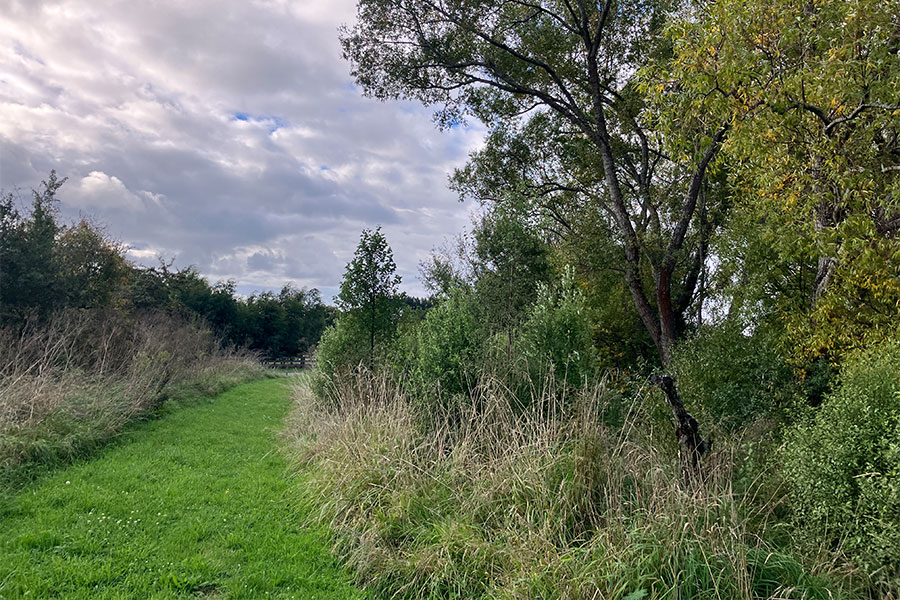
Ruataniwha Cam River stopbank before work
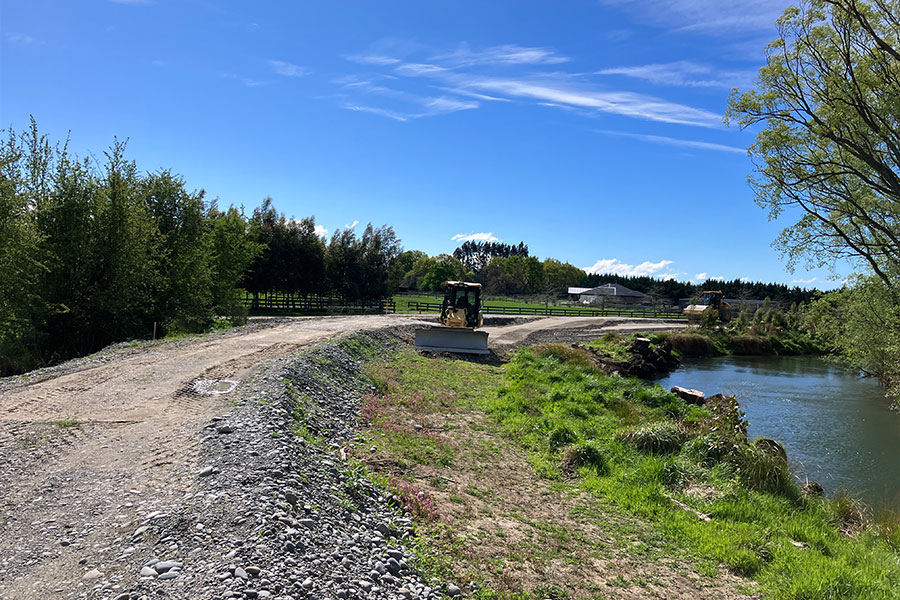
Ruataniwha Cam River stopbank after work
Tranche 2 funding expands flood protection programme
In October, the Government announced a further $21.5 million of RIF co-funding (Tranche 2) to accelerate nine key projects in Waitaha.
Improving flood and river resilience in Waitaha is one of the Council’s top priorities for the region, said Canterbury Regional Councillor Ian Mackenzie, lead councillor for community preparedness and response to hazards committee.
“$1 spent protecting a community avoids $5–$8 in direct losses after an event. Partnering with central government to accelerate the delivery of these projects will significantly reduce the risk of flooding events in our region,” said Councillor Mackenzie.
Together, Tranches 1 and 2 represent a major step forward in safeguarding our communities. They also support local employment and economic resilience by involving local contractors and suppliers.
Learn more about the RIF-funded projects: Visit our river projects page.