Find out how to get started with the SCAR programme, connect with our land management advisors, and access funding support.
For advice or mapping help, contact:
- Sam Thompson on 027 678 9746
- Andrew Turnbull on 027 244 9502
- Email: SoilCon@ecan.govt.nz

A 43-hectare area of retired farmland in Blythe Valley has been permanently protected to support native biodiversity, reduce erosion, and improve water quality. With a new QEII covenant and deer fencing in place, native birds and vegetation are returning to the valley. Learn how this restoration is working and how to access support for your own land.
Thanks to a QEII covenant placed by landowners Tim and Jen Le Pine, the steep hillside terrain is now permanently safeguarded.
The couple, who own a 500-hectare sheep and beef farm in the North Canterbury catchment, set out to protect a lowland wetland, but after speaking with land management advisor, Andrew Turnbull, the vision expanded.
“When Tim and Jen approached me about fencing off the wetland, I suggested widening the area to include land that wasn’t performing well in the farm system,” Andrew said.
“It was a great opportunity to support soil conservation and improve water quality.”
Tim and his son Jed spent three months this year building a three-kilometre deer fence surrounding the protected area, which now supports both ecological restoration and land resilience.
Jen said every day they look out at the protected land from their kitchen window and can hear the native birds.
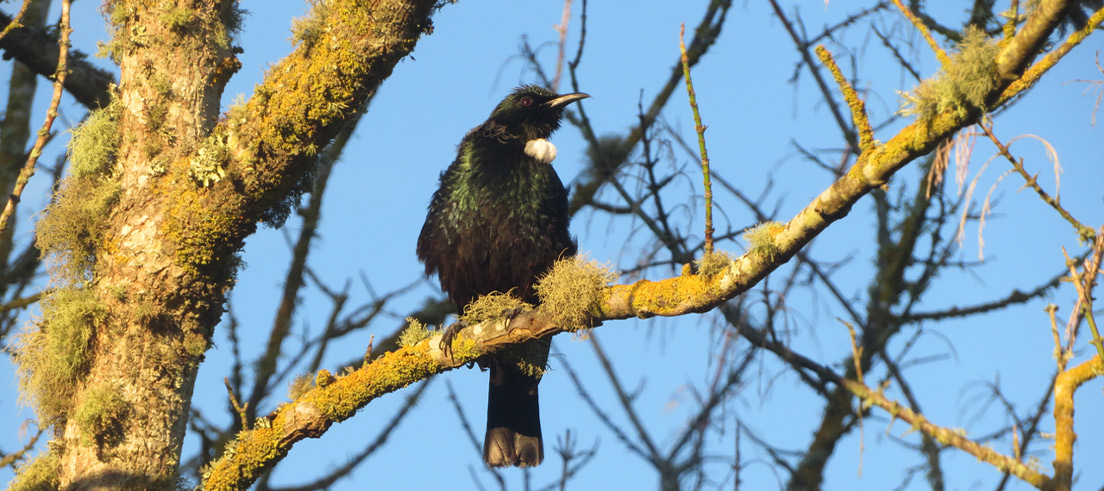
“Tui hadn’t been seen in our catchment for more than three decades until the past couple of years due to ongoing environmental improvements in the valley.”
The QEII covenant will help further enhance biodiversity in the area, creating a protected playground for more korimako (bellbirds), piwakawaka (fantail), kererū (wood pigeons), tui and kingfishers as well as geckos, skinks and weta.
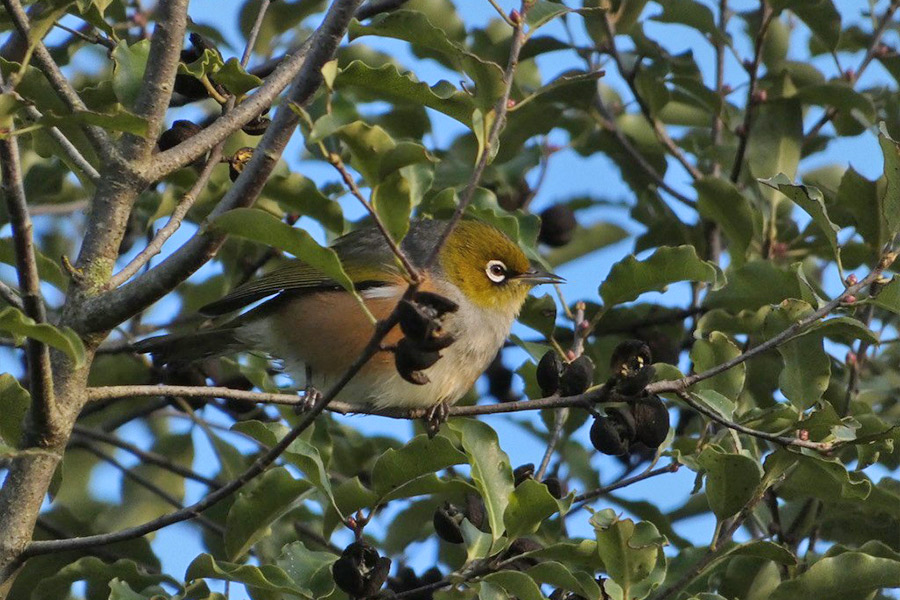
Tauhou (silvereye) translates to "stranger" or "new arrival" came to New Zealand from Australia in the 1800s. Photo / Nicki Murray
By retiring the land and fencing it off, young palatable native plants—like kānuka, mānuka, cabbage trees, and five-finger—can regenerate naturally without the grazing of stock and feral deer. These plants play a crucial role in stabilising soil and filtering runoff, especially on steep slopes where erosion risk is high.
Jen said they had done a lot of work to remove wilding pines, willows and pampas to increase regeneration of native bush and understory.
“Knowing the deer fence will keep out feral deer makes all the hard work worthwhile.”
The project received $60,000 in funding from us – half was from the Soil Conservation and Revegetation (SCAR) programme, and the remaining half came out of a biodiversity grant.
The Queen Elizabeth II National Trust contributed $36,000, with Jen and Tim fronting the rest.
Andrew said this project was a testament to Tim and Jen’s willingness to engage with Environment Canterbury.
“They have taken up every opportunity presented to them. This was just one that they were keen to get on board with,” Andrew said.
The Blythe Valley Catchment Group, formed in August 2023 and now made up of 22 families, has been working collectively to restore wetlands, retire grazing land, and enhance biodiversity through an extensive trapping programme and weed control.
We have been supporting this work to help the catchment group achieve outcomes. Andrew said the mobilisation of the community was exciting, especially the trapping project.
Jen and Tim’s covenant complements two existing QEII covenants within the catchment and was one of many initiatives helping the valley thrive.
Catchment group coordinator Richard Shaw said protecting the native vegetation remnants was really important for the environment and biodiversity.
“Having landowners put aside and protect large areas of high biodiversity areas creates ecological islands that provide opportunities for our native flora and fauna to survive and thrive,” Richard said.
He said the catchment group had also been working together to plant areas and reintroduce plant species, especially podocarps using eco-sourced seed, that would have historically been present in our locality.
With these types of interventions, the group is looking forward to watching the Blythe Valley thrive.
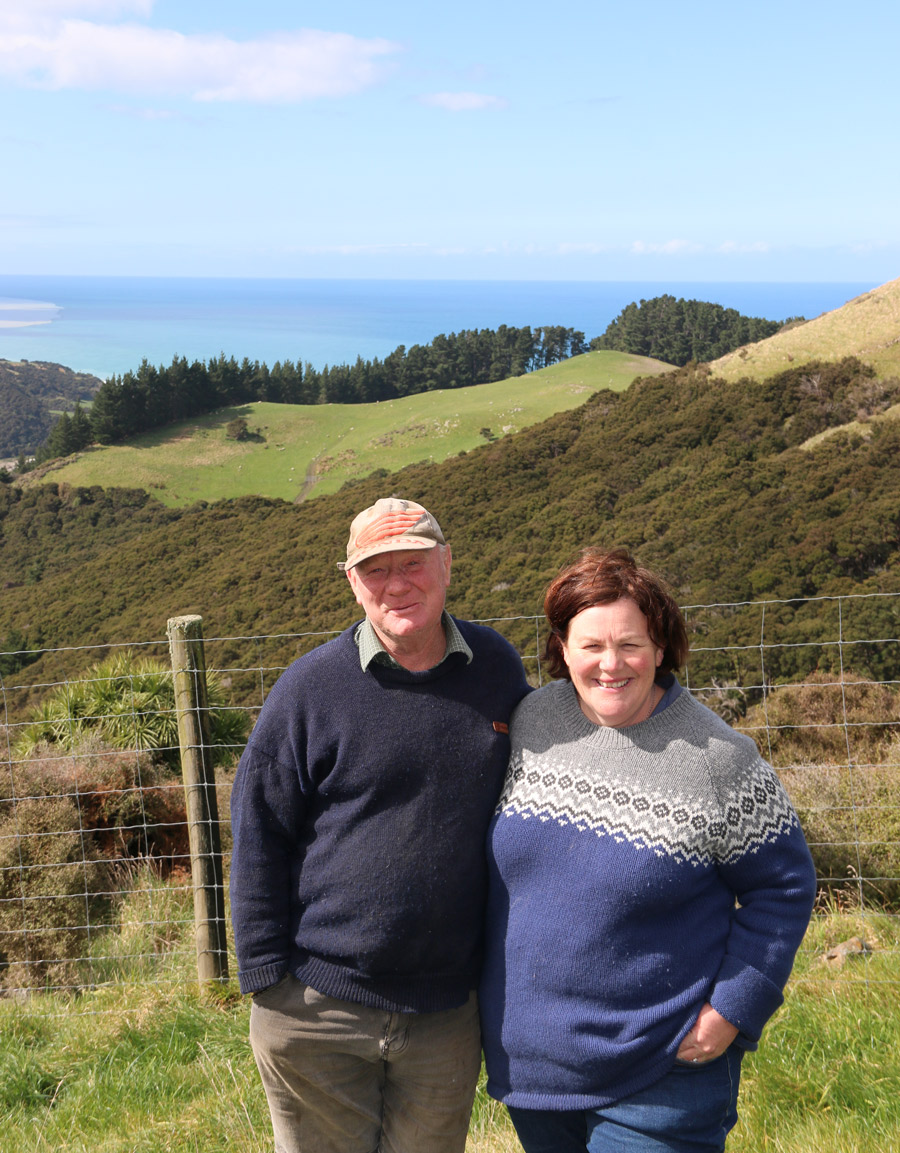
Blythe Valley landowners Tim and Jen Le Pine
Jen and Tim have also worked with us to undertake land use capability mapping and substantial pole planting, all partially funded by the Soil Conservation and Revegetation Programme (SCAR).
The SCAR programme offers assistance to landowners wanting to retire areas with active erosion to help landowners prevent sediment loss.
This is done by permanently fencing areas off from stock to allow existing vegetation to thrive and regenerate, without pressure from animals grazing young palatable seedlings.
The programme can offer $20 a metre for a deer fence and $15 per metre towards a sheep fence.
Find out how to get started with the SCAR programme, connect with our land management advisors, and access funding support.
For advice or mapping help, contact:
New Zealand has more than 1000 threatened native species. Almost 70 per cent of our country is in private land ownership. This means protecting biodiversity and heritage on private land is crucial to reversing the decline of native species.
A covenant is an agreement between QEII National Trust and a landowner to protect land forever. The landowner continues to own and manage the protected land, and the covenant stays on the land, even when the property is sold to a new owner.