
African love grass: there’s nothing romantic about it
While its name sounds exciting and enticing, African love grass is anything but. It’s a fast-spreading pest plant that could threaten farms across Waitaha Canterbury. Learn how to spot it and stop it spreading.
That’s why we're asking farmers to be vigilant for sightings of this pest grass and practice good biosecurity hygiene to keep their properties and neighbouring farms free of pests.
African love grass in Waitaha Canterbury
African love grass was introduced to South Canterbury in the 1950s. Today, it is confirmed on one property in South Canterbury, in isolated places along the Waitaki River and on some roadside areas in North Canterbury.
“African love grass thrives in our environnment, is tolerant of extreme conditions, and can easily take over productive land. It’s a formidable biosecurity foe,” says Team Leader South Biodiversity and Biosecurity Gina Slee.
How to identify African love grass
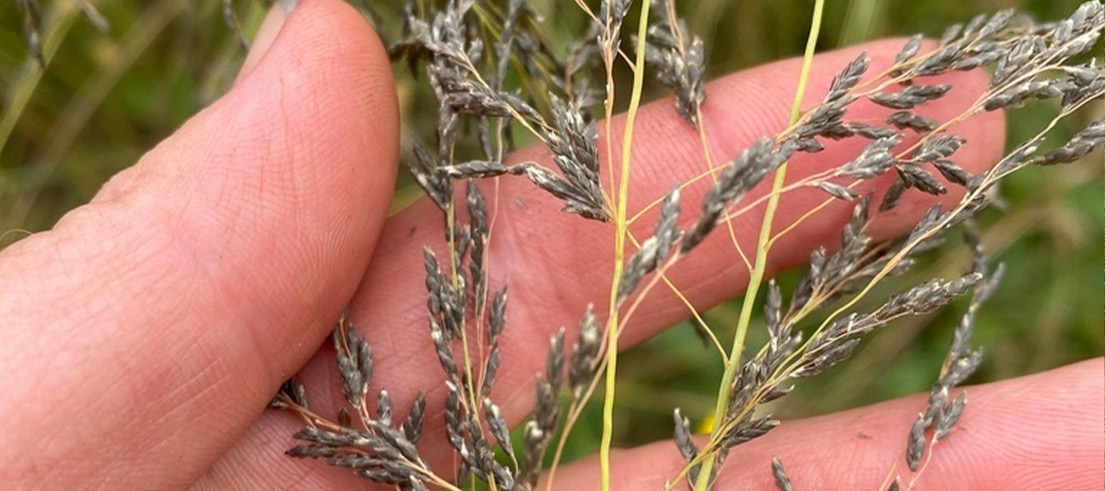
African love grass can be identified by its blackish seeds and distinctive curly leaf tips. If you think it may be present on your property, do not attempt to remove it, as it requires specific herbicides and has very deep root systems.
If you think you have found African love grass:
- Take clear photos of the plant and seed heads
- Report it at reportpests.nz
- Do not attempt to remove it yourself
Characteristics of African love grass
African love grass:
- Produces massive numbers of viable seeds throughout the year
- Germinates in spring and autumn
- Tolerates fire, disturbance, hot temperatures to hard frost, poor and acidic soil, and grows rapidly through droughts
- Unpalatable to stock
How to protect your property from African love grass
Like many pest plants, African love grass is easily spread by humans through the contamination of vehicles, livestock and clothing.
That’s why it’s important to maintain good on-farm biosecurity practices to avoid unwanted pests arriving or spreading anything that may already be there.
Good on-farm biosecurity practices include:
- Asking all visitors to check their footwear and clothing are free from mud and plant seeds or fragments before entering your farm
- Only allowing clean vehicles or machinery on your farm
- Regularly monitoring feed-out areas for pest plants
- Checking for pest plants before bringing feed or stock onto your property
Why stopping invasive pest plants matters
Stopping invasive species like African love grass protects native biodiversity, helps keep farmland productive, and avoids much bigger environmental and economic costs down the track.
To find out more about on-farm biosecurity practices, visit our preventing the spread of pests page.