
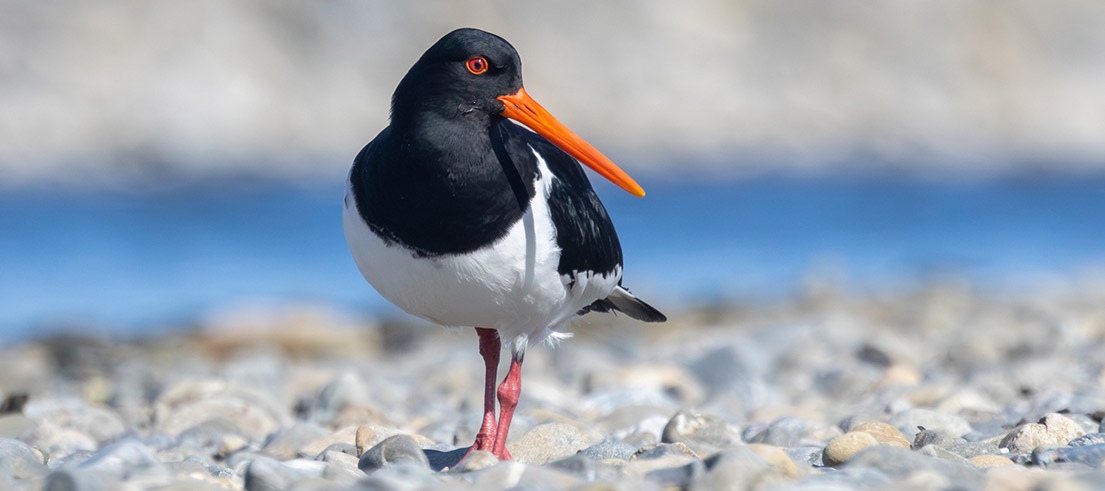
Mapping tool reveals decline in tōrea across Canterbury braided rivers
A groundbreaking mapping platform that brings together more than 60 years of river bird survey data is already delivering critical new insights for conservation – this time revealing new warning signs for the tōrea, South Island pied oystercatcher.
Using the GIS-based platform launched last year and hosted on Canterbury Maps, along with other datasets, researchers from Manaaki Whenua Landcare Research have carried out new region-wide analysis of tōrea populations.
The findings show the tōrea is in decline, warranting a higher threat classification and a conservation approach that focuses not only on breeding success, but on survival across its entire annual cycle.
Nationally-significant data set
The research draws on the braided river bird count dataset, one of the most extensive and enduring wildlife monitoring programmes in Aotearoa New Zealand.
We played a key role in bringing this dataset together into a single, publicly accessible GIS platform, transforming thousands of historic records into a searchable, online resource.
Spanning more than six decades and covering vast areas of the South Island, it provides rare insight into population trends for migratory species that move across wide geographic areas.
“Species that migrate over long distances face some of the greatest conservation pressures, yet they are also among the most difficult to track,” Environment Canterbury Principal Biodiversity Advisor Frances Schmechel said.
“It demonstrates the value of large‑scale, long‑running datasets like the braided river bird counts, which help fill that critical gap.
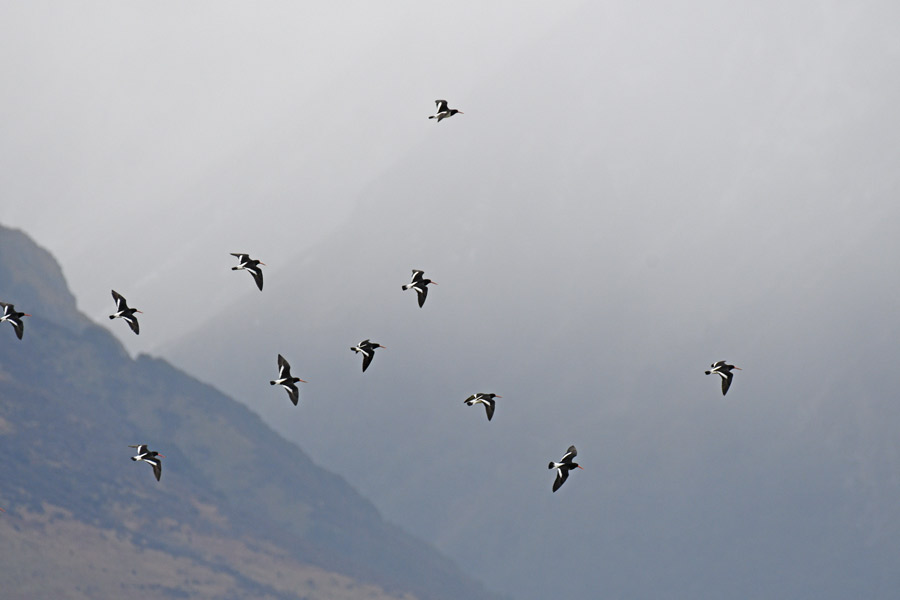
Tōrea South Island pied oystercatcher in flight - photo credit: Warwick Allen
What the analysis shows
By bringing decades of scattered records into a single, accessible public database, the platform has enabled scientists to analyse tōrea data in ways that were not previously possible.
The study found population declines are most strongly linked to sub-adult survival.
Conservation interventions aimed at increasing breeding success would only be beneficial if survival remained at current levels. Additional mortality, particularly from emerging threats, is unlikely to be offset by increased productivity.
This means conservation efforts must extend beyond nesting sites, addressing pressures tōrea face throughout the year, including during migration and in non-breeding habitats.
The work also highlights the importance of linking information across a species’ full annual cycle. When braided river counts are used alongside other volunteer-led monitoring programmes, researchers can build a far clearer picture of long-term trends and cumulative pressures.
“This tool turns decades of observations into evidence we can act on,” said Environment Canterbury Senior Science Analyst Miles Burford, whose work georeferencing historic counting sections and maintaining the database has transformed paper records into a powerful digital resource.
“We’ve converted a vast amount of historic information into a format that’s accessible and usable,” Miles said. “Making it available through an online mapping portal allows people to explore it across rivers and catchments, and apply it to real world conservation and management.”
A foundation for the future of conservation efforts
The tōrea findings are an early example of the platform’s potential. By making bird data easier to access and analyse, it is opening new opportunities for research, collaboration and evidence-based management.
As pressures on braided river ecosystems grow, robust long-term information becomes increasingly important. Thanks to the dedication of volunteers and the power of modern mapping technology, the braided rivers of Waitaha are helping to tell a clearer, nationally-significant story about the future of some of our most distinctive birds.
“For many species, conservation is constrained by data gaps,” Frances said.
“Having this platform means we finally have robust evidence to support informed, effective conservation decisions.”
Explore the braided river bird data: See how six decades of braided river bird data are guiding conservation in Waitaha Canterbury. Explore the braided river mapping tool on Canterbury Maps
Further reading on braided rivers
- The braided rivers of Waitaha provide nationally-significant breeding habitat for many of native species. 👉 Learn more about our braided river biodiversity work.
- Read the full peer-reviewed study: A range-wide full-annual-cycle model informs conservation of a declining migratory shorebird