
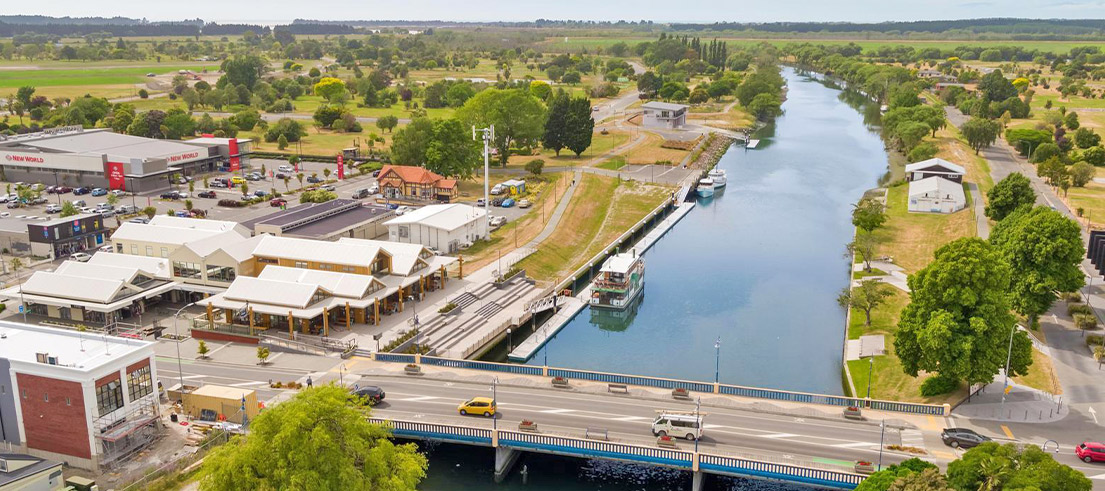
New study identifies why saltwater is increasing in the Kaiapoi River
A new study by Earth Sciences NZ has found that low Waimakariri River flows, high tides, dredging, and sea-level rise are driving more frequent saltwater intrusion into the Kaiapoi River.
Why is the Kaiapoi River becoming saltier?
The Canterbury Regional Council (Environment Canterbury) commissioned Earth Sciences New Zealand to investigate the main drivers of an increase in saltwater in the Kaiapoi River.
This followed reports in 2024 of the death of aquatic plants and kākahi (native freshwater mussels).
The scientists used data we collected over a decade from monitors in the river near Mandeville Bridge.
They found the main reasons behind more saltwater in the river were:
- Low river flows allow saltwater intrusion: The Waimakariri River flow is the strongest influence on saltwater intrusion. Saltwater enters the Kaiapoi River on almost every tide when river flow is below 35 m³/s (cumecs). It almost never enters when flows are above 105 cumecs.
- High tide level also significantly affects saltwater intrusion
- Dredging increases saltwater intrusion: After dredging in 2020, saltwater was detected at higher river flows and lower tide levels than before the works.
- Sea-level rise will increase river saltiness: A 10cm rise could increase the frequency of saltwater intrusion at medium flows by more than 20 per cent. With half a metre of sea-level rise, intrusion would occur on every tide when flows in the Waimakariri River are around 60 cumecs.
Increasing incidence of saltwater intrusion can change freshwater ecosystems to estuarine conditions, detrimentally affecting native freshwater species such as kākahi (native freshwater mussels).
The changing nature of saline incursions is an important challenge to the water quality and biodiversity of our near coastal tidal waterways. It is important that we work with our partners and communities to understand these changes.
What happens next?
The study was recently presented to the Waimakariri District Council. They, with support from Environment Canterbury, will consider options for managing the increase in saltwater in the river.
Options are primarily through increasing community understanding as methods to prevent further increases in saltwater incursion are likely to be very costly and generate additional issues. The primary objective was acknowledging the ongoing change and changes to the river’s ecosystem.
Further research could be done to understand climate change projections, such as sea-level rise and changing rainfall patterns, and assessing whether minimum flow settings or future dredging practices need to be reviewed.
About the study
The Canterbury earthquakes caused the Kaiapoi River bed to drop. Following this, there were reports of willows dying along the river.
A 2018 Environment Canterbury study identified increasing saltiness as the likely cause of reported changes in the river’s ecosystems, such as dying willows.
In 2024, there were reports of aquatic plants and kākahi dying along the river. A Waimakariri District Council report published that year found saltwater was the most likely cause.
Read the full study report: Read the full report on saltwater intrusion in the Kaiapoi River (PDF file, 1.77MB) including detailed data, modelling, and analysis.