
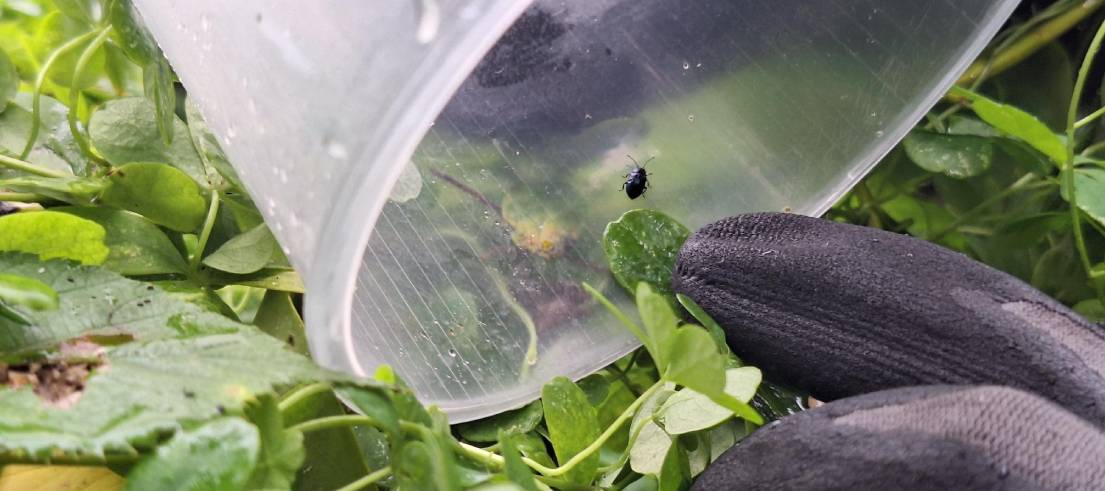
Tiny beetles released in Canterbury to tackle invasive Chilean flame creeper
Around 200 tiny beetles have been released near Staveley to help control Chilean flame creeper, an invasive vine threatening native forests. They’re small, and they’re on a big mission.
The beetles are part of a biological control programme (using natural predators to manage pests) approved by the Environmental Protection Authority. This is the second release in Canterbury, following an earlier release in the Orari Gorge last month.
Chilean flame creeper smothers native plants, climbing through forest canopy and understorey, blocking light and competing aggressively for space. It spreads easily through bird‑dispersed seed and is difficult to locate and remove once established, particularly in forests and shrublands.
Dr Morgan Shields, biosecurity adviser – invasive species says "left unchecked, Chilean flame creeper can overwhelm native vegetation and change the structure of forest ecosystems."
Using biocontrol to protect native forest
The release took place in Staveley Camp Forest, a significant pocket of indigenous beech forest on the Canterbury Plains with high biodiversity values. The site was carefully chosen due to the scale of infestation, nearby source populations, landowner support, and the ability to leave the area undisturbed for at least five years so the beetles can establish.
Forest Care Coordinator Gen de Spa, who has worked on weed control at Staveley Camp Forest for nine years, says traditional control options are extremely limited.
"Because the vine grows through other plants, spraying isn’t an option, and its fine stems make cut‑and‑paste control ineffective. Pulling it back often just strengthens the roots, so biocontrol offers a much‑needed tool for a pest that currently has no effective long‑term control," Gen says.
The site also meets cultural, ecological and practical requirements, including tolerance of releases within local takiwā and suitable access for ongoing monitoring.
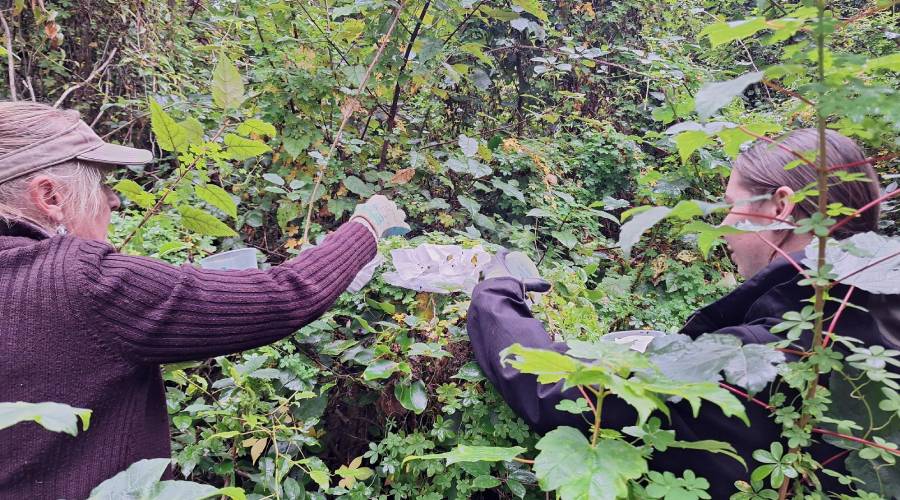
Releasing the beetles: Gen de spa Forest Care Coordinator, Staveley Camp and Michelle Ingham, Land Management and Biodiversity Advisor
How the beetles attack the vine
Both adult beetles and their larvae feed on the leaves of Chilean flame creeper. Over time, this feeding can slow vine growth, reduce its spread, and in some cases lead to repeated defoliation.
"This isn’t a quick fix. But as beetle numbers build, we expect them to place ongoing pressure on the weed and support the recovery of native plants," Dr Shields says.
The beetle was approved for release earlier this year by the Environmental Protection Authority following extensive research, safety testing and regulatory review, which showed it is highly host‑specific and will not feed on other New Zealand plant species.
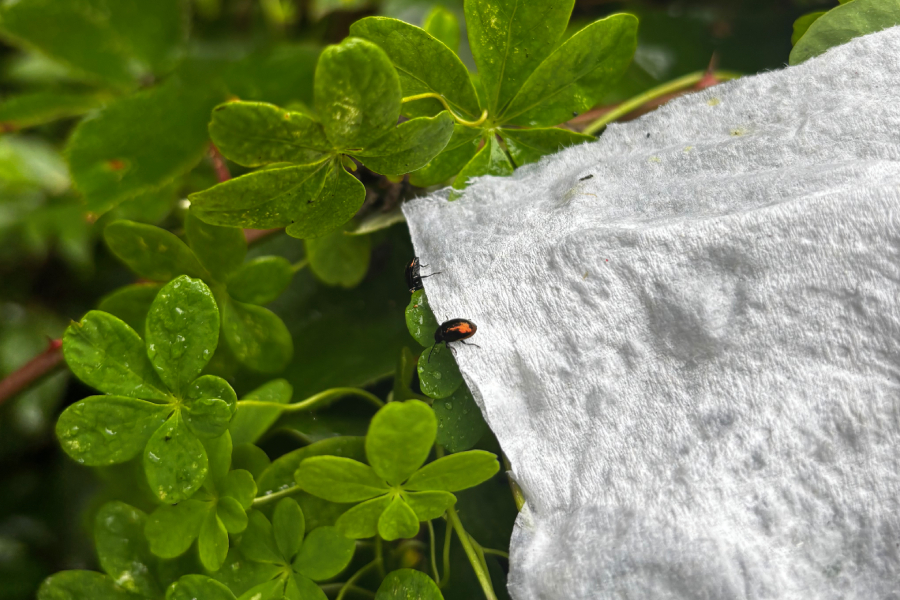
Beetles released to feed on pest plant - Chilean flame creeper
A long-term solution for native forests
Release sites will be monitored annually for the next five years, with longer‑term monitoring planned at 10 and 20 years. If populations establish successfully, local impacts could become visible within three to 10 years, and beetles may naturally spread or be moved to other suitable sites.
Councillor Claire McKay, Environmental Regulation and Protection Core Service Lead, says the release reflects a long‑term commitment to protecting natural environments.
"Protecting our remaining native forests means thinking decades ahead. Biocontrol is a smart, science‑backed approach to support biodiversity, reduce future control costs, and give our ecosystems the best possible chance to recover and thrive."
While the beetles may be small, the goal is big – safeguarding Canterbury’s native forests for generations to come.
Explore biodiversity and biosecurity: Learn more about biodiversity and biosecurity in Canterbury