
Years of wilding pine removal minimised wildfire damage
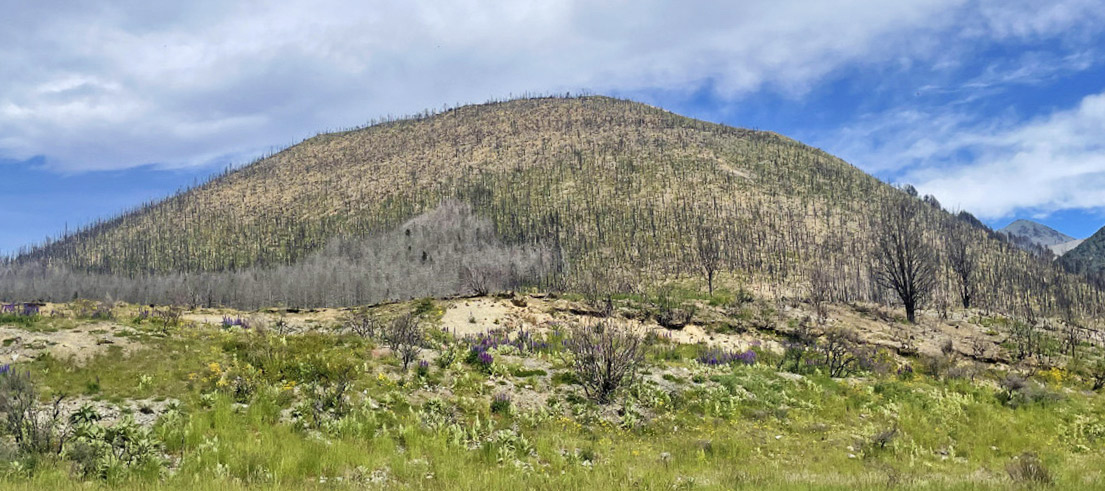
Years of work by land and aerial crews to clear thousands of hectares of wilding pines at Flock Hill helped contain a devastating wildfire there a year ago – saving precious land, ecosystems and infrastructure from damage.
In December 2024, a fire started in hot, dry conditions in the Craigieburn area about 100 kilometres west of Christchurch.
Over several days, it consumed more than 1000 hectares of forest and tussock planting, most of it at Flock Hill Station.
While the fire was devastating, its spread and impact were minimised by our annual operations in the area since 2016 to remove tens of thousands of wilding pines and their highly flammable cones and needles.
The fire was in an area where most wildings had been removed.
Aerial imaging taken during the fire showed extreme burn temperatures in areas where wildings remained, demonstrating the positive impact of controlling the pest trees.
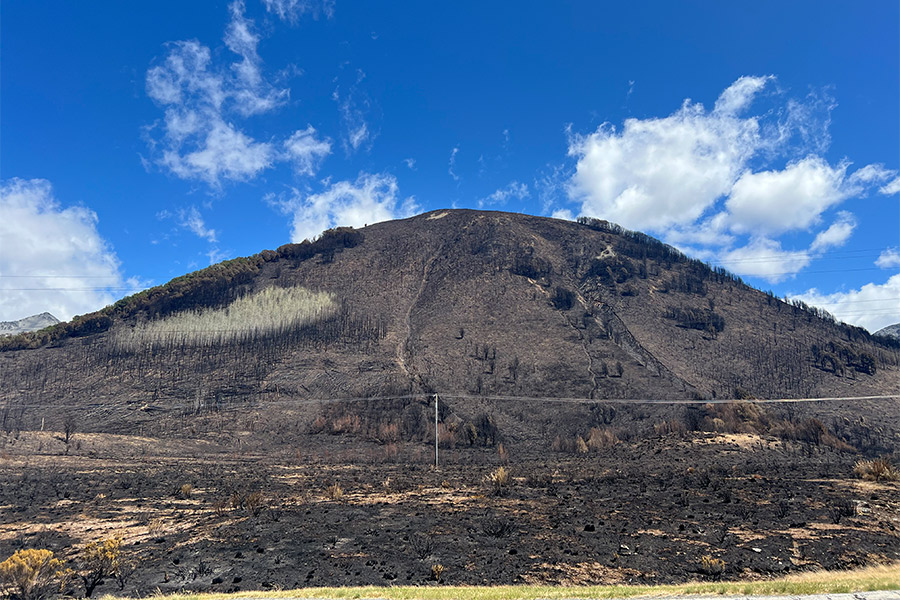
Helicopter Hill post fire in 2016
Why wilding pines increase wildfire risk
Wilding pines (also called wilding conifers) are introduced species that spread their seed on the wind and easily establish in areas they are not wanted.
They can turn what would be low-intensity fires in tussock or grassland into intense, fast-moving ones that threaten homes, safety, and ecosystems because they:
- contain resins and oils that are highly flammable
- often grow in inaccessible places making firefighting difficult
- often grow in uneven patches with twigs and needles allowing fires to spread between stands of trees.
Removing wilding pines, ideally before they cone, helps lower the risk of wildfires.
How wilding pine control reduced wildfire damage in the Craigieburn area
Over the past decade we’ve cleared much of the wilding pine infestation in Craigieburn – which was one of the worst in the country. We’ve done the work in partnership with the local community groups and landowners, as part of the National Wilding Conifer Control Programme.
Controlling wilding pines means regularly removing new seedlings. New trees that have emerged (from seed in the ground) after a major clearance operation at Craigieburn in 2020/2021 are now reaching an age where they can produce cones with hundreds of seeds inside them.
Our focus for 2026 is removing the most mature remaining trees before they develop cones. We’re also monitoring the regrowth of wildings in the fire-affected area.
What landowners can do to reduce wildfire risk
If you have wilding pines on your property, remove them before they produce cones and before they reach a size and density that can carry wildfire and pose a risk to your property. This will prevent stress and extra cost in future.
- Get practical help: Download the handbook with step-by-step tools and advice for managing wilding pines on your property.
- Community groups: Join or support one of the many volunteer groups around Waitaha that work to remove wilding pines.
- Learn more about the regional programme: Find out how Environment Canterbury works with the National Wilding Conifer Control Programme, landowners and community groups to reduce wildfire risk across Canterbury.