

From our Acting Chair: Co-investment for flood and river management a positive step
The recently-announced support from Central Government for flood and river management measures in Waitaha/Canterbury is welcome news.
Co-funding, drawn from a new Regional Infrastructure Fund, will help speed progress on a range of projects identified in the Before the Deluge 2.0 report. This report is a business case put together by unitary and regional councils, advocating for co-investment in river resilience and flood management infrastructure.
The projects in Waitaha that will benefit are:
- Rangitata Flood and Resilience Works – Stage 2
- Regional Structure Upgrade and Adaptation Programme
- Waitarakao, Washdyke and Seadown Flood Works.
We and other councils have been asking for Wellington’s support on this for a long time now, so it’s pleasing to see the Government acknowledging that help is needed.
As we’ve always said, it shouldn’t be up to ratepayers to foot the entire bill for protecting communities from the risks of natural hazards. If an important piece of infrastructure is taken out by a flooding river, the effects can be felt far beyond the community itself. It’s in the entire country’s best interests to protect roads, bridges, railway lines and other important lifelines, and therefore the Government has a key role to play.
A new approach to river resilience
As I see it, this co-funding – together with a new targeted rate being introduced in Herewini/Selwyn – signals a new way of working towards river resilience.
The targeted rate, adopted in our Long-Term Plan 2024-34, spreads the cost of flood and river resilience works across all ratepayers in the district. This is in addition to the six dedicated river and drainage rating districts that already exist. So those who benefit from works that directly affect their property are still paying their share, while the costs of district-wide work will be spread more evenly.
In Year 1, the targeted rate will add $7.08 to rates bills for Selwyn households, which will go towards:
- Investigation and development of a forward work programme
- Initial work clearing out channels and flow paths
- Weed control and planting.
The targeted rate is a trial, so depending on its success, it could potentially be replicated in other districts in the future. River resilience isn’t only about flood management.
The big picture
We’re moving towards a ‘whole of catchment’ approach: a more holistic way of looking at rivers and the land around them. Our awa are unique and one size does not fit all. We want to manage rivers from the mountains to the sea, ki uta ki tai - acknowledging the impact of the wider environment on the health of our awa, and the way they behave.
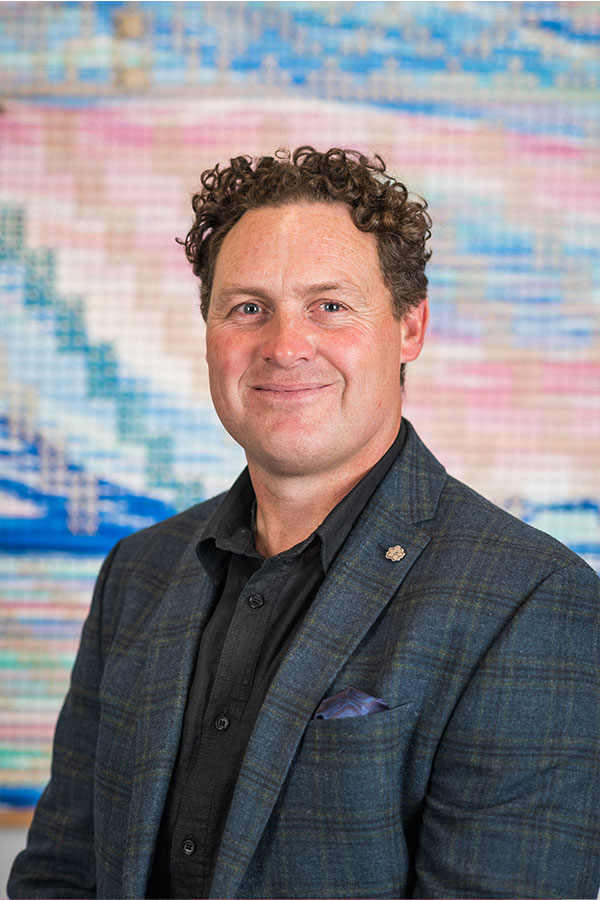
Acting chair Craig Pauling
There’s still a lot more to do to protect our farms, homes, businesses and infrastructure from the type of deluges we saw in Waitaha in May and June of 2021.
By looking at the bigger picture and the range of values we need to manage, we can drive efficiencies and develop solutions that are long lasting, more equitable and sustainable.
For example, fairway clearance deals with both biosecurity issues relating to weed species, as well as creating biodiversity outcomes for braided river birds, while allowing our rivers to flow, lessening flood risks. Likewise, providing strategic locations where rivers are given more room, similar to what we are doing on the Hakatere/Ashburton River, can allow for planned gravel accumulation and removal.
These are all things we are working towards, and for which both the co-investment from Government, and our district-wide rating trial are helping to achieve.