

Keep you and your dog safe from toxic algae this summer
With summer just around the corner, rivers and lakes across Aotearoa New Zealand are calling — but it's also the time to watch out for toxic algae that can harm both people and their pets.
Toxic algae, also known as cyanobacteria, thrives in warm, slow-moving water and can quickly bloom into dangerous mats. When this happens, it releases toxins that can cause serious illness if ingested.
Manager for water and land science, Dr Elaine Moriarty, said knowing how to spot toxic algae could save your dog’s life this summer.
“Unfortunately, dogs are drawn to the musty smell of toxic algae and will investigate, usually by eating or licking it.”
“It only takes a teaspoon of toxic algae to cause fatal consequences if ingested by dogs,” Dr Moriarty said.
How to spot toxic algae
We monitor water quality at popular recreation sites over summer. These assessments are based on the amount of toxic algae needed to pose a risk to human health. But even small amounts, especially those not easily visible, can be dangerous for dogs.
“Small amounts of toxic algae can be present in a waterway that is listed as suitable for swimming, or it can be present in areas that we don’t monitor,” said Dr Moriarty.
“The best way people can protect their dogs is by knowing what toxic algae looks like and avoiding it. If you’re ever in doubt about the water quality, then keep your dog on a leash and away from the water’s edge.”
What to look for in rivers
- Growth on the bottom of riverbeds.
- Thick, dark brown or black mats.
- Slimy or velvety texture and a strong musty smell.
- Detached and floating mats in shallow areas or washed up on the riverbank.
- Dried mats that have turned light brown or white and resemble dried leaves or cowpats.
What to look for in lakes, ponds and lagoons
- Toxic algae suspended in the water.
- Cloudy or discoloured water.
- Small globules floating in the water.
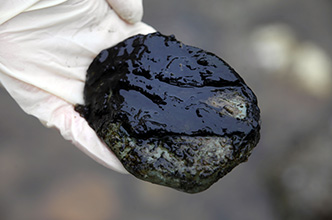
Toxic algae appears in rivers as slimy mats
Causes and symptoms of toxic algae
Toxic algae is naturally occurring in the rivers and lakes of Aotearoa New Zealand. In summer, warmer temperatures and slower water flow can cause it to bloom.
In animals, toxic algae poisoning presents as lethargy, muscle tremors, fast breathing, twitching, paralysis, or convulsions.
In humans, toxic algae poisoning presents as tingling or numbness around the fingertips and/or mouth, breathing difficulty, gastrointestinal symptoms, or skin rashes.
If you suspect exposure
If you suspect your dog has been exposed, contact your vet immediately.
If you feel any of the symptoms after contact with a waterway, seek medical advice or call Healthline on 0800 611 116.
Learn more: Get familiar with what toxic algae looks like and how you can identify it.