Toxic algae
Toxic algae (also called cyanobacteria) are a naturally occurring algae with the potential to bloom, producing toxins that can harm or even kill dogs, people and other animals. When conditions are right, they can bloom and produce toxins that can seriously harm or kill dogs, livestock, wildlife, and people.
Why toxic algae is dangerous
Even small amounts of toxic algae (about the size of a 50-cent piece) can cause serious illness if swallowed. Toxic algae can pose health risks through:
- swimming and water activities
- drinking contaminated water
- gathering shellfish and mahinga kai.
Risks to people
Health effects may include:
- tingling or numbness around the fingertips and/or mouth
- breathing difficulties
- gastrointestinal symptoms
- skin rashes.
Risks to dogs and livestock
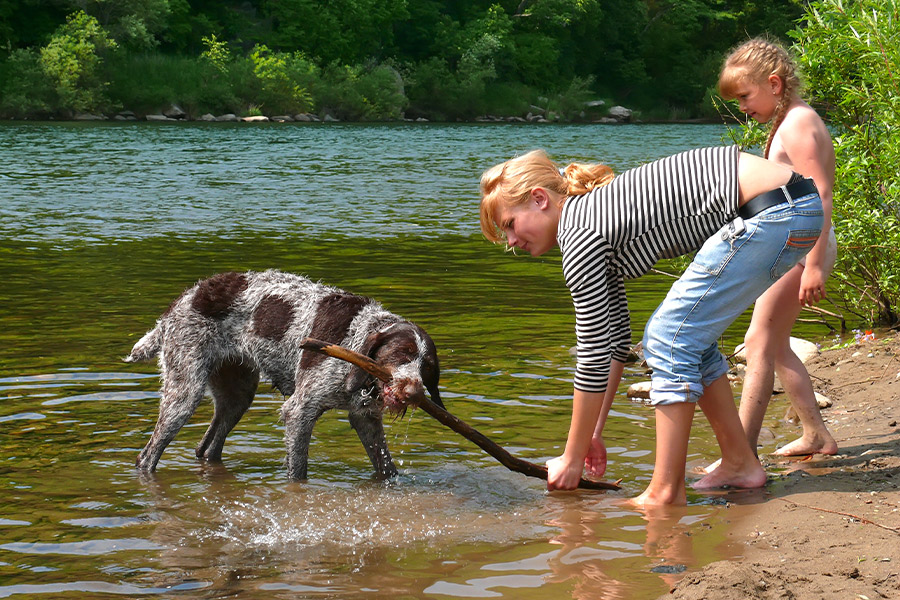
It can be especially dangerous for dogs as they love the musty smell it produces and are naturally drawn to investigating it – usually by licking or ingesting the material when out enjoying rivers and lakes across the country.
If your dog is showing symptoms after being in contact with a waterway, contact a veterinarian immediately. Common symptoms include:
- panting
- lethargy
- muscle tremors
- twitching
- convulsions.
If your animal becomes unwell after contact with a waterway, contact a veterinarian immediately and report it to Environment Canterbury.
Our monitoring may not detect the small amounts of toxins that can make dogs sick, so pets should be kept away from any signs of algae.
What causes toxic algae
- Toxic algae is found in rivers, lakes and beaches across Aotearoa, including Waitaha Canterbury.
- Blooms happen when the algae multiply rapidly, usually due to changes in environmental conditions like warm temperatures, abundant sunlight, low or stable river flows, and high nutrient levels.
- These conditions often occur during hot, dry periods or after particularly wet seasons.
- The nutrients that fuel blooms, mainly nitrogen and phosphorus, come from natural sources and land use (urban and rural). Common contributors include wastewater and sewage, stormwater runoff, and agricultural runoff.
Where nutrients come from
- The nutrients that trigger these blooms, primarily nitrogen and phosphorus, come from both natural sources and human activities.
- Common nutrient contributors include:
- Wastewater and sewage
- Stormwater run-off carrying contaminants from our urban centres like lawn fertilisers, sediment, and heavy metals from our vehicles
- Agricultural run-off from livestock and fertilisers
Toxic algae in rivers: What it looks like
To help keep you and your pets safe, check for signs of toxic algae before going into rivers. Below are descriptions of what toxic algae in rivers can look like.
What it looks like in rivers
- Grows on the bottom of riverbeds: Toxic algae (benthic cyanobacteria) attaches to rocks and gravel on the riverbed.
- Forms dark, slimy mats: It appears as thick dark brown or black mats that have a slimy or velvety texture and musty smell.
- Can break loose and float: Mats can come loose and wash up on the edge of the rivers, or form ‘floating rafts’ in shallow areas.
- Changes appearance as it dries: As they dry out, they turn light brown or white and look like dried leaves or cowpats.

Toxic algae mats in riverbed
What it looks like in lakes, ponds and lagoons
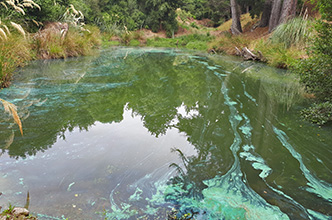
- Suspended in the water: Floating toxic algae (Planktonic cyanobacteria) are often mixed through the water rather than attached to the riverbed.
- Can change the colour or clarity of water: When it blooms, it can make water look cloudy, discoloured, or like it has small globules in it.
- May be hard to see: In some cases, there are no obvious visual signs, even when toxic algae is present.
Health warnings: Before you head out, check current health warnings for rivers and lakes to keep people and pets safe.
Check before you swim
We monitor water quality at many of the region’s recreational swim sites between November and March. However, we cannot monitor all sites.
Water quality results on Land Air Water Aotearoa (LAWA) and health warnings are based on the risk to human health, not animals.
Check water quality before you go
Caution advised at these rivers in Waitaha Canterbury
Toxic algae (cyanobacteria) are known to grow in many of our hill-fed and some alpine rivers and may pose a risk to humans and dogs. Please be cautious and ensure you check any river for toxic algae before jumping in.
These rivers are known to have toxic algae blooms at times:
- Hae Hae Te Moana River
- Leader River
- Opihi River
- Ōtākaro Avon River
- Otaio River
- Pareora River
- Rakahuri Ashley River
- Temuka River
- Waiau River
- Waihao River
- Waihi River
- Waikirikiri Selwyn River
- Waimakariri River
- Waipara River
- Waitohi River
Monitored swimming spots along these rivers may not have an active public health warning. This is because the amount of toxic algae could be below the threshold for a public health warning.
What’s happening this season?
Conditions this season are similar to previous years, but you may see more health warnings due to improved and faster communication to help communities stay informed and safe.
Is the problem getting worse?
In Waitaha Canterbury, water quality remains relatively stable.
- 80% of our monitored swimming sites suitable for recreation.
- We’ve been monitoring for toxic algae at recreational sites since 2009.
- Year-on-year, this season is similar to previous years in terms of temporary health warnings.
- In December 2025 there were 10 active temporary health warnings, comparable to:
- 9 warnings in December 2024
- 8 warnings the year before.
Why are there so many health warnings this season?
In recent years, we’ve changed how we communicate about temporary health warnings for toxic algae and faecal contamination.
- Our website and social media allow us to share warnings faster, often before signage appears on site.
- This helps communities identify affected sites and recognise blooms earlier.
- In addition to signage, we share updates on our Facebook page using information from the National Public Health Service.
Environment Canterbury © 2026
Retrieved: 2:24am, Sun 04 Oct 2026
ecan.govt.nz/your-region/your-environment/water/swimming-water-quality/toxic-algae