
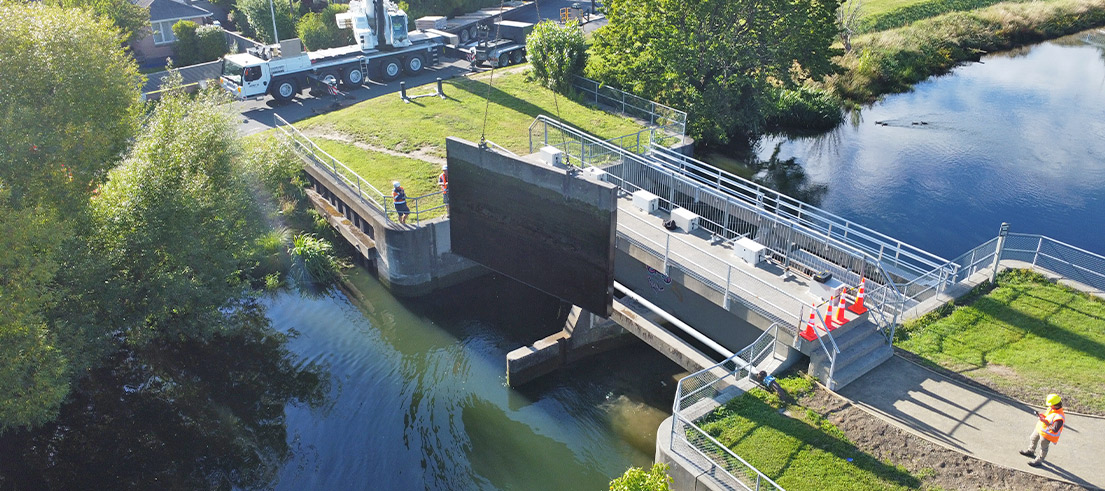
Cam River flood protection work in Kaiapoi uncovers native mussels
Flood protection work on the Cam River in Kaiapoi uncovered native mussels living among decades-old debris, highlighting river health and flood risk reduction efforts.
Cam River flood protection work – key facts
Location: Cam River / Kaiapoi
Work: Structure upgrades and adaptation programme
Discovery: 153 native kākahi (some ~60 years old)
Why it matters: Reducing flood risk and protecting river health
How the Cam River control structure protects Kaiapoi from flooding
In early March, we temporarily drained (dewatered) one half of the Cam River control structure so the team could get inside and carry out important inspections and maintenance.
The concrete structure was built into the river and stopbank system in 1972 to help with flood protection.
Its gates are open most of the time to allow tides and fish to move freely and support the natural functioning of the river ecosystem.
When we know a flood is on its way, the gates are closed, helping to protect people and property in the area.
Once the team were inside, we found a range of unexpected items had found their way into the structure over time and settled into the mud and debris below.
Amongst the rubbish, uncovered were street signs, a shopping trolley, bikes, a knife and even a passport.
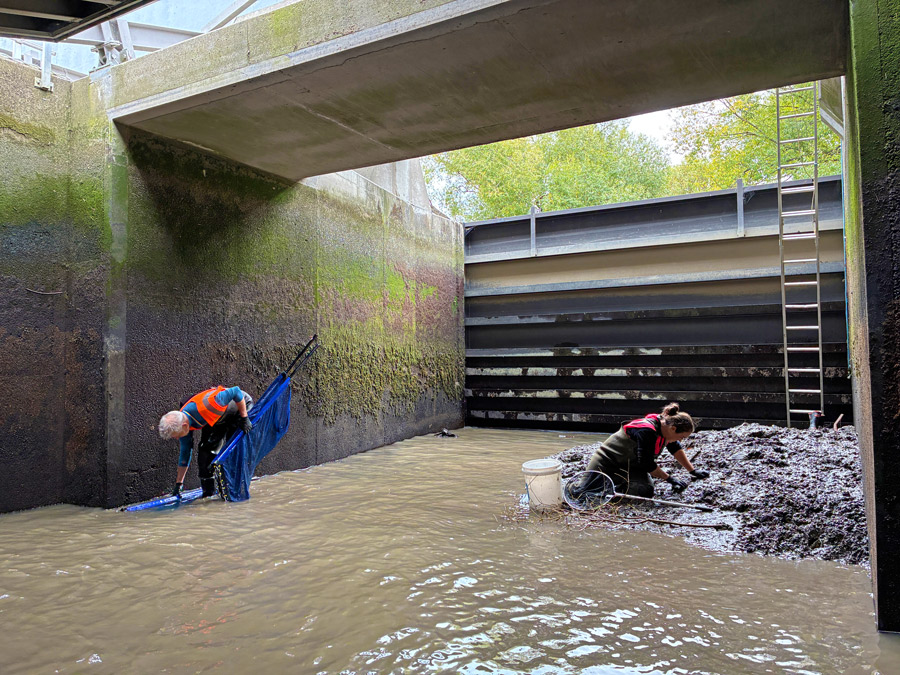
Rivers team relocating aquatic life during maintenance inside the Cam River control structure
Native mussels and aquatic life discovered during flood works
Before taking all the water out in projects like this, we check what’s living there and safely relocate any fish or other aquatic life. This process, known as fish salvage, is carried out by specialist members of our Rivers team.
The biggest surprise during this operation was discovering 153 large kākahi (native freshwater mussels) buried deep in the mud, some of which are estimated to be up to 60 years old.
Unlike marine mussels that attach to rock and stay put, kākahi use a strong foot to move and burrow into sediment. They are also excellent water filters and are often viewed as a sign of a healthy waterway.
We carefully relocated the kākahi to a nearby area beyond the works site before cleaning and maintenance work began. We also relocated lots of bullies, freshwater paratya shrimp, a black flounder and two brown trout.
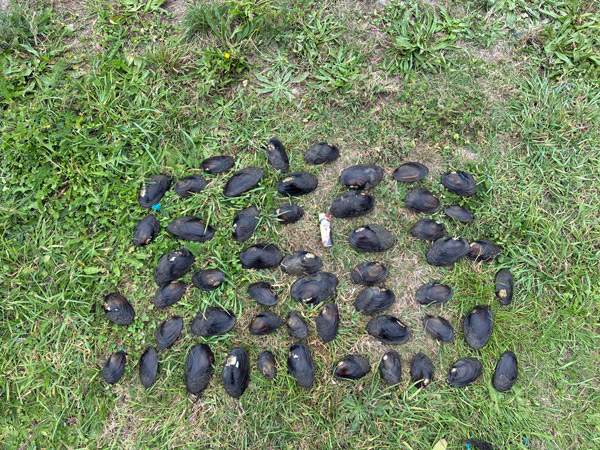
Kākahi (native freshwater mussels) relocated from the Cam River during maintenance work
Learn more about flood protection work in your area or how we manage river flood risk across Canterbury.