
Council performance highlights from late 2025
Canterbury Regional Council (Environment Canterbury) made progress across transport, water quality, governance and financial performance in late 2025. This update outlines the key decisions and actions taken by councillors to support Canterbury communities and protect the environment.
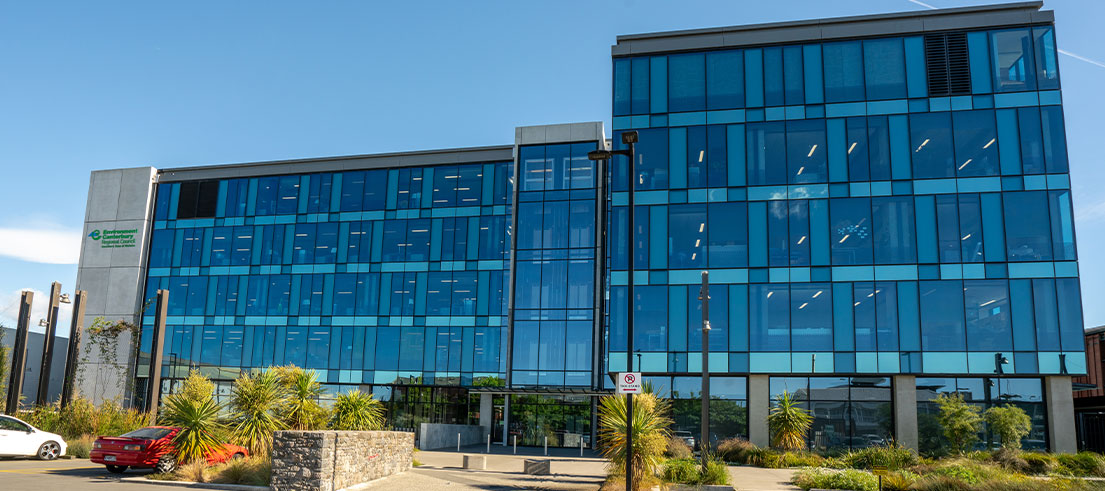
Canterbury Regional Councillors gathered at Tuam St in central Christchurch on Wednesday for a meeting of the Regional Delivery Committee to review a Q2 performance summary (covering October to December 2025), including highlights such as increased public bus patronage and new predictive water quality monitoring.
A new Canterbury Regional Council
We welcomed a new Council. Eight councillors were re-elected and six new councillors joined the table. The Christchurch South/Ōwhanga constituency had entirely new representation, while the other six had a mix of new and returning councillors.
In accordance with the Canterbury Regional Council (Ngāi Tahu Representation) Act 2022, the 10 Papatipu Rūnanga also appointed two Ngāi Tahu Councillors. Iaean Cranwell returned for his second term with Megen McKay also appointed.
Submissions on central government proposals
Our Councillors have been busy through that period, in no small part due to handling and responding to central government proposals to reform local government and the legislation it operates within.
A team of senior staff was stood up to provide advice to Councillors on the implications of change and develop submissions that were delivered in quarter three. These were finalised in early 2026 with the last signed off last week.
Read a summary of the council’s submissions on central government reform, or download the full submissions.
Our kaimahi continue to stay focused on delivering for our communities under existing legislation, while ensuring readiness for transition should the proposals progress.
Updated Tuia Agreement
In December, representatives of Environment Canterbury and Papatipu Rūnanga within Waitaha Canterbury signed an updated Tuia Agreement, reaffirming our commitment to working with mana whenua to achieve better outcomes for everyone and protect the environment.
The agreement acknowledges the relationship between Environment Canterbury and Ngāi Tahu, their ancestral land, and the fact that it’s inextricably affected by the work the council does.
Public transport milestones
Several milestones were heralded in the public transport core service space, including the November launch of contactless payment for the National Ticketing Solution Motu Move. The service welcomed more than 100,000 tags in its first month.
Councillors marked the response to community feedback allowing passengers to travel with pets on Metro services and congratulated both staff and the community for a seven per cent patronage increase on Route 7, Halswell/Queenspark.
Financial performance
The organisation ended the second quarter with expenditure $12.4 million below budget, $11.4m more than the $1m budgeted surplus. This was due to planning work being on hold, contract and project underspends for public transport, weather-related delays for planned river works, and staff vacancies.
Accurately predicting water quality
A new predictive water quality model launched in September, adding another tool to our efforts to keep Cantabrians informed about their favourite swimming spots.
It addressed long-standing community concerns in Whakaraupō Lyttelton Harbour and Akaroa Harbour about long-term grades and sites being considered unsuitable for swimming all season. See hourly water quality predictions on LAWA’s ‘Can I swim here?’ website.
See how we’re tracking on our core services: View our latest Q2 performance updates across environmental regulation, hazard response, and public transport.