
Farm Environment Plan audits: Turning ‘gutfeel’ into proven results
A Farm Environment Plan (FEP) is key tool Canterbury farmers use to manage environmental risks and ensure they are meeting regional regulations. FEP auditors work with farmers to ensure their FEP documentation reflects the environmental outcomes happening on farm.
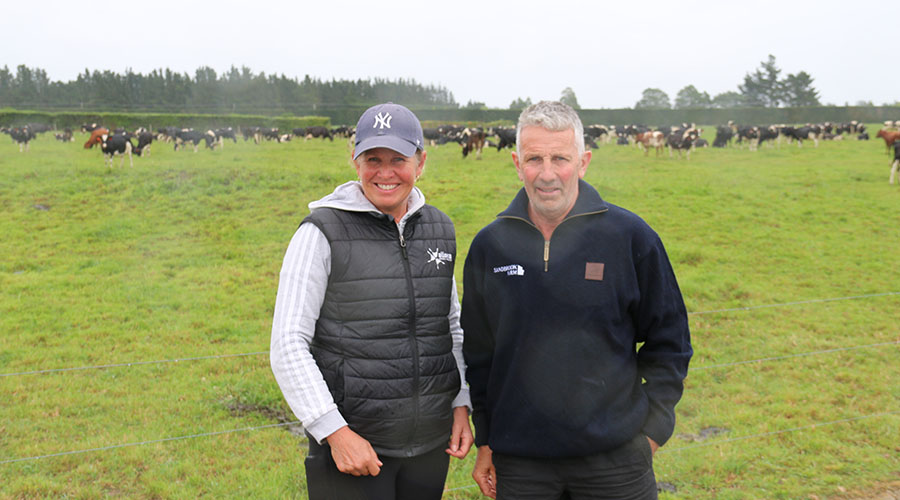
For Adele and Peter King, owners of Sandbrook Farm Ltd, caring for the environment has never been a box-ticking exercise.
Long before Farm Environment Plans became standard practice, the family were already setting their own nitrate limits, planning carefully, and doing what they believed was right for their 197-hectare dairy operation and the land they depend on.
“We’d set ourselves a 200-kilogram nitrogen limit 20 years ago, so the 190-kilogram cap didn’t really change anything for us,” Peter said. “Our philosophy has always been to do things right, rather than chasing maximum production.”
The value of record-keeping
While the FEP framework hasn’t required major changes to their on-farm system, it has changed one important aspect of their business, and that’s record keeping. Over time it’s proven to be a valuable shift.
Adele said it’s hard work carrying all these books around, but it does prove what we’re doing is working.
Moisture probes are one example. Initially installed to meet an FEP requirement, they have now become a decision-making tool the family trust.
“We used to look over the fence and think, everyone else is irrigating, we should probably start. Now we listen to the probes – 100 per cent. It’s improved how we plan irrigation and fertiliser,” Peter said.
The couple said their biggest environmental learning hasn’t come from paperwork, but from adapting to the weather. Protecting 665 cows and the soil during extreme rainfall is a constant challenge.
“There’s a lot you can’t control with farming. In a big rain event, my focus is the cows, the paddocks and the farm. That’s what good practice looks like, and that does align with the FEP,” Peter said.
‘It’s not about looking good on paper’
For the Kings, the value of the auditing system is that the paperwork is backed up with genuine visits from auditors who want to understand and ensure what’s written down on paper reflects the environmental outcome on farm.
“It’s not about looking good on paper,” said Adele.
“We can prove everything with documentation.”
Credit to FEP auditors
They credit the FEP auditors for making the process constructive rather than adversarial.
“You sit down and talk for an hour, just a causal chat, and then they go and check the points you’ve talked about. It feels like they’re working with you,” Peter said.
Canterbury Regional Council Senior Farm Plan Advisor Melissa Gillespie said we’re fortunate in Waitaha Canterbury to have FEP auditors of such high calibre.
“They’re not only across policy and the Land and Water Regional Plan but are also farm system experts. The success of our farm environment management expectations comes down to their engagement and the feedback they bring into the programme.”
“Through FEP audit implementation, the programme, auditors, and landowners have grown together,” Melissa said.
Catchment groups building understanding
Catchment groups have also strengthened their environmental approach. Being part of both the Eastern Plains Land User Group and the Central Canterbury Plains catchment has helped them connect with farmers from different systems and landscapes.
“It builds rapport and understanding. Everyone affects the catchment, and everyone has a role,” Adele said.
Long-term sustainability
Noting increasing compliance demands across the sector, Adele and Peter remain focused on long-term sustainability for future generations.
Their investments in effluent management and storage, tree planting, soil-health trials, low-risk wintering, and staff training all reflect a core belief:
“We’re here to farm for the future. Not to take what we can from the environment, but to do right by it,” Peter said.