
FEP data shows Canterbury farmers are making real environmental progress
Canterbury farmers are proving that steady progress pays off, with seven years of our collected Farm Environment Plan (FEP) audit data showing a dramatic lift in environmental performance across the region.
We introduced FEP audits through the Land and Water Regional Plan (LWRP) to ensure farm practices are managed to reduce risks to water quality and protect mahinga kai (food gathering) values.
The number of farms receiving A grades in Canterbury has jumped significantly – from 14 per cent in 2017 to 77 per cent during the 2024-25 period.
The number of C and D grades dropped from 12 per cent to two per cent over the same period.
Learn more about what the FEP grades mean
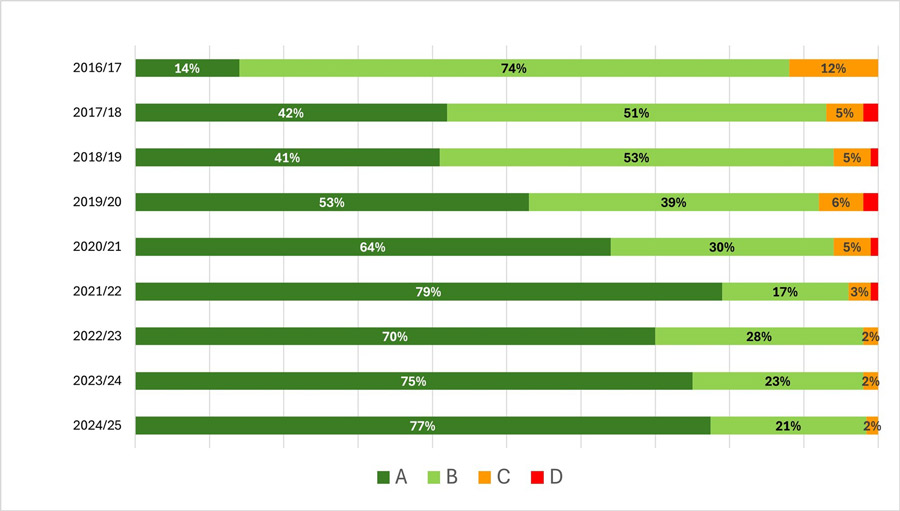
Figure 1: Proportion of farms by FEP audit grade in Canterbury (non-scheme), 2016–2025
Selwyn leading the way in FEP audits
The data was presented to Lower Selwyn catchment’s Eastern Plains Land User Group (EPLUG) by the group’s environmental advisor, Agri Intel Director and FEP Auditor Charlotte Senior, supported by our FEP programme manager Melissa Gillespie.
Sharing the data with the community helped reinforce that the efforts made by many farmers on the ground are being recognised and felt.
“It can make you wonder if it’s all worth it when you are stuck doing paperwork or looking at the cost associated with auditing … but be assured it is,” said Charlotte.
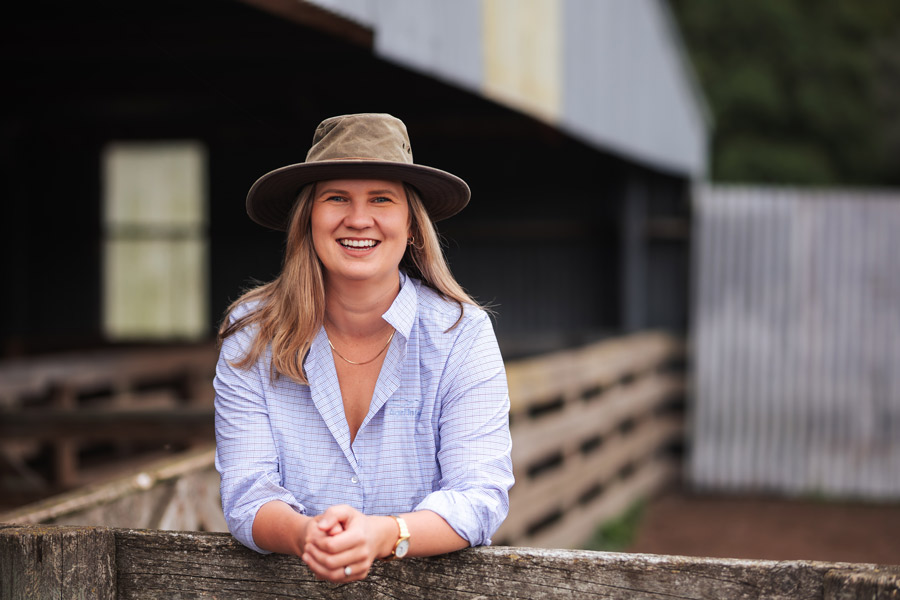
Agri Intel Director and FEP Auditor Charlotte Senior
“Direction is more important than speed, and the data from the FEP programme shows farmers are heading in the right direction.”
Selwyn outperforms wider Canterbury results by about 10 per cent (see figure), reflecting its earlier adoption of audits in 2017 under the Canterbury Land and Water Regional Plan.
The rest of Canterbury was on average two-to-three years later.
“Both Canterbury and Selwyn have lifted, but Selwyn led the way – A grades have become the norm and C and D grades are now almost gone,” said Charlotte.
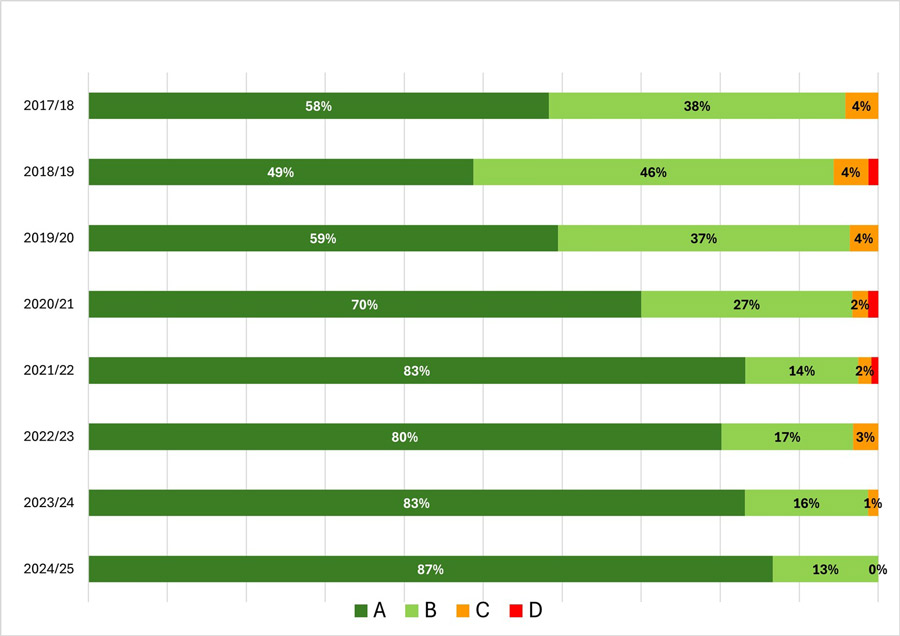
Figure 2: Proportion of farms achieving each FEP audit grade in Selwyn, 2017–2025
Holding the line: groundwater nitrate levels trending down
Central Plains Water Limited’s (CPWL) latest groundwater monitoring shows nitrate levels have been trending down in most wells the company monitors over the past five years.
“The good news is that data across Selwyn backs up the progress we’re seeing on the ground,” said Charlotte.
She said according to independent analysis undertaken by Lincoln Agritech, in the last five years alone, 60 per cent of wells monitored by CPWL had shown clear signs of improvement.
“It’s not a coincidence that CPWL groundwater monitoring results are improving – that’s farmers making changes and sticking with them. Efforts are really starting to add up.”
Irrigation management a success story
Charlotte said a standout area of improvement has been irrigation management. While noting it’s still the management area with the second-most issues (next to effluent), they’ve seen real progress in irrigation efficiency and management, even as requirements to comply have become more stringent.
“It’s a real good news story,” said Charlotte. “People are now understanding and using their data rather than just buying gear and collecting numbers they don’t look at.”
Level of confidence (LoC) in irrigation management
An FEP auditor undertakes a level of confidence (LoC) assessment to determine achievement of the farm’s management practice targets and objectives.
In 2018/19, only about one-third of farms were rated as a high LoC for achieving irrigation management outcomes in both Canterbury and Selwyn districts.
Fast forward to 2024/25, and this is now 80 per cent and 90 per cent of farms in Canterbury and Selwyn respectively (figure 3 and figure 4).
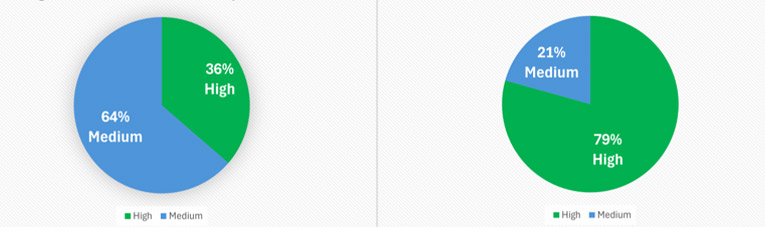
Figure 3: Proportion of farms achieving high and medium irrigation LoC in Canterbury, 2018–19 and 2024–25
“The progress in this space has been a collective effort from farmers and industry players like Irrigation NZ, irrigation providers, schemes and the FEP audit team,”
“We’ve now got more farmers who really know their systems well and can explain what they expect from their irrigation systems, or why they run them the way they do,” said FEP programme manager Melissa Gillespie.
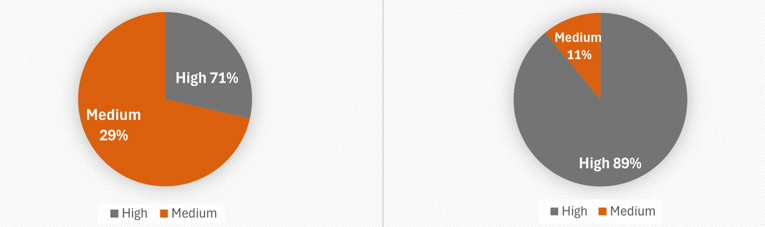
Figure 4: Proportion of farms achieving high and medium irrigation LoC in Selwyn, 2018–19 and 2024–25
Reframing the narrative
Since 2021, the FEP framework’s been more structured and legally supported to make audits defensible and consistent, including the development of formal guidance documents.
“Over the past five years we’ve seen a big shift in how Good Management Practice (GMP) is interpreted and applied,” said Melissa.
It’s been a collective process — one they both agreed had evolved into a ‘living framework’.
“Guidelines have tightened up and there's been lots of great feedback from industry on that as well, so that's been quite a collaborative effort,” said Charlotte.
Farmers now benefit from greater clarity about what the auditors are looking for and how grades are determined.
“From an auditor’s perspective, that consistency is a good thing — it means everyone’s working from the same playbook.”
Where to from here?
It’s no secret that changing rules, regulations and resource management reform have left many landowners confused and uncertain about the way forward.
The next big change expected in Canterbury will be the rollout of Freshwater Farm Plans (FWFPs), although just when this change can be expected remains to be seen.
“While the government may be making changes in this space, it’s important to remember we haven’t rolled out FWFPs in Canterbury, and until we do, we remain under the FEP programme as required by individual consent conditions,” said Melissa.
“These are required for the duration of a consent, so it’s important to remain focused on what’s required now rather than waiting for the new system to land.”
Keeping up the good work — what matters now
Where farmers are looking to move beyond the required good management practices, there are frameworks being trialled to support this. However, it’s important to remember the FEP Programme is not about pushing to the next level, it’s about making sure risk is managed consistently across all farms.
“It can be really powerful to record your progress and keep records to show how far you’ve come,” said Charlotte. “Even simple photo points, before and after shots or a few notes in your FEP can tell a powerful story of improvement over time.”
While regulatory change is coming, the focus on understanding risks, evidence and record keeping, efficiency and outcomes will remain.
“We value and commend all the work being done by farmers to manage risks and also for proving that GMP does make a difference,” said Charlotte.
“The data’s showing it, the water’s showing it, and honestly the progress across the Selwyn catchment is something to be proud of.”
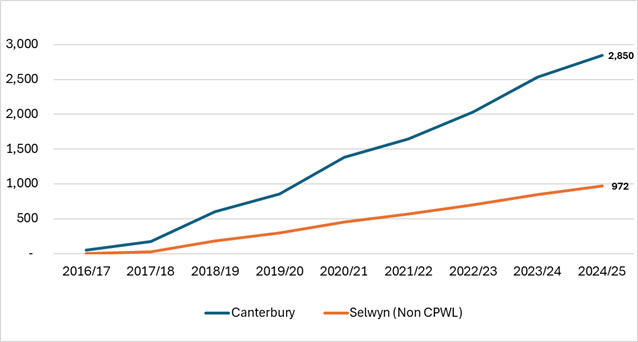
Figure 5: Total audits completed in Canterbury 2016-25
Understand FEP audits: Find out how FEP audits work and what auditors look for when assessing good management practice. Learn more about FEP audits