
Managing on-farm compost
On-farm composting is increasingly being adopted as a practical solution – particularly for managing animal mortalities – and offers both operational and environmental benefits. Learn about these benefits, download our guidance and find what you need to know to get started.
Composting is a controlled biodegradation process, distinct from the uncontrolled rotting that occurs in offal pits. By managing aeration, moisture and carbon-to-nitrogen ratios, composting accelerates the breakdown of organic matter into a stable, useful by-product that can improve your soil structure.
On-farm composting isn’t new – it has been done successfully by farmers in Aotearoa New Zealand and overseas for many years. In situations where the water table is high or there are deep gravel soils, an above-ground compost pile is an alternative option to an offal pit for managing animal mortalities that avoids leachate from offal entering groundwater.
Benefits of composting
- Combination waste management – Farms generate a variety of organic wastes, including animal mortalities, spent silage, hay, effluent, solid waste, and bedding materials (e.g. straw, sawdust). Composting allows these materials to be transformed into a valuable resource.
- Reduced contaminant discharge – Unlike offal pits, composting occurs above ground, reducing the risk of leachate contaminating groundwater, particularly in areas with high water tables. Composting minimises environmental risks from leachate by transforming waste into a stable product.
- Odour control – Composting is an aerobic (oxygen-using) decomposition process, which is faster and less prone to odour issues than the anaerobic decomposition that occurs in offal pits.
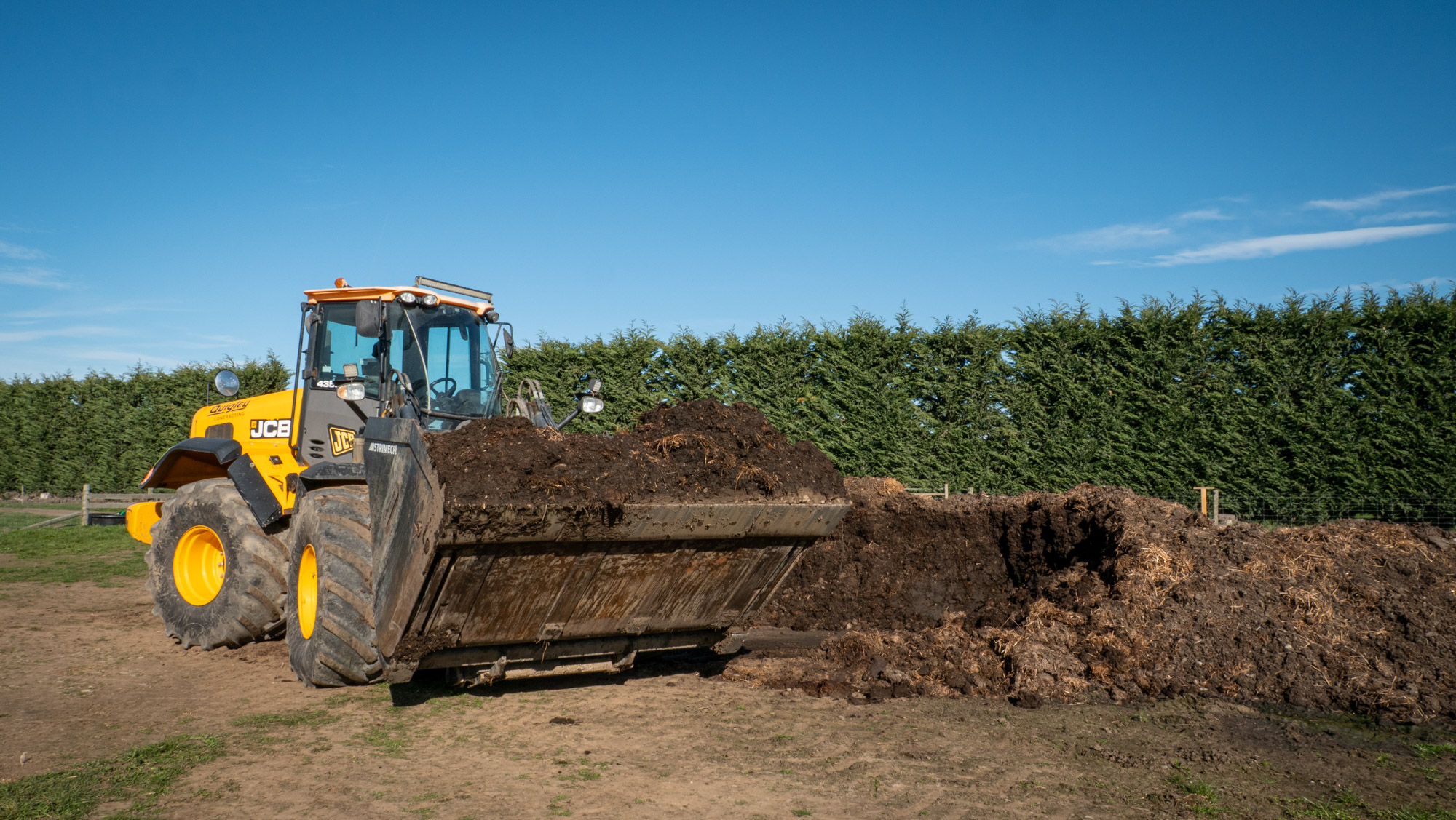
- Soil structure, water retention, and nutrients – Compost adds organic matter to the soil, which improves soil structure, moisture retention and nutrient availability.
- Reduced greenhouse gas emissions – Composting is an aerobic process that produces carbon dioxide (CO₂) – a greenhouse gas. However, methane (CH₄) produced by anaerobic decomposition in offal pits has about 28 times the effect of carbon dioxide. Every molecule of carbon dioxide that doesn’t become a molecule of methane helps.
Compost management guidance
Our compost management guidance has been developed in partnership with a group of test farmers across Waitaha Canterbury, and with support from DairyNZ, Synlait, and Morven Glenavy Ikawai (MGI) Irrigation Company Ltd.
Canterbury’s farming systems are diverse, ranging from dairy, sheep and beef farming to horticulture and cropping. Therefore, composting methods and compost application will vary depending on the type of farm and the resources available.
This guidance document is designed to assist farm decision makers by offering practical, evidence-based recommendations, along with on-farm insights to help implement composting systems, tailored to various specific operational needs.
This webpage is intended as a brief overview of composting information and principles. Refer to the 'Managing on-farm compost' booklet to ensure compliance with relevant Canterbury Land and Water Regional Plan (CLWRP) rules, and to ensure your compost pile performs as it should with no leaching or other unintended environmental effects.
Choose the guide that suits your needs
Full guidance (detailed booklet)
For farm decision-makers and planning: Use the Managing on-farm compost booklet for comprehensive, evidence-based guidance, including how to meet Canterbury Land and Water Regional Plan (CLWRP) requirements and avoid environmental risks like leaching.
Download full compost guidance (PDF, 2.61MB)
Quick guide (day-to-day use)
For farm staff and practical use on the ground: Use the Compost Management: On-Farm Quick Guide for simple, quick-reference instructions to support daily compost pile management.
Compost location planning
It's important to follow the rules in the Canterbury Land and Water Regional Plan (CLWRP). Two key rules (5.38 and 5.39) tell you when composting is allowed and what conditions you need to meet:
Rule 5.38
Under rule 5.38, composting is allowed if:
- The compost pile is smaller than 20 cubic metres (about the size of a large truckload or roughly the recipe for six cattle carcasses)
- Any liquid that comes out of the compost pile does not go into any waterbodies unless it’s a special wetland used to treat animal waste
- The compost does not come from any industrial or factory waste.
Rule 5.39
Under rule 5.39, if your compost pile is larger than 20 cubic metres, you can still compost if:
- The compost site is not closer than 50 metres from:
-
- Any waterbody (like a stream, river or lake)
- The edge of your property boundary
- A well, bore or Coastal Marine Area
-
- The compost site is not within a Community Drinking-water Protection Zone or Christchurch groundwater protection zone (check your maps)
- Any liquid from the compost does not go into any waterbodies unless it’s a special wetland used for treating animal waste.
When selecting a site for your composting operation:
Location and access
- Choose a flat area with sufficient space to build, manage and access the pile
- Ensure there is good access for delivering materials and animal mortalities, and that the site remains accessible in all weather conditions.
Setbacks and neighbours
- Position the site at least 50 metres away from surface waterbodies, bores/wells and property boundaries
- Consider how odour might be carried by wind, and minimise both odour and negative visual impacts on neighbours or nearby residents.
Stock exclusion
- Locate the site where stock can be fully excluded to prevent contamination and ensure composting materials are not disturbed.
Farm efficiency
- Choose a location that is convenient to high-use areas (e.g. calf sheds) and other farm facilities. This helps streamline the movement of materials and improves day-to-day practicality.
Composting system layout options
- Windrows – long rows for easy access and management (e.g. add carcasses as needed and cover them from the adjacent row)
- Bunkers – good for permanent setups or limited space (e.g. converted silage pits)
- Two-part system – one pile for general compost, one for animal mortalities; allows you to manage different risks and re-use active compost to speed up new piles.
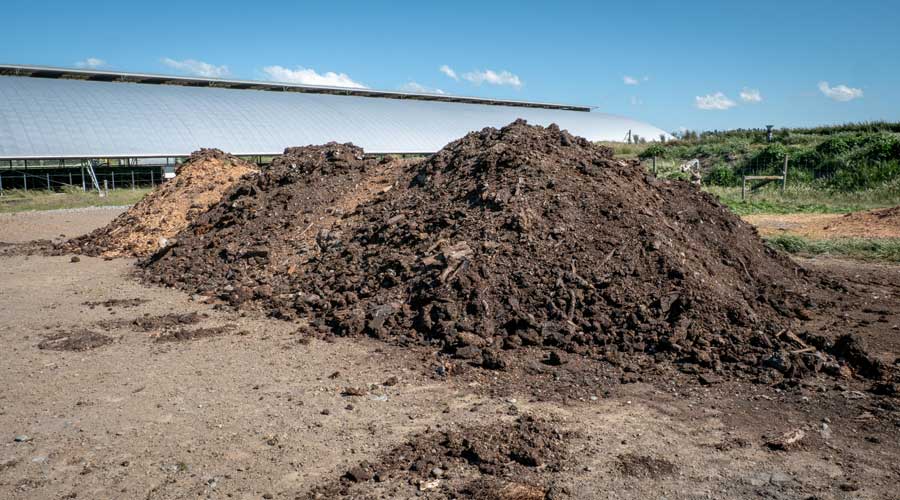
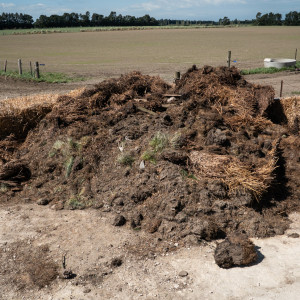
Dairy farm compost on an elevated and compacted pad behind feed barn
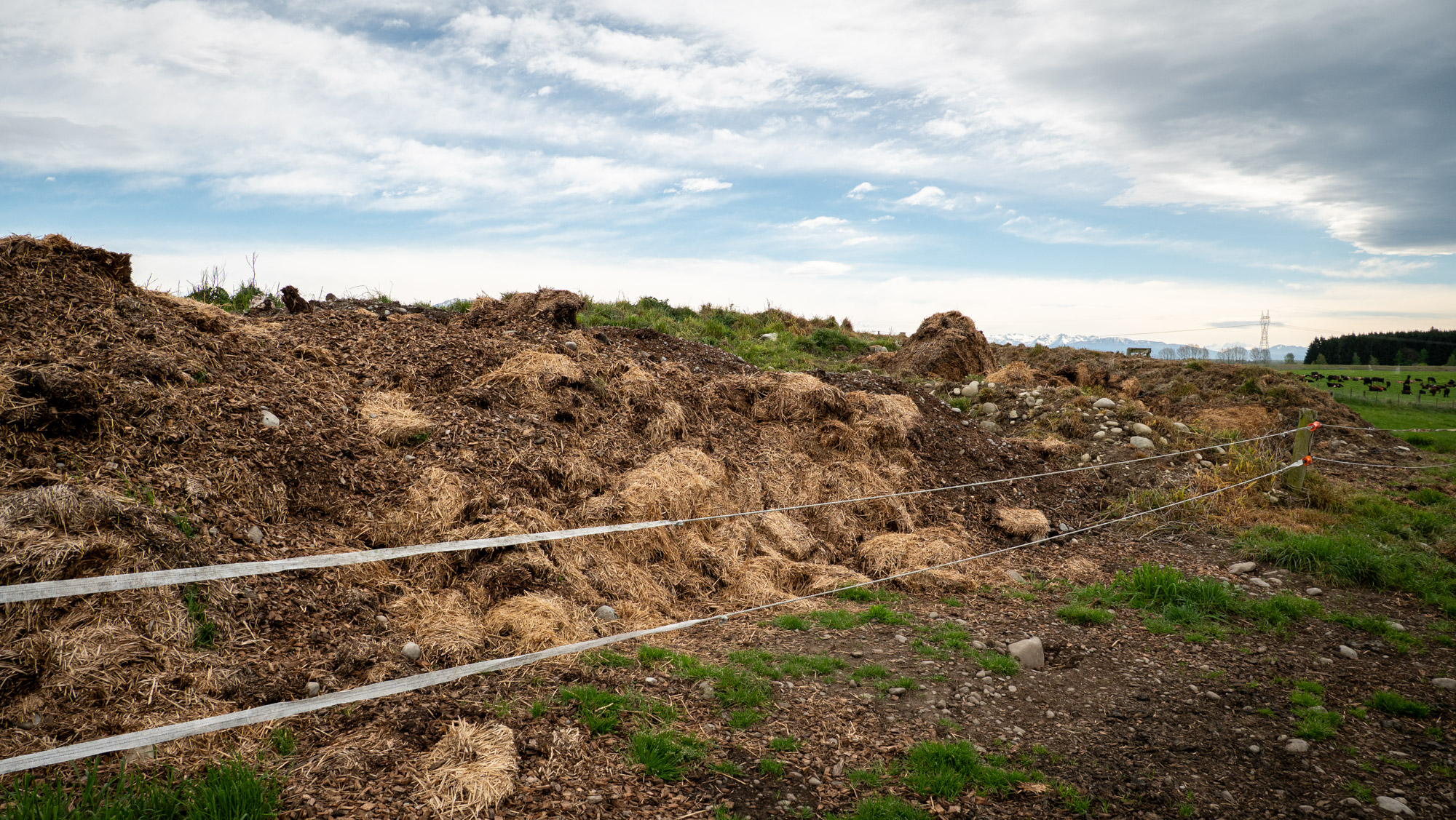
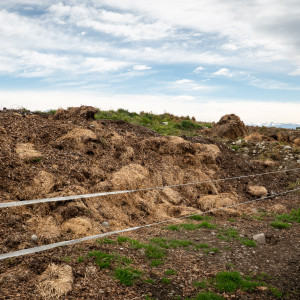
Compost pile fenced off from stock
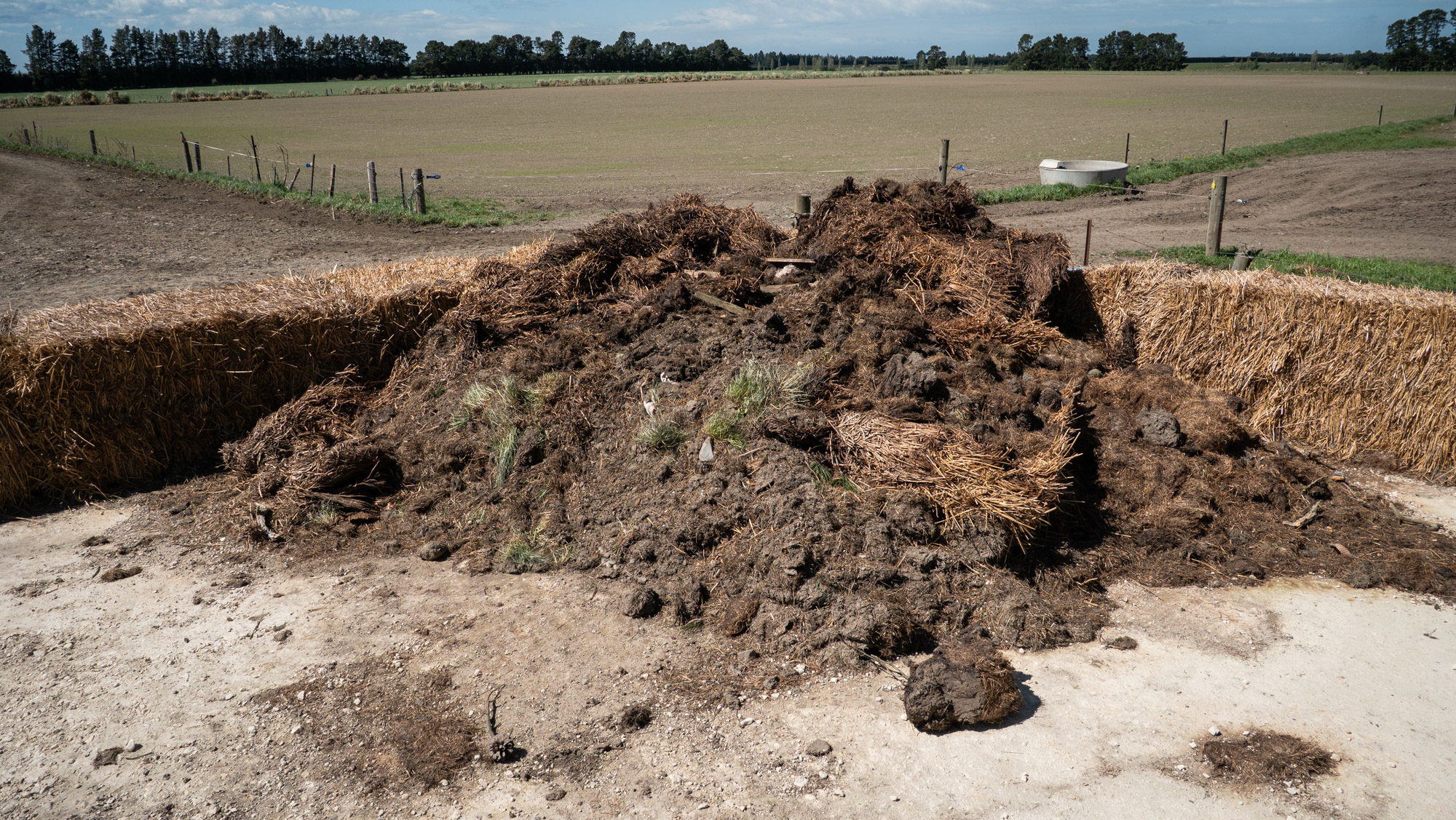
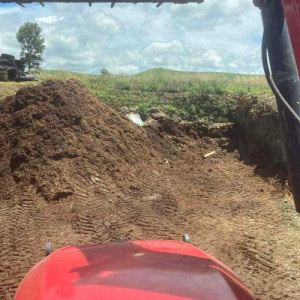
Compost pile with hay bunker system
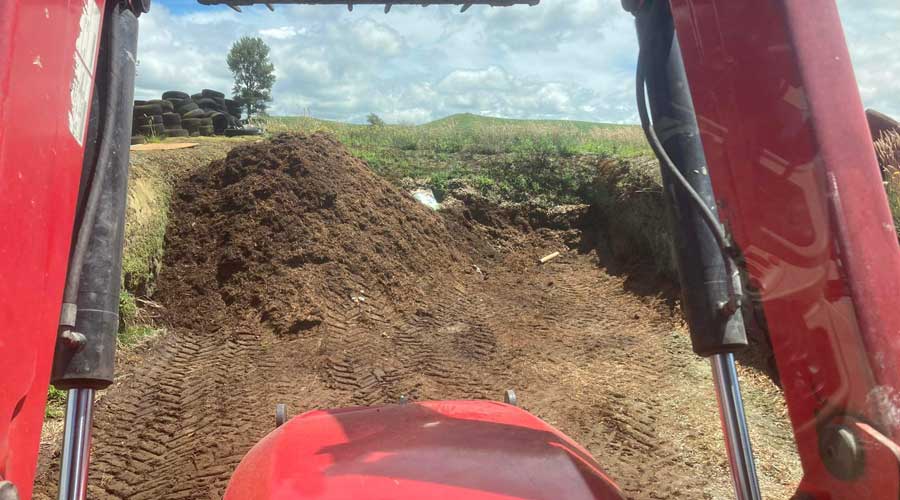
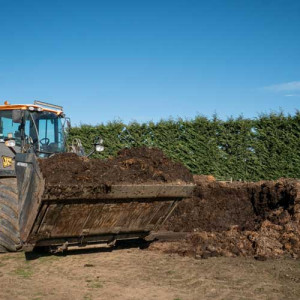
Compost pile in converted silage pit
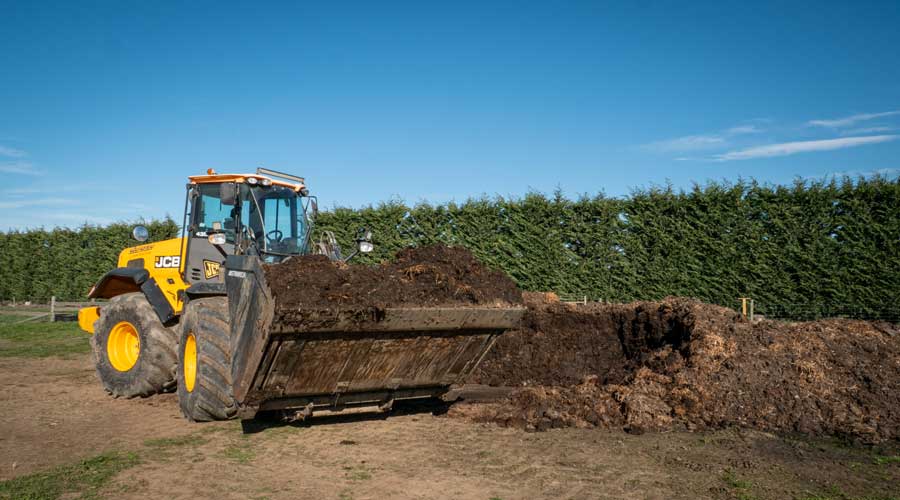
Chicken farm compost ready to be spread to improve soil structure
Constructing your compost
- Base layer (30cm): coarse, carbon-rich material (wood chips, straw, sawdust) to allow airflow and absorb any leachate
- Add waste: animal mortalities, manure, spoiled hay, silage, bedding
- Mix for balance:
- Carbon = wood, straw, dry leaves
- Nitrogen = manure, silage, green waste
- Cover (20–40cm): carbon-based ingredients, existing compost, fine sawdust. You may also want to cover with a tarpaulin to retain heat and moisture
- Shape:
- Round top in wet weather (shields from water)
- Flat top in dry weather (collects rain).
Monitoring compost performance
A healthy compost pile should be active and aerobic.
| Check | What to look for | What it means |
| Temperature | 50-65°C | Active microbial activity |
| Smell | Earthy, not rotten | Pile has oxygen |
| Moisture | 'Squeeze test' – damp, only 1-2 drops | Ideal hydration |
| Appearance | Shrinking pile, dark colour | Composting progressing |
If it smells bad, it’s likely too wet or low in carbon – turn or remix with dry material.
Key ratios
Composting works best when you have the right balance of carbon and nitrogen. Carbon comes from dry materials like leaves and wood chips, while nitrogen comes from green plants or manure.
A good rule of thumb is to aim for a 30:1 ratio of carbon to nitrogen (C:N). Animal mortality composting generally uses a higher carbon ratio (40:1–80:1) to help control odour and minimise leachate.
| Material | Carbon:Nitrogen ratio (approx.) |
| Wood chips/sawdust | 300-400:1 |
| Straw | 80:1 |
| Hay | 25-80:1 |
| Manure | 15-25:1 |
| Poultry manure | 6:1 |
| Animal carcasses | 5:1 |
Compost application options
Under the Biosecurity (Ruminant Protein) Regulations 1999, compost that includes ruminant (cattle, sheep, deer, goats, horses) carcasses must not be applied to land grazed by ruminants.
Safe options include:
- Shelter belts and non-grazed margins
- Cropping or forestry blocks
- Backfilling old offal pits (where groundwater intrusion is not an issue) or erosion repairs.
This prevents spreading prion diseases (like mad cow disease or scrapie) and protects New Zealand’s export economy.
Compost made from non-ruminant animals (e.g. pigs, poultry) or just farm waste (manure, bedding, crop residues) can be safely spread on:
- Pastures and crops
- Vegetable gardens
- Damaged soil areas.
Health and safety
Composting involves living microorganisms that can sometimes cause skin irritation, infections or breathing problems. To stay safe, follow these tips:
- Avoid breathing dust: Keep the compost damp and wear a mask
- Protect your skin: Wear gloves and always wash your clothes after handling dead animals or compost.
More information
We're here to help. If you have any questions about compost management or need to talk to your local land management advisor, please contact our advisory team on 0800 324 636 or at ecinfo@ecan.govt.nz.