
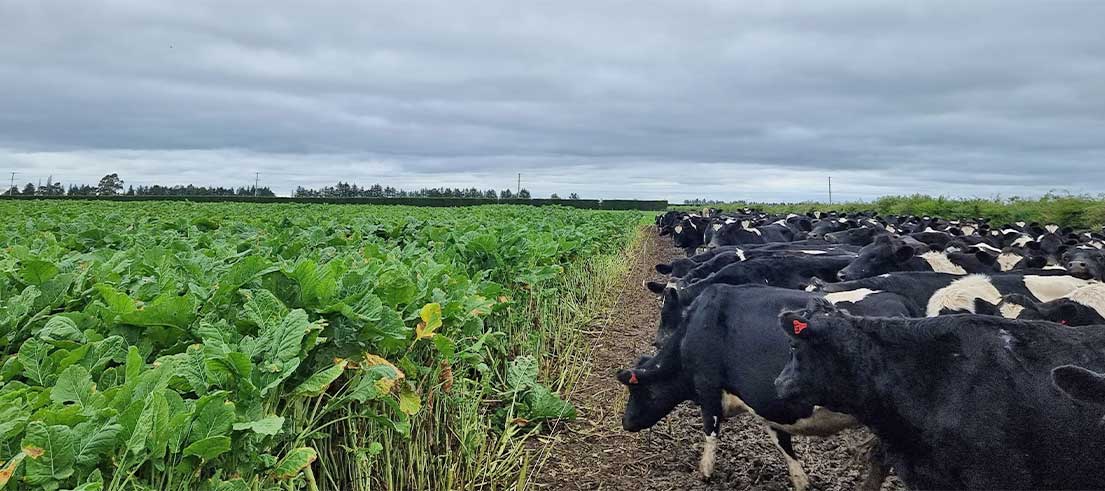
Good preparation will pay off as stock graze over winter
Information from flights gives us confidence that Waitaha Canterbury farmers have adopted good management practices when setting up their wintering paddocks to minimise the environmental risks that come with winter grazing.
In early May, we conducted two flights - one in Ashburton and one in Waimakariri - to observe how paddocks had been prepared for the upcoming winter grazing season.
Two of our field staff were joined by an industry representative on each flight. They looked for signs that appropriate paddocks had been selected, and that critical source areas and waterways were being well protected.
Well set for safe winter grazing
Principal Farm Systems Advisor Sarah Heddell says that results from the flights in May were largely pleasing, with no locations of serious concern observed.
"Our team saw good buffer setbacks, especially in foothill areas, and evidence that most farmers had selected paddocks carefully to avoid winter grazing in areas with more critical source areas," Heddell says.
"Our field staff have followed up with farmers who have set up very well, as well as others where we observed minimal setbacks from critical source areas, giving them advice on making sure they follow a robust winter grazing plan that will ensure good environmental outcomes once stock are introduced over winter."
- Maintain buffers from waterways: Make sure a buffer of grass or crops of at least five metres is maintained from all rivers, lakes, wetlands and drains while you graze. High-risk areas may need an even wider buffer.
- Manage critical source areas: Make sure your team know of any critical source areas (CSAs) in your winter grazing paddocks, and put up temporary fencing as soon as possible so your team know not to graze these areas. If you have crops planted in these areas, do not graze, harvest, or cultivate them over winter.
- Place your feeders and troughs carefully: The more feeders and troughs you have, the easier it will be to manage grazing to limit pugging and avoid impacting waterways. Paddock gateways can be potential CSAs so look for ways to avoid excessive pugging by installing hard surfaces and mitigate any run-off.
- Graze strategically: Graze towards a waterway or other CSA, starting at the far end of the paddock and working towards it, so more vegetation is maintained between stock and risk areas for longer. Make sure to back fence stock off the land that has already been grazed to minimise pugging and damage to your soil.
- Plan for bad weather: Have a Plan B in place for bad weather mitigation, such as a run-off paddock in case it's needed.
- Document your tactics: All the environmental risks you have identified should be documented in your winter grazing management plan. It's useful to keep notes on how you carried out your plan, as well as any changes you made.
- Plant a catch crop: Sow a cool-weather tolerant follow-up crop, such as oats or rye, as soon as possible after grazing. This can soak up nutrients that would otherwise be leached if the paddock is left fallow.