
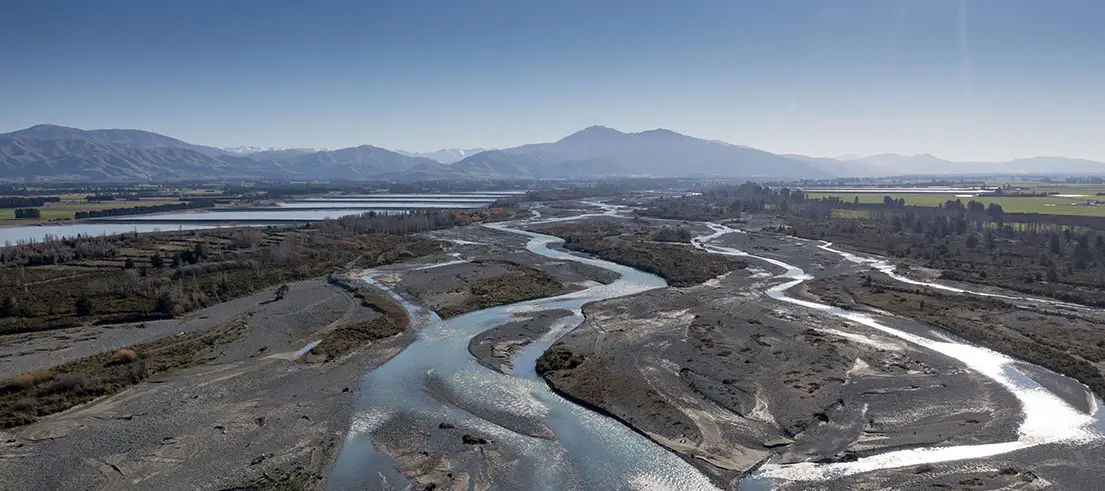
Protecting Waitaha Canterbury rivers from invasive weeds
Weed control is critical when it comes to keeping our communities safe from flood risks, and it also plays an important role in protecting biodiversity in our region’s precious land and waterways.
Healthy waterways are central to a thriving environment. They connect communities ki uta ki tai/from the mountains to the sea, provide a rich ecosystem for native animals and plants, and support agriculture and local economies.
However, invasive pest plants can choke braided rivers and restrict their natural functions.
Across Canterbury, we manage around 2,000 kilometres of waterways and 671 kilometres of drains. Managing invasive weeds across this extensive network helps maintain the capacity of our rivers to carry floodwater, while also protecting river habitats.
Weed control supports flood resilience
We manage 59 river rating and drainage districts in Canterbury, and each rating district has an agreed level of service for community flood protection. Left unchecked, invasive weeds in these areas are a significant flood risk, said Rivers Manager David Aires.
"Weeds can bind river gravels into dense islands within the channel, obstructing natural water flow and potentially redirecting floodwaters towards riverbanks or stopbanks," David said.
"In a flood event, weeds can reduce flow capacity, increasing the likelihood of erosion and out-of-river flooding."
If weed growth becomes too established, mechanical intervention may be needed to clear the riverbed. This can be more intrusive to the river environment and costly for local ratepayers, so regular weed control helps reduce the need for this type of work.
Biodiversity protection
Weeds not only increase our risk of flood events. They are also a major threat to biodiversity and prevent the river system from naturally braiding, said Environment Canterbury Principal Biodiversity Advisor Frances Schmechel.
"Weed infestations provide cover for predators and can cause the loss of habitats, including some of our iconic native braided river birds which need clear gravels to nest and raise their chicks," she said.
The diversity of aquatic habitats is also impacted, potentially reducing the variety of native and sports fish that occupy our rivers.

The Rangitata is one of many rivers we protect
Department of Conservation (DOC) Senior Science Advisor Kate McAlpine, who led the development of a new Smart Weed Alert Tool (SWAT), describes invasive weeds as one of New Zealand's most significant environmental challenges.
"Invasive weeds threaten native biodiversity, reduce agricultural and forestry production, degrade recreational and landscape values, interfere with hydroelectric infrastructure and waterways, and impose significant weed management costs on agencies, landowners and communities across the country.
"Weed control is an important tool in preventing lasting damage to native biodiversity and the places New Zealanders love."
How we control weeds
We use a range of methods to control invasive weeds, including hand removal, machinery and herbicides. The method used depends on the weed species, location, scale of infestation and accessibility.
Across Canterbury's extensive river network, aerial spraying using helicopters can be an effective way to treat large or difficult-to-access areas. Ground-based spraying and drones are also used where appropriate.
Riverbeds are surveyed first so treatment can be targeted to vegetation requiring control. Weather and river conditions are also considered when operations are planned.
Where herbicide is the appropriate control method, we use glyphosate and triclopyr under strict controls and in accordance with resource consent conditions and relevant requirements. We may also use surphactants, which help herbicide stick to vegetation and can reduce the amount required.
Glyphosate is widely used in New Zealand and other countries as a general-purpose herbicide, and is regulated by the New Zealand Environmental Protection Agency (EPA). You can read the EPA’s statement on glyphosate and information about how it is regulated in New Zealand on the EPA website.
We continue to review new technology and alternative weed-control methods as they become available, with a longer-term focus on reducing the volume of herbicide used where practicable.
Collaborative region-wide effort
Controlling invasive weeds across Canterbury's river systems requires a coordinated effort. Environment Canterbury works alongside mana whenua, government agencies, landowners, stakeholders and communities to support effective weed management across land and organisational boundaries.
"Weeds don’t recognise boundaries, so neither can our approach to controlling them," said Land and Information New Zealand (LINZ) Leader Biosecurity Tracey Burton.
"Coordinating our work with Environment Canterbury and other partners helps tackle infestations across the wider river system, rather than shifting the problem from one piece of land to the other. Taking a coordinated approach gives us a much better chance of staying ahead of invasive weeds and protecting the environmental values of these rivers over the long term," she said.
"These are important places for native plants and wildlife, but they're also places people live along side, enjoy and spend time in, and care deeply about. Working together helps us look after them now and for future generations."
Current weed control
Weed control takes place at different times around Canterbury, depending on the river, weed species and river conditions. Spraying is timed for when target weeds are actively growing, as this is when herbicide treatment is most effective.
We also consider how people use rivers and surrounding areas when planning this work, particularly during the busy summer recreation period. Spraying is weather-dependent and only goes ahead when conditions are suitable.
Where spraying is planned, we notify the community and put signage in place at spray sites.
For more information about current weed control works, including locations, maps and indicative timing, visit our current works page.