
Community voices helping shape Canterbury's biosecurity future
Knowledgeable community members will help inform the future of biosecurity in Waitaha Canterbury, with a new three-year term of Environment Canterbury’s Biosecurity Advisory Groups now underway.
The Biosecurity Advisory Groups bring together community members, mana whenua representatives, local government, and biosecurity experts to provide advice on pest management issues across Waitaha Canterbury.
Their work will be particularly important over the coming term as Canterbury Regional Council (Environment Canterbury) prepares for future Regional Pest Management Plan discussions and responds to emerging biosecurity challenges across the region.
Environment Canterbury Councillor Nick Moody said the groups play an important role in connecting communities with biosecurity work happening across the region.
“Their advice helps inform how we approach biosecurity challenges, identify emerging issues and deliver the Regional Pest Management Plan in a way that reflects local knowledge and community perspectives. They share this information in their communities and empower everyone to keep an eye out for new pests so that we can catch them early. That partnership is critical to ensuring our biosecurity work remains effective, responsive and relevant across Waitaha Canterbury.”
A new term for Canterbury’s Biosecurity Advisory Groups
This year marks the beginning of a new three-year term for the groups. Each member will represent one of four groups, advising on biosecurity issues in different parts of the region: North, Central, South, and Christchurch/Banks Peninsula.
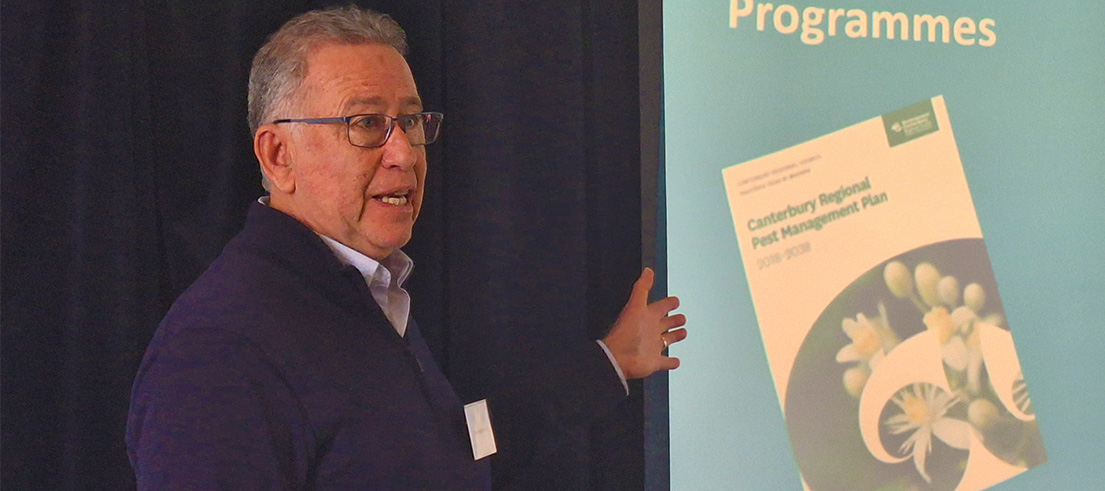
Members, a mix of new and returning representatives, met in July for an induction day at Dunsandel Community Centre. The day included presentations from Environment Canterbury Principal Biosecurity Advisor Laurence Smith, Wallaby Programme Leader Brent Glentworth, and PhD researcher Jazmynn Hodder-Swain, who shared insights into the values that influence pest management decisions.
Community members bringing their experience
The groups’ members come from a wide range of backgrounds but share a common interest in protecting Canterbury's environment from pest plants and animals.
Member: Tommy Copeland
New member Tommy Copeland, a Lincoln University ecology PhD student, volunteers on environmental projects across the region, including pest trapping programmes that protect native birds.
“I thought it would be good to join a Biosecurity Advisory Group to meet other people who also have interest in the region and its biosecurity. I think a lot of change starts locally, so just meeting people and trying to figure things out for our region and just taking things one step at a time - it sounded like a cool group to do that.”
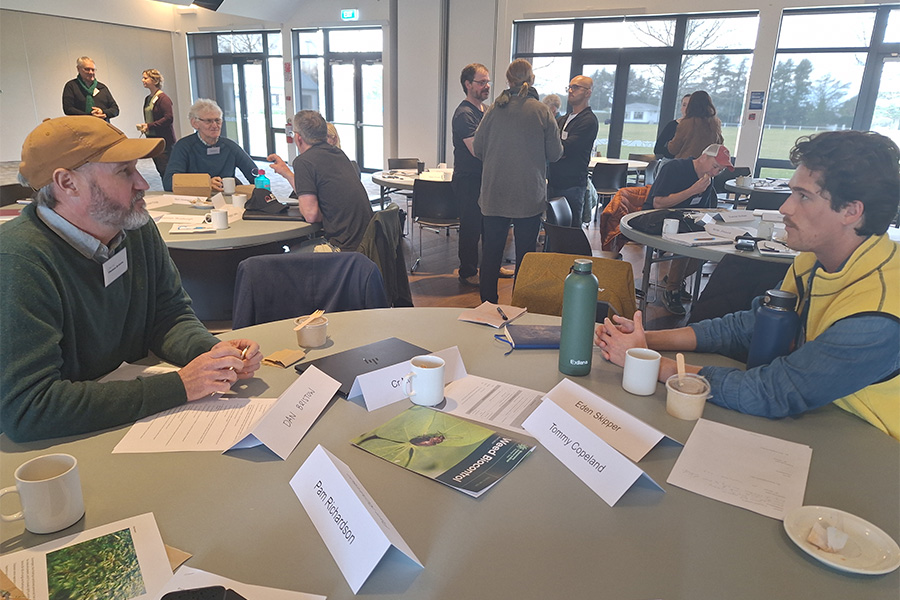
Daniel Bristow and Tommy Copeland are new members of the Biosecurity Advisory Groups
Member: Daniel Bristow
Daniel Bristow, another new member, said he’s done a lot of biosecurity work as a “lone wolf” in the past. His area of interest is Banks Peninsula, where he’s recently bought a former forestry block, which he’s in the process of restoring by eliminating weeds like wilding pines.
“I saw this opportunity to apply for the advisory groups, and I saw it as an opportunity that maybe I could find a way to contribute even more than just working on my own and doing my own thing.”
Member: Shannon McAleer
Returning member Shannon McAleer is beginning his fourth year and second term with the Central Biosecurity Advisory Group. He works for the Isaac Conservation and Wildlife Trust and is involved in several community pest-trapping initiatives. His interests include wilding pine control in the Craigieburn area and managing exotic pest plants.
"Why I joined was out of curiosity, but why I've stayed on is that I act as a conduit between the discussions we have in the group with Environment Canterbury, the community groups that I'm involved with, and my work. It's about information travelling between groups. That's what my role is."
What Biosecurity Advisory Groups do
Each Biosecurity Advisory Group includes community members, up to one representative from each Papatipu Rūnanga, an Environment Canterbury councillor and up to two city or district council representatives.
The groups help inform Environment Canterbury's pest management work, support delivery of the Canterbury Regional Pest Management Plan and strengthen links between communities and regional biosecurity programmes.
Supporting Canterbury’s biosecurity future
As biosecurity challenges continue to evolve, the Biosecurity Advisory Groups will play an important role in strengthening connections between communities, local government, rūnanga and Environment Canterbury. Their knowledge and experience will help ensure local perspectives remain at the heart of decision making.
See how local voices shape biosecurity decisions: Learn how the Biosecurity Advisory Groups work, who is involved and how they help shape pest management across Canterbury.