
New Courtenay floodgates boost flood resilience and fish passage near Kaiapoi
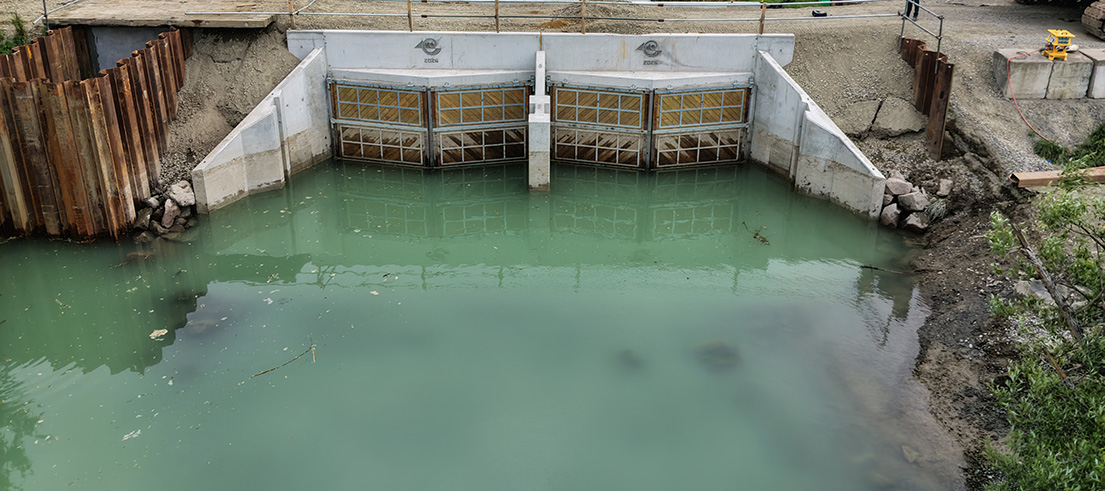
A project to replace the ageing Courtenay floodgates near Kaiapoi is nearly complete, improving flood resilience while creating better passage for native fish.
The existing structure dates from the 1940s. It suffered significant earthquake damage in 2011, caused by liquefaction and ground settlement.
The project involves removing the old structure and replacing it with a modern floodgate system designed to provide greater resilience for the future.
Regional Infrastructure Fund supports floodgate replacement
Construction began in February 2026 and is on track to be finished in November.
The $2.4M project received co-funding from the Government's Regional Infrastructure Fund, administered by Kānoa – Regional Economic Development & Investment Unit, and Environment Canterbury.
Community Preparedness and Response to Hazards Core Service Lead Councillor Ian Mackenzie said replacing ageing infrastructure is an important part of preparing for the future.
"We have an on-going programme of replacing our flood protection infrastructure to ensure it is fit for purpose and fully functional. Replacing this flood gate is an important part of that programme and will contribute to keeping our communities around the lower Waimakariri safe and dry."
How the Courtenay floodgates work
The gates operate automatically according to water levels. No mechanical operating system is required.
They sit where Courtenay Stream meets the Kaiapoi River, opening to let water drain out and closing when river levels or tides are high enough to push water back upstream.
The old gates required frequent debris clearing and exposed staff to risks associated with steep access, confined spaces, water and fast flows.
The replacement structure will improve the way floodwater drains from the catchment during high-flow events and reduce the amount of maintenance needed over its lifetime.
Improving fish passage while maintaining flood protection
The new side-hung gates will remain open for longer periods and provide a wider, more natural opening than the existing structure, improving fish passage for species such as īnanga (whitebait). While the gates still need to close during high tides to prevent flooding, the new design provides better passage opportunities than the existing structure.
Restorative planting is also proposed around the completed site, including planting intended to add īnanga spawning habitat while maintaining access and visibility for inspection
The stopbank walking and cycling connection is being retained over the top of the new structure, including the four-metre-wide stopbank crest.
Projects like the Courtenay floodgate replacement are helping modernise Canterbury's flood protection infrastructure, ensuring communities are better protected while delivering environmental benefits at the same time.