
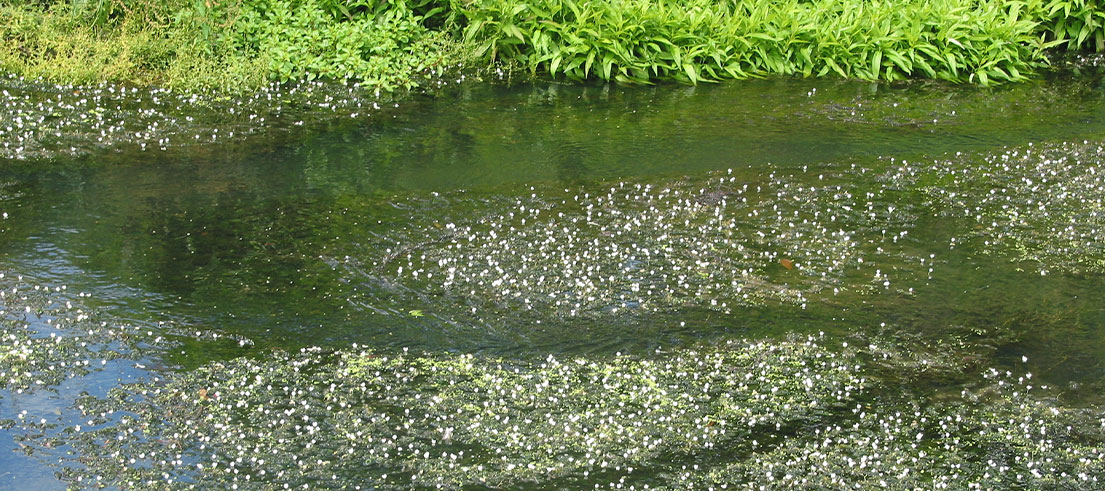
Taking on Canterbury's largest egeria infestation
Divers will be back in the Ōtākaro Avon River from 30 November to 17 December to tackle Canterbury’s largest remaining infestation of egeria, an invasive freshwater weed.
Canterbury Regional Council (Environment Canterbury) is working alongside Christchurch City Council and the Department of Conservation on the project. Divers will lay biodegradable hessian matting in targeted areas around Kerrs Reach to suppress Egeria and support its eventual eradication.
Work at a glance
- When: 30 November to 17 December 2026 (expected)
- Where: Around Kerrs Reach, Ōtākaro Avon River
- What: Divers will lay biodegradable hessian matting to control egeria.
- River access: The river will remain open. Keep clear of active dive areas and follow crew guidance.
Why we control egeria
Egeria is a freshwater weed that grows entirely underwater, forming dense beds that can crowd out native plants and alter freshwater habitats. The Ōtākaro Avon River infestation is the largest remaining population and presents a significant risk of spreading to other waterways across the region.
"This is a really important opportunity to tackle Canterbury's largest remaining egeria infestation," says Lauren Piket, Senior Biosecurity Officer.
"We’ve made good progress controlling egeria in recent years, and this next stage gives us the best chance to tackle the remaining infestation and prevent it spreading to other waterways."
Why we’re using hessian matting
The programme builds on years of control work, including diver hand-weeding and targeted herbicide treatments.
Hessian matting has been used successfully to suppress other aquatic pests and has been identified as the best option for tackling the remaining egeria infestation across a larger area while reducing reliance on herbicides.
The material blocks light, preventing egeria from growing, and naturally breaks down over time.
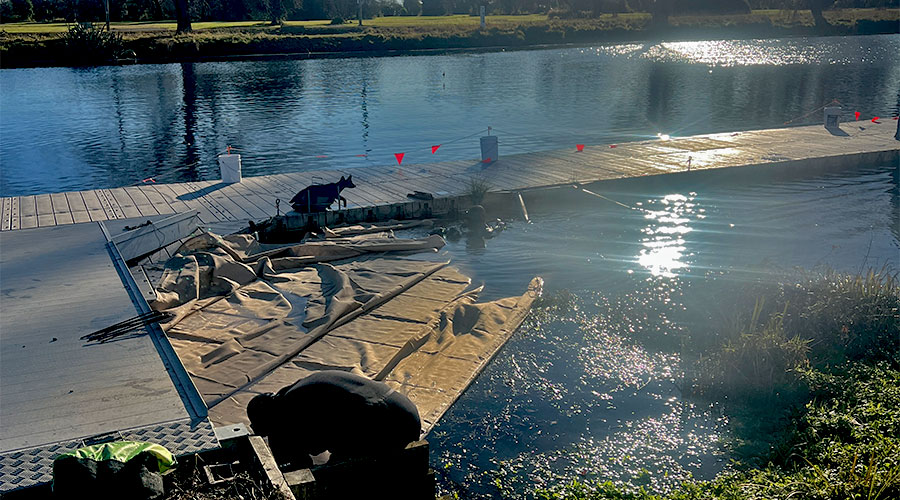
Divers install hessian matting to control egeria
What river users need to know
River users can expect to see divers working in the water, laying and securing the hessian matting on the riverbed. Anyone using the river is asked to keep clear of active work areas and remain alert for dive flags. Under maritime rules, vessels must travel at no more than five knots when within 200 metres of a displayed dive flag.
“People will still be able to use the river while the work is underway, but they may need to slow down or adjust their course around active dive areas. We ask river users to keep a safe distance from divers and follow any guidance from crews on the water,” says Lauren.
“We appreciate everyone’s patience while we carry out this work.”
Protecting the Ōtākaro Avon River
The Ōtākaro Avon River is valued for its ecological, cultural, recreational and community importance. Protecting the river from invasive weeds helps support native biodiversity, mahinga kai values and the long-term health of the waterway.
"This project is about giving native plants the opportunity to thrive and protecting the values that make the Avon such a special place for the community," says Lauren.