
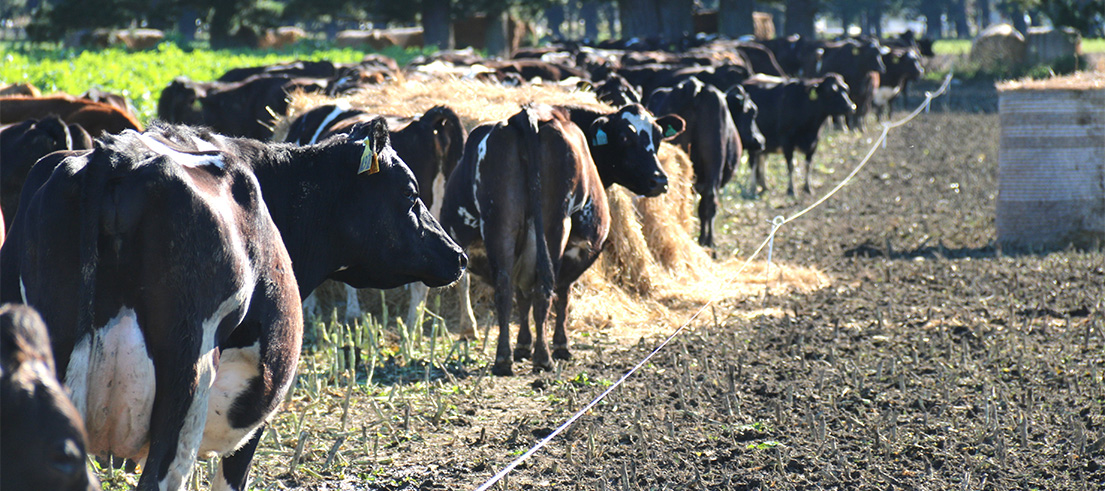
Winter grazing flights show improvements across South Canterbury
South Canterbury farmers are making great gains mitigating and managing the environment risks from winter grazing, our mid-season flyover showed.
Each year, our Water and Land team run monitoring flights to assess how well the environmental risks from winter grazing are being managed.
This year, we completed a pre-season and mid-season flight over South Canterbury. Last year, these flights were over Hurunui.
In early July, the mid-season flight followed a weekend that had delivered between 20-40mm of rain across much of the district. While there was plenty of surface water visible from the air, conditions were considered typical for winter.
Winter grazing monitoring shows positive results
Two of our land management advisors on the flight were accompanied by industry representative, Federated Farmers South Canterbury president Greg Anderson.
They were largely impressed with the winter grazing practices they observed and were particularly encouraged with farmers’ effort to improve paddock selection.
Staff noted that the benefits of better paddock choice were especially evident following the recent rainfall, with many paddocks performing well despite wet conditions.
Some of the strongest examples of good practice were seen around Waimate and Waihaorunga.
The flights also highlighted widespread use of strategic grazing practices, including grazing from the top of slopes downwards to help minimise runoff and soil movement.
This approach, alongside improved paddock selection, is helping farmers better manage challenging winter conditions.
Our land management advisors followed up with a small number of farms and said farmers were very receptive to being contacted. Farmers were interested in learning more about alternative wintering options and further improvements they could make on farm.
Opportunities for further improvement
While the overall picture was positive, the flights also identified some areas where further gains could be made.
Greater use of portable troughs could help reduce stock pressure around fixed watering points and improve paddock management during wet conditions.
Staff also observed several areas losing soil and sediment through low points and valley floors, particularly in Timaru Downlands.
Upon further observation it was noted that this was not due to winter grazing but served as a reminder that sediment loss can occur across a range of farming systems and land uses during wet weather.
Under the national winter grazing regulations, CSAs must remain in grass (not cropped or grazed) and fenced from stock during the winter grazing period from May 1 to September 30.
Our land management advisors stressed the importance of ensuring a 5m buffer from CSAs to waterways. This is a national regulation that must be followed, so farmers need to make sure it’s part of their 2027 winter planning and preparation.
Time to plant catch crops
Providing weather conditions are sufficiently dry, farmers should take advantage of the opportunity to plant catch crops and ensure ground cover before the end of winter.
Principal farm systems advisor Sarah Heddell said many grazed paddocks are already at the stage where catch crops could be over-sown.
"We'd encourage farmers to keep using back-fencing where appropriate and start thinking about sowing winter-tolerant species to cover bare soil, particularly in winter feed paddocks that have been heavily grazed,” Sarah said.
Planting catch crops and ensuring ground cover as soon as conditions allow can help protect soil, reduce erosion risk and support paddock recovery heading into spring.
Supporting sustainable farming
Winter grazing flights form part of Environment Canterbury's wider programme of education and support, helping farmers maintain productive farming systems while protecting the region's natural resources.
Environment Canterbury will continue working alongside farmers and industry partners through the remainder of the winter grazing season to promote good practice and support continuous improvement.