
Flood risk is real, and it's growing
Environment Canterbury Chair Dr Deon Swiggs has acknowledged communities hit by this week's flooding and reaffirmed the region's commitment to sustained investment in flood resilience.
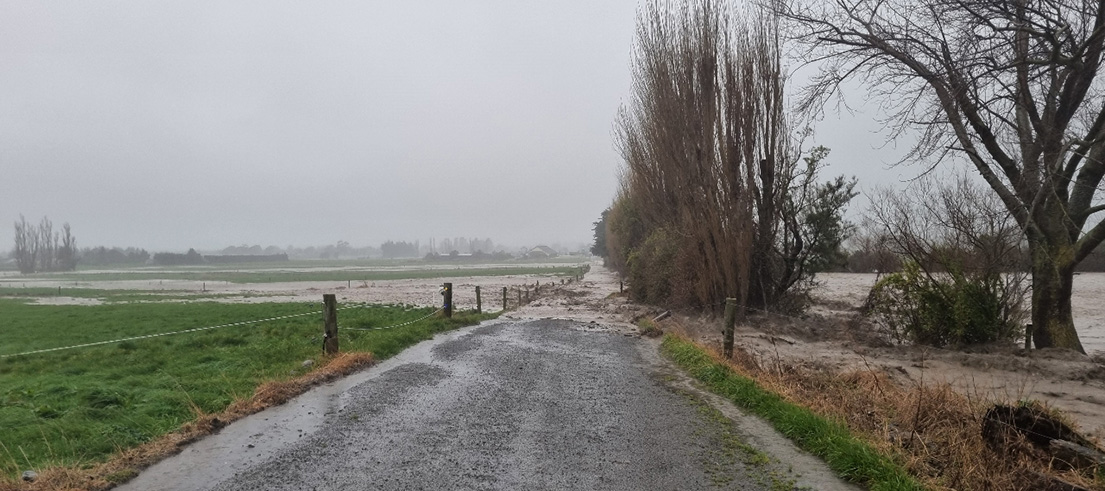
States of emergency were declared this week in Waitaki and Kaikōura, with homes evacuated and major routes including State Highway 1 closed.
"My first thoughts are with everyone affected - the households who had to leave their homes, the farmers moving, and losing, stock, and the communities now facing the clean-up," Chair Swiggs said.
"I want to thank our emergency responders, volunteers, and everyone at Takahanga Marae and other centres who opened their doors. Canterbury looks after its own, and that's been on full display this week."
"Environment Canterbury's teams have worked alongside Civil Defence throughout, and our focus now turns to supporting affected communities through recovery."
Flood resilience is important
Chair Swiggs said this week's events reflect a challenge many Canterbury communities are already living with.
"Flooding isn't a future problem for our region. It's here, and it's being felt by real communities right now. Continued investment in flood resilience is how we protect homes, roads, water services and farmland from the next event."
New research by Earth Sciences New Zealand released this week, commissioned by the New Zealand Infrastructure Commission Te Waihanga, found that annual inland flood damage to infrastructure is expected to grow significantly across the country over the coming decades.
It is projected to increase from around $300 million nationally in 2025 to almost $465 million by 2075. Canterbury is forecast to experience some of the highest total flood losses in the country by 2075, totalling around $113 million.
"These are book-value estimates under one credible scenario, and they exclude landslides and future growth so, if anything, they understate the challenge," Chair Swiggs said.
"But they confirm what this week has shown us: flood risk is real, it's growing, and sizing it properly is how we make good investment decisions."
Appropriate investment up front
Chair Swiggs said appropriate resilience investment should be understood as protecting infrastructure, not competing with it.
"There's a view that money spent on resilience is money taken away from roads and water services. But resilience is how you protect those assets. When we don't build resilience in, we risk trapping communities in an expensive cycle of damage, recovery and repair.
"The real choice isn't resilience versus core services. It's paying once, now, to build things properly, or paying more later, after the damage is done - often with ratepayers and the Crown picking up the recovery bill. Every dollar invested in preparedness can save around four dollars in recovery costs.”
Chair Swiggs says this week is a live example of what the alternative looks like.
"Good stewardship of ratepayer money means investing where the evidence says the risk is, not defaulting to the cheapest assumption and hoping the next event holds off. The right response will differ by catchment, and it has to be practical, evidence-based and affordable. But the direction is clear."
For now, the focus remains on the communities still dealing with this week's flooding.
"Recovery comes first. But the lesson from this week is one we can't afford to set aside, the time to invest in resilience is before the next event, not after it.”