Wilding pines spread fast and keep coming back if seed sources aren’t removed.
Without ongoing control, they damage biodiversity, water resources and landscapes across Canterbury.

Wilding pines are one of the most serious invasive pest plants affecting Waitaha Canterbury. This page explains what wilding pines are, why they spread so quickly, the impacts they have on land and ecosystems, and why early action is critical.
Wilding pines are species of conifer that have self-seeded and are growing where they shouldn't.
Exotic conifers, including pines, were introduced to Aotearoa New Zealand for use as timber, shelter and erosion control. They adapted well here and grow and spread too quickly creating dense infestations.
Not all conifer species are a problem in this region - some are more spread-prone and invasive than others.
Ten introduced species of pine, fir and larch are responsible for most of the wilding problem we have in Waitaha Canterbury. These introduced species are responsible for most wilding pine spread in Waitaha Canterbury.
| Common name | Scientific name |
|---|---|
| Bishops pine | Pinus muricata |
| Contorta (lodgepole) pine | Pinus contorta |
| Corsican pine | Pinus nigra |
| Douglas fir | Pseudotsuga menziesii |
| European larch | Larix decidua |
| Maritime pine | Pinus pinaster |
| Mountain pine and dwarf mountain pine | Pinus mugo and P.uncinata |
| Ponderosa pine | Pinus ponderosa |
| Radiata pine | Pinus radiata |
| Scots pine | Pinus sylvestris |
They are an extremely invasive pest plant - their seeds can travel on the wind for many kilometres, and they grow quickly and spread exponentially.
There are economic, social and cultural impacts of wilding pine spread in Canterbury/Waitaha including:
Unlike well-managed plantation forests, wilding pine infestations are rarely a usable resource. Once wilding pines establish at scale, they are costly and difficult to remove, and landscape change can be long-lasting.
Unless we work together to prevent their spread, it’s estimated that more than 25 per cent of New Zealand could be covered by dense wilding infestations within 30 years.
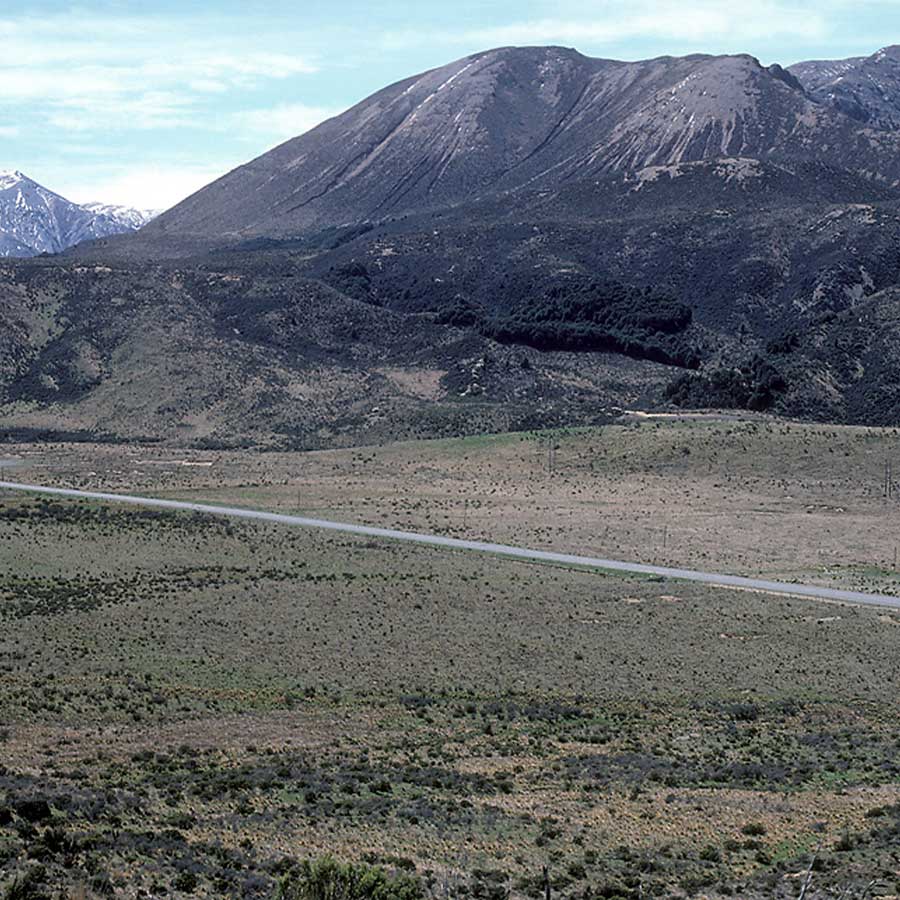
Pine spread on SH73 in the 1970s
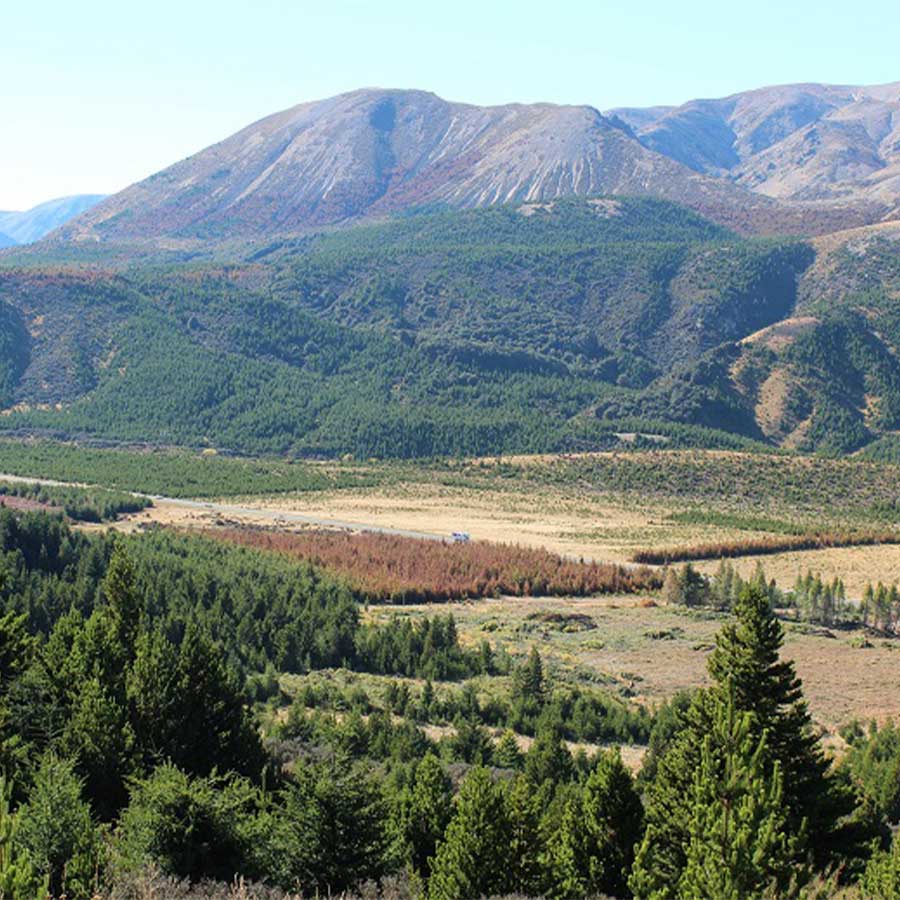
Pine spread on SH73 in 2012
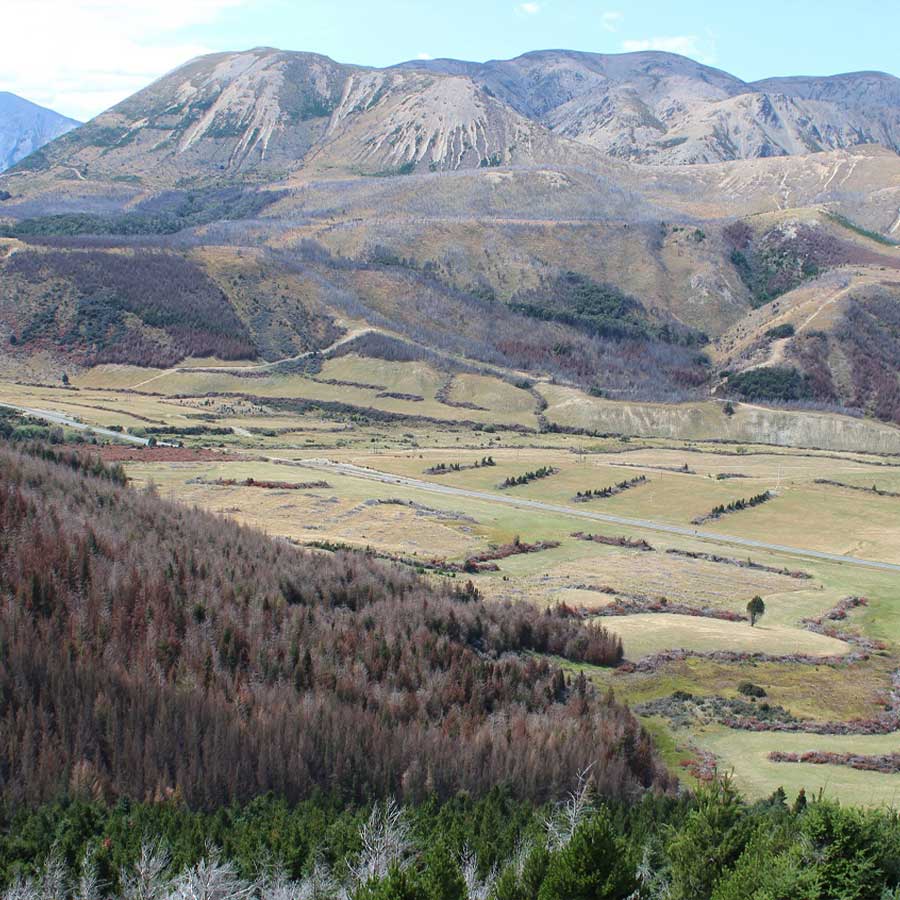
Pine spread on SH73 in 2018
Pines are woody plants that have cones instead of flowers. You can identify pine species by the appearance of their needles, cones and bark using the Wilding Conifer Quick ID Guide.
For more in-depth information, visit the New Zealand Plant Conservation Network's website via the links below.
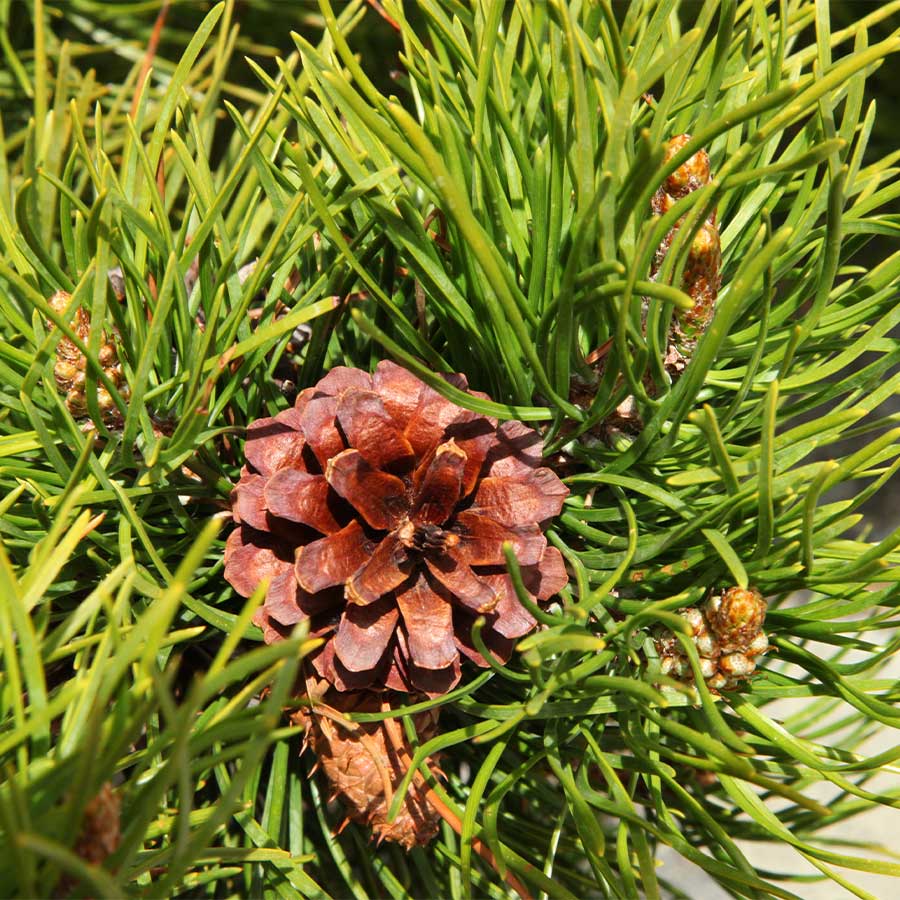
Lodgepole pine
Pinus contorta
Large shrub or small to medium-sized tree (sometimes large in cultivation); habit erect or spreading. Branches straight or somewhat twisted. Bark reddish-brown, grey on surface, fissured and forming small plates.
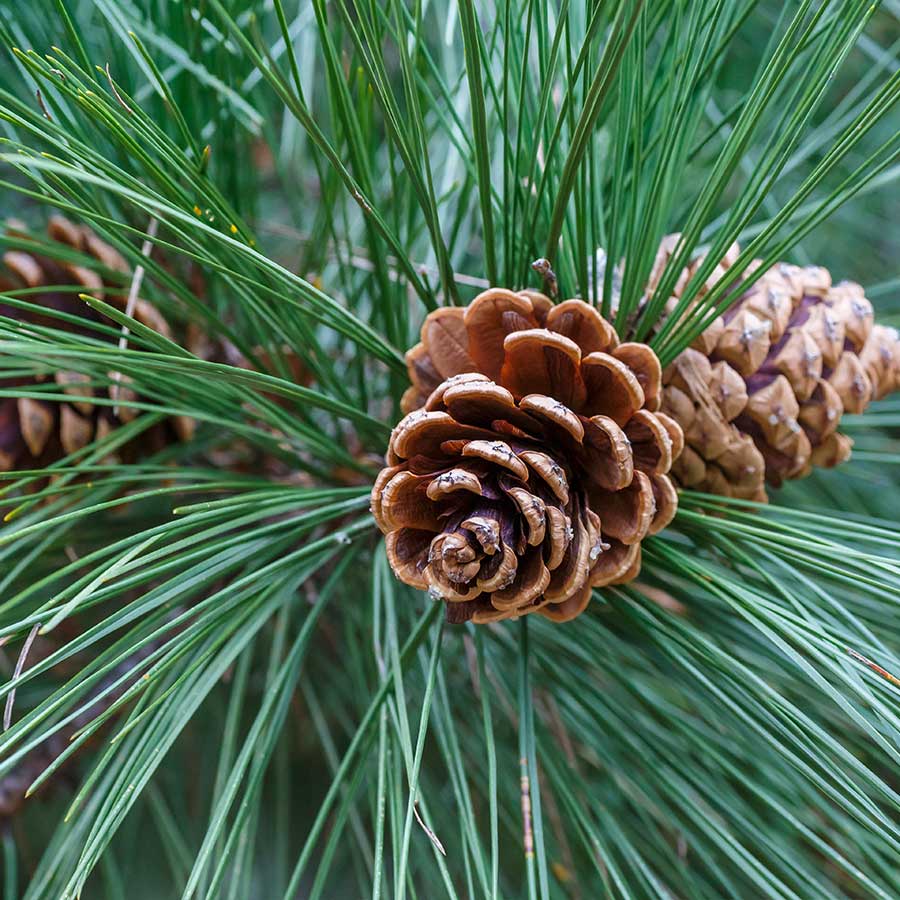
Corsican pine
Pinus nigra
Tall tree to 40 m with open-branching habit. The dark brown bark is fissured and forms scaly plates.
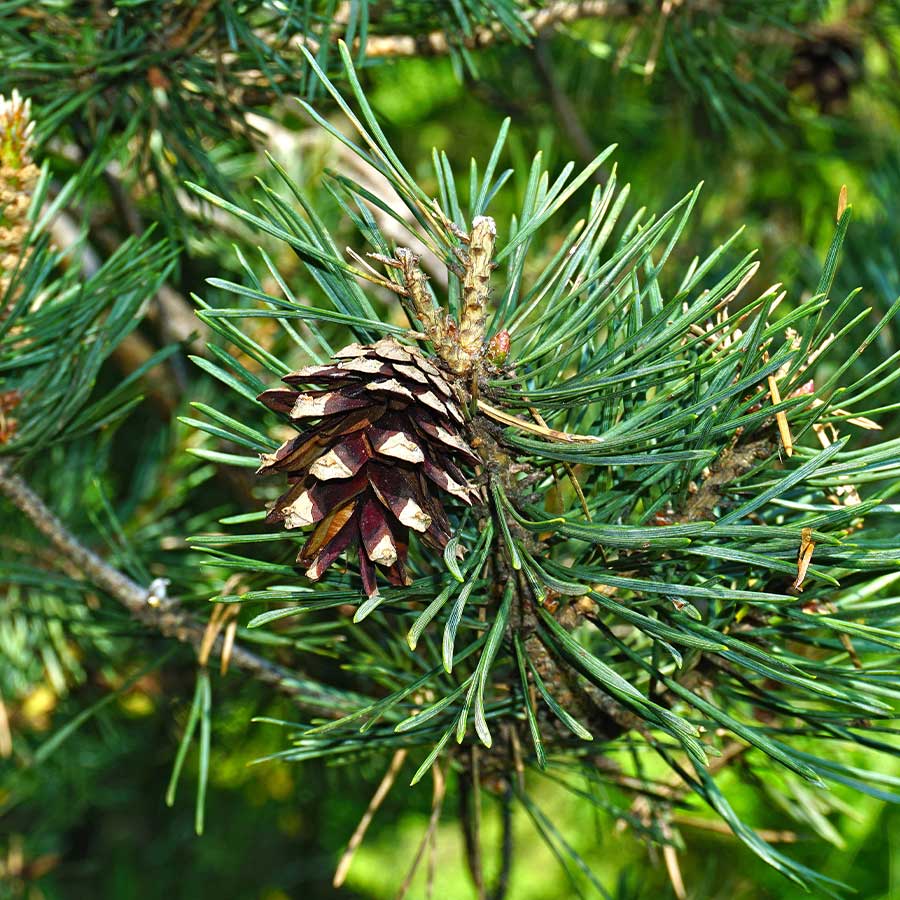
Scots pine
Pinus sylvestris
Medium sized tree reaching about 35 m. Needles are stout 2.5-7 cm by 1-1.5 mm, in bunches of 2.
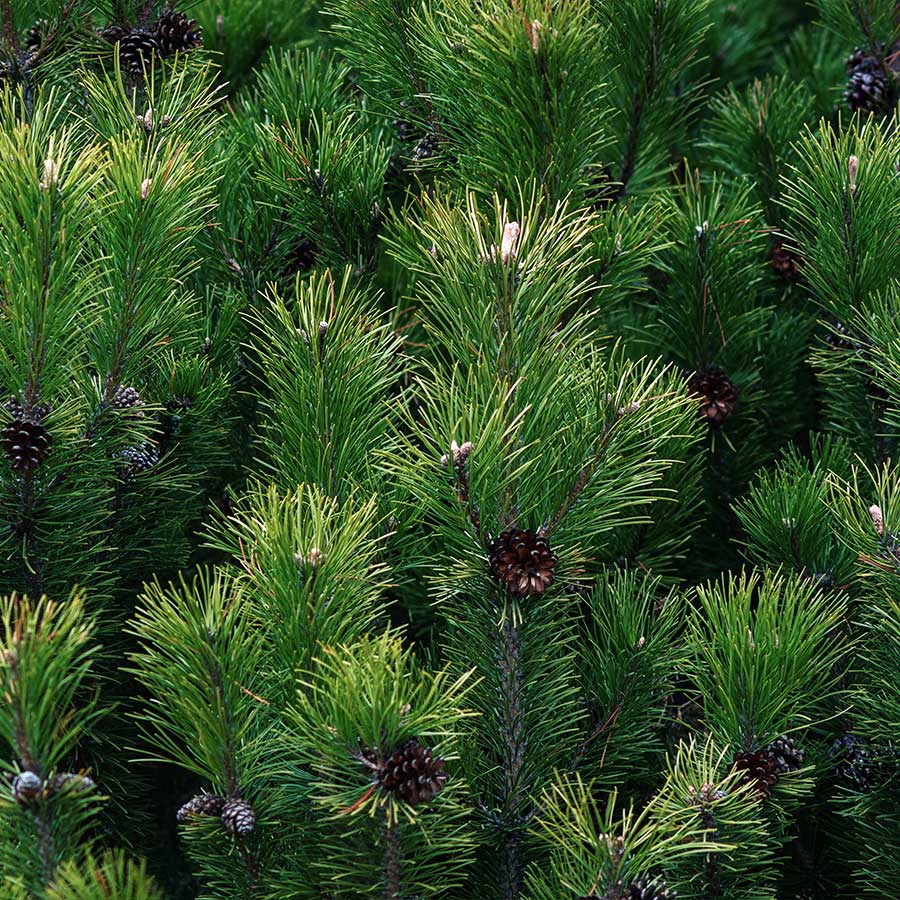
Mountain pine
Pinus mugo
Small tree or multi-stemmed shrub. Dark green rigid leaves, more or less curved but not twisted.
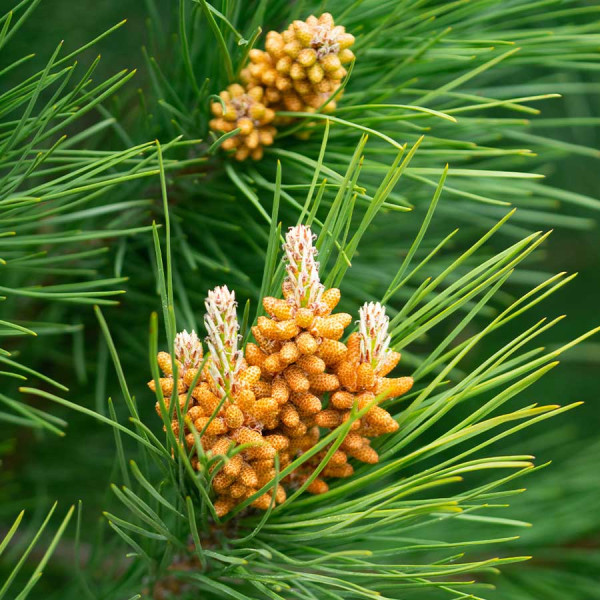
Radiata pine
Pinus radiata
Medium to large tree. Needles are slender, 15 cm long, deep or dark green and held in bunches of 3.
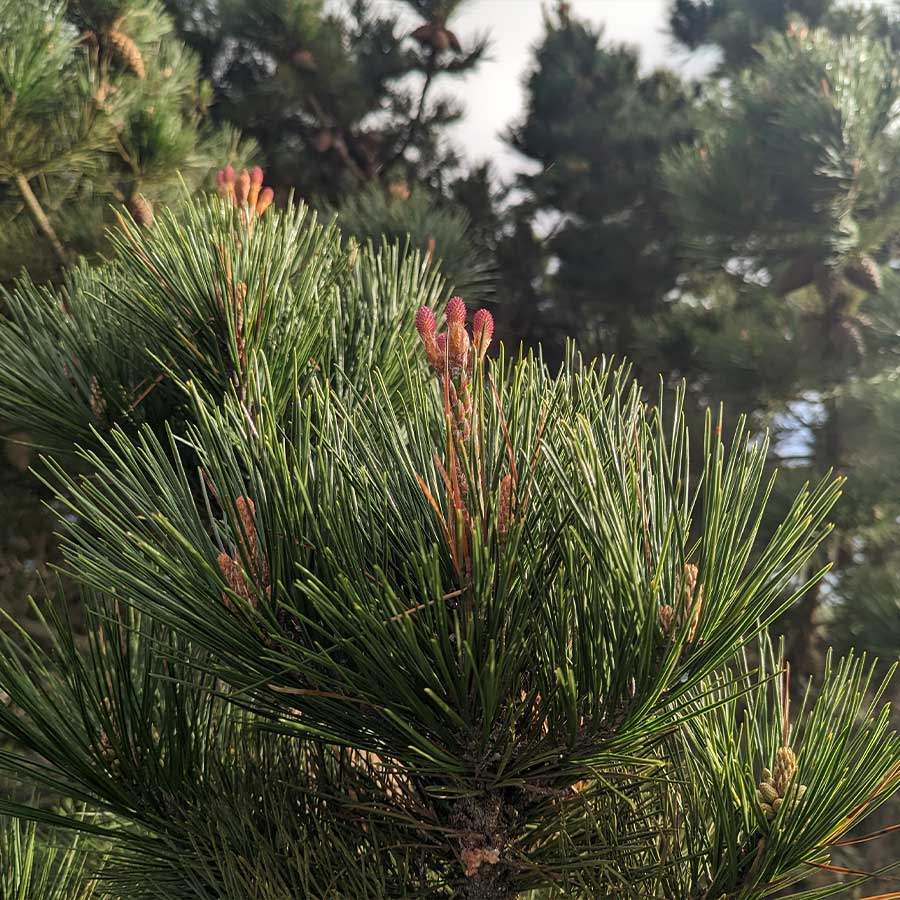
Bishops pine
Pinus muricata
Medium sized tree up to 25 m high with straight trunk, and spreading or slightly drooping branches.
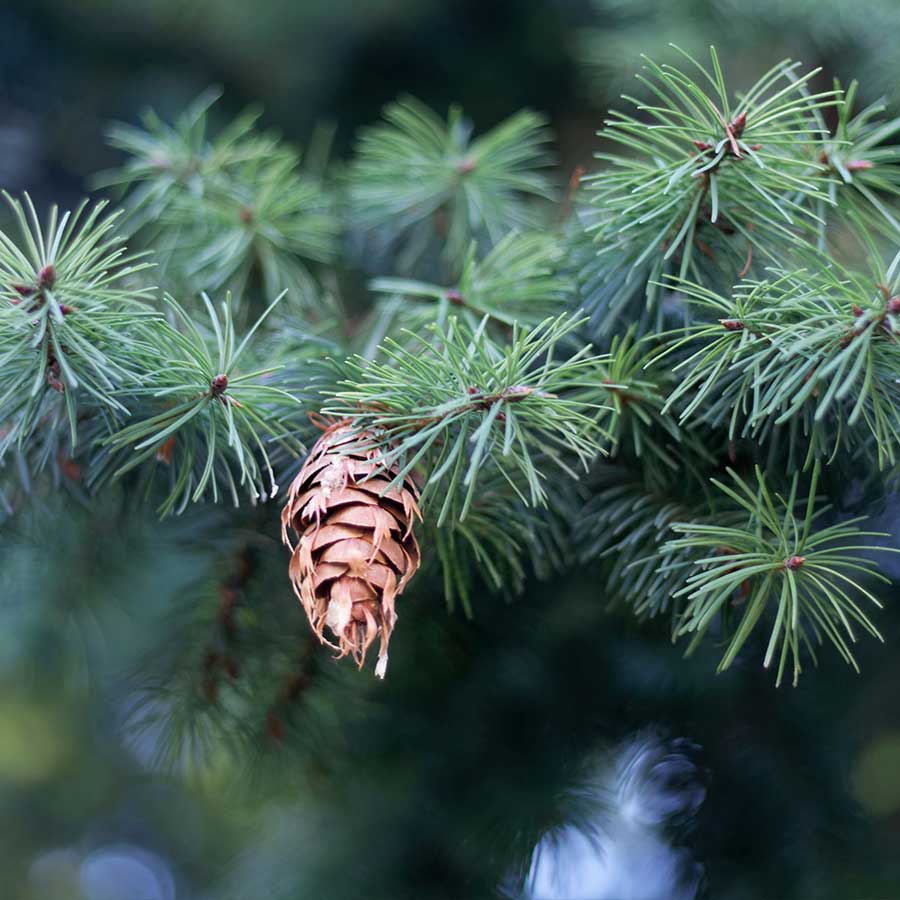
Douglas fir/Oregon pine
Pseudotsuga menziesii
Very large evergreen tree. Bark thick, reddish-brown beneath, rough and furrowed when mature.
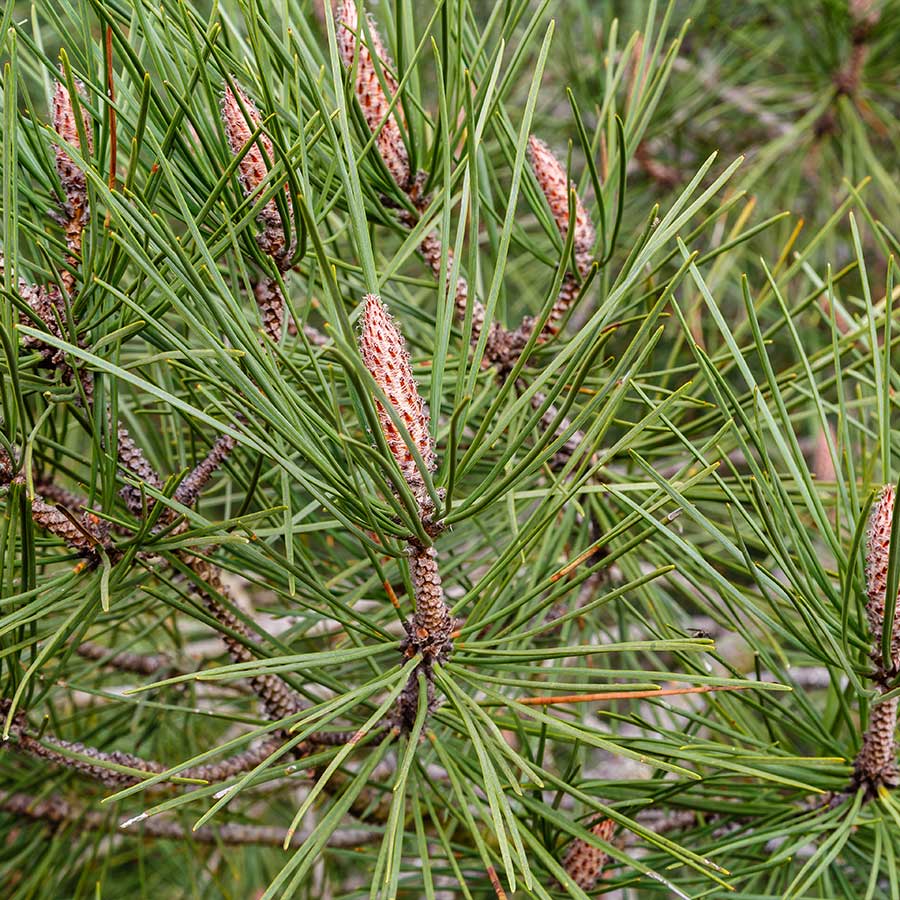
Maritime pine
Pinus pinaster
Medium-sized to large tree with open crown, the stout trunk becoming bare of branches for most of length.
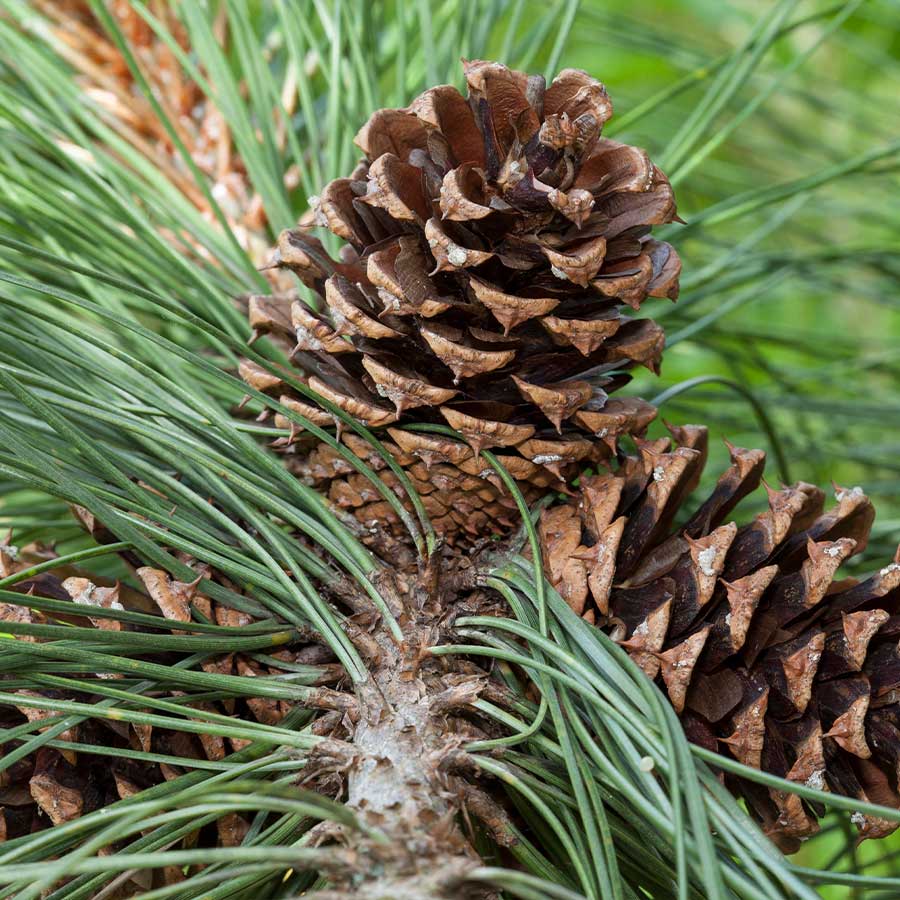
Ponderosa pine
Pinus ponderosa
Medium to large tree. Needles are 25 cm long, rigid, dull-green, in bunches of 3, projecting forward.
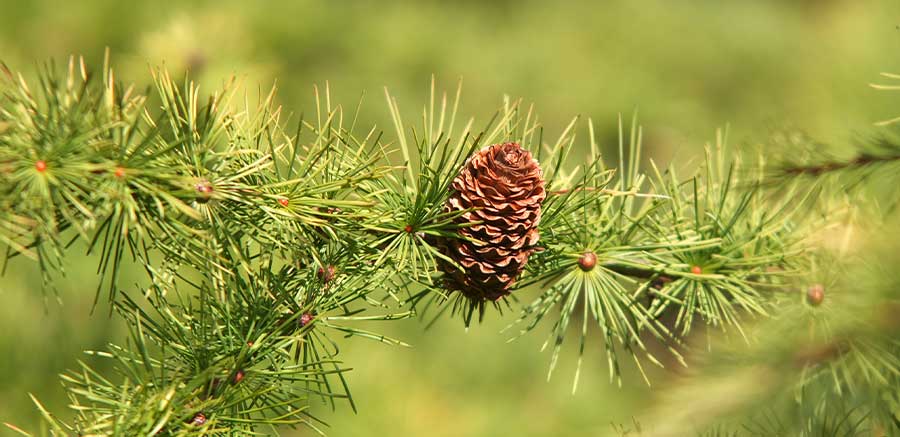
European larch
Larix decidua
Open-branching deciduous tree to up to 43 m tall. Needles are grass-green, 4 cm long held in dense whorls of 40-65. Male cones are yellow; female cones are crimson red, maturing to brown.