
Fish rescue advice
In our waterways, fish may face distress due to natural factors or human activities. If you encounter stranded or distressed fish, follow these basic steps - and remember to put your safety first.
Fish can become distressed for many reasons, both naturally occurring (like weather conditions and during peak migrations to and from the sea) and as a result of human activity, such as changes to water courses or chemical spills.
These events can happen in remote waterways and help from trained staff may not be nearby.
If you come across fish (including tuna/eel) that are stranded, dead or appear unwell, here are some basic steps you can take.
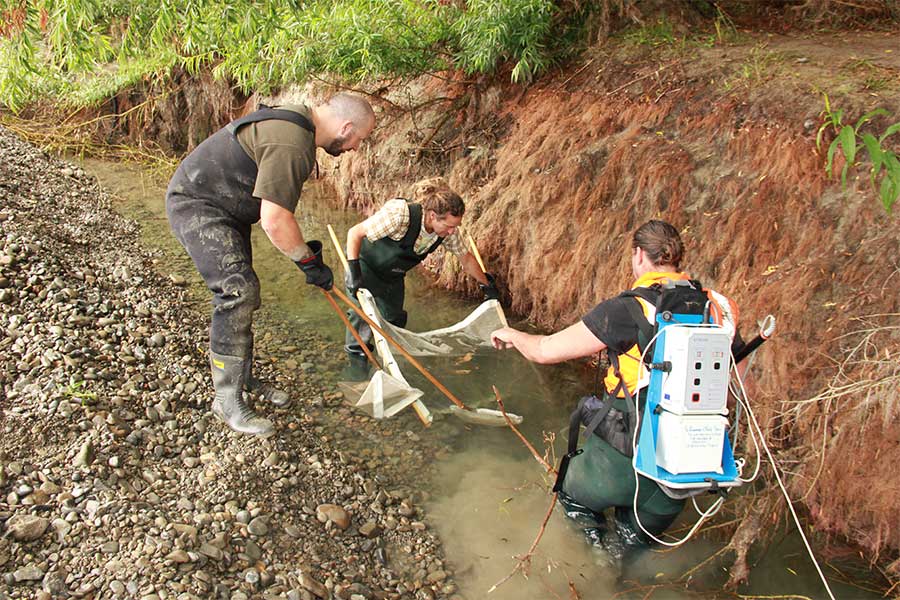
Tuna/eel relocation in the Ashley River
Report
Call our incident response line by phone on 0800 765 588 (24/7) as soon as possible.
To help the team assess the situation, share as much information as you can, including:
- Where you are - waterbody name and your exact location
- Number, type and size (adult or juvenile) of fish stranded if known
- How many fish are alive and/or dead
- Estimated time until water disappears entirely e.g. if river or lake is drying up
- Possible cause of the problem if known
- Your contact details
The call centre team will then assess the incident and may organise a response, which will depend on location, the severity of the incident, weather conditions, and staff availability.
Identify
Try to identify what might be causing the problem.
If there’s a possibility that pollution has occurred – like a discharge of chemicals into the water – do not handle the fish as this could be a risk to your health.
If fish have become stranded due to a river or lake drying up or a waterway changing course, you might be able to help rescue or relocate fish.
It’s important to know that fish distress can increase under the following conditions:
- high heat and sun exposure
- low oxygen levels and high pH
- exposure to chemical pollutants (e.g., paint, oil)
- time fish are out of water when handling them.
If you can’t identify the cause of the problem – do not handle the fish.
Rescue
If safe, take action to rescue fish without causing them further harm.
Remember, if you can’t identify the cause of the problem – do not handle the fish in case you are exposed to a pollutant.
If it’s safe, priority should be given to relocating stranded fish to suitable safe water. This should be within the same waterway, in an area with more plentiful water.
Useful gear for this task includes buckets, dip nets/ hand nets and also a bubbler (aerator) if one is available.
Tips for relocating fish:
- First, fish should be placed in buckets filled with clean water - wherever possible they should not be removed from water.
- Be careful with juveniles and fragile fish species that are more vulnerable to handling than other fish. Always use wet hands when handling fish to protect their skin.
- Containers holding fish should be placed under shade or sheltered to avoid stress due to exposure to sun and heat.
- Collected fish should be returned to a safer area in the same stream/ river that has deeper and more persistent water/space.
- Do not return any dead fish to the water (dispose via landfill)
Need help?
If in doubt, call incident response on 0800 765 588 (24/7) for further information.
Other organisations who often support fish rescue events include Fish and Game Council NZ, local Ngāi Tahu papatipu rūnanga and the Department of Conservation.