
From water quality monitoring and biodiversity protection to wetland restoration and sustainable land management, Environment Canterbury works alongside farmers and communities to support resilient farming systems and healthy waterways across Waitaha Canterbury.
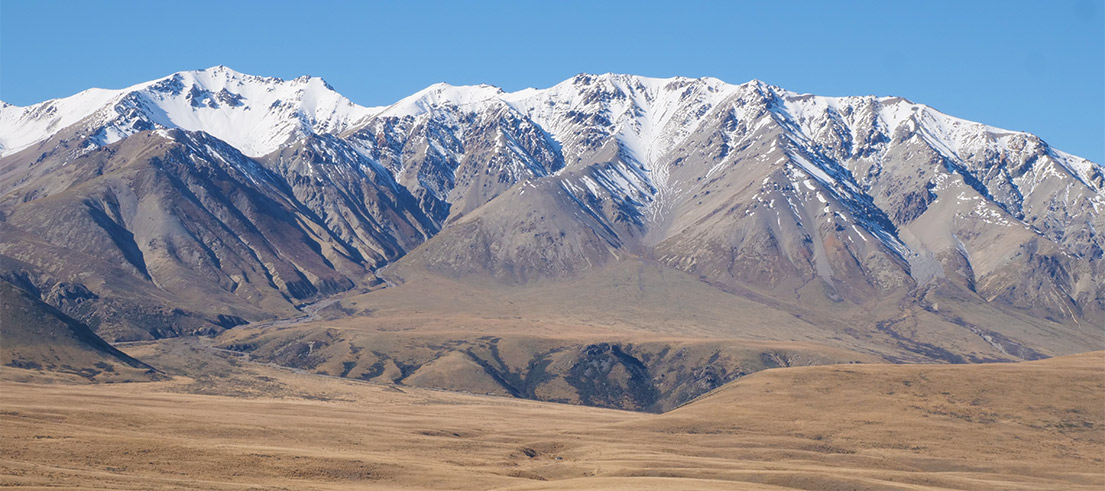
Award-winning Canterbury farmers open gates for high country field day
Award-winning Canterbury high-country farmers Paul and Kerry Harmer welcomed more than 100 guests to Castle Ridge Station to share ideas on sustainable farming, water quality, conservation and the future of farming in the Hakatere catchment.
The Harmers are strong believers in the value of quality data in making evidence-based decisions and as the tour progressed, their ‘farm-pedia’ knowledge had you believing that it’s possible to know every inch of a 6000Ha farm.
Steeped in farming and local rūnanga history, the Hakatere catchment is “perhaps the most studied and modelled in New Zealand,” Kerry said later.
“This catchment has been under the microscope, but that has given us opportunities like today, to share our work and ideas.”
There have been other benefits too, as emphasised by their neighbour Donald Whyte.
“Working as part of the catchment group has rekindled the high-country farming culture and helped strengthen connections among the farming community in the face of regulatory pressure and scrutiny,” Donald Whyte said.
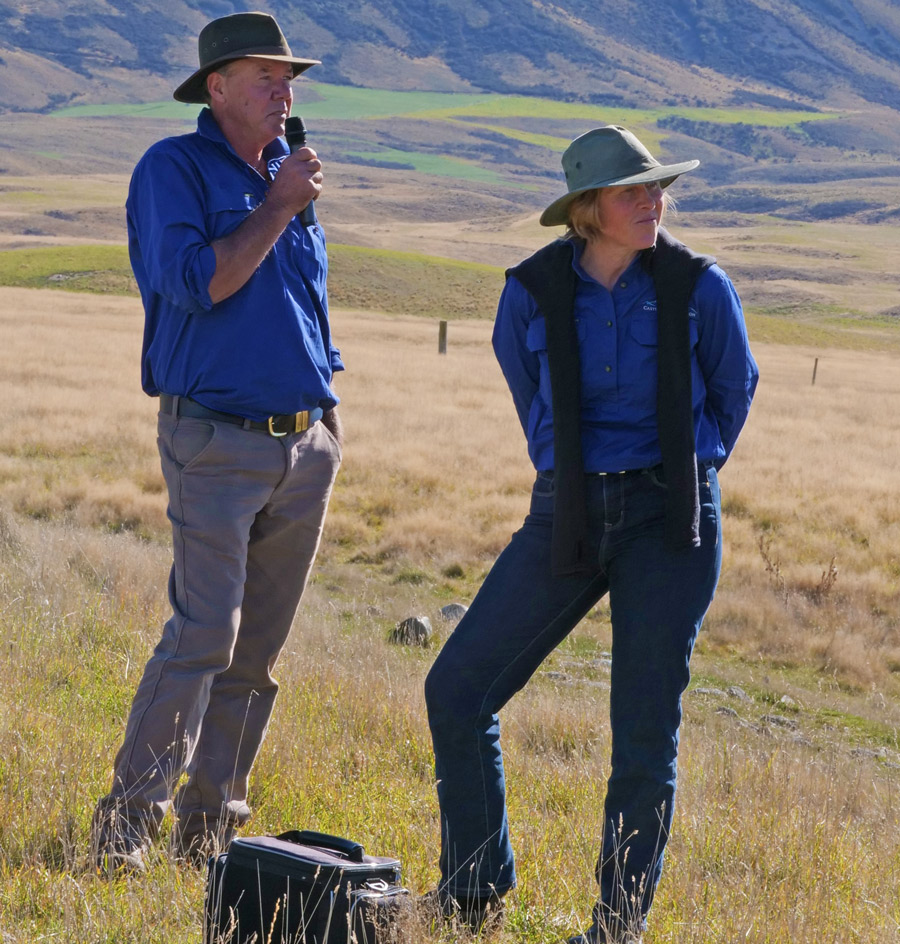
Canterbury high-country farmers Paul and Kerry Harmer
A journey into the high country
Having been asked to take it easy and avoid a "Le Mans start", a procession of utes and flat decks snaked their way deeper into the valley, past beautiful, black Angus cattle.
The rounded hilltops surrounding the valley are a reminder of the ancient glaciers that once sculpted this high-country landscape.
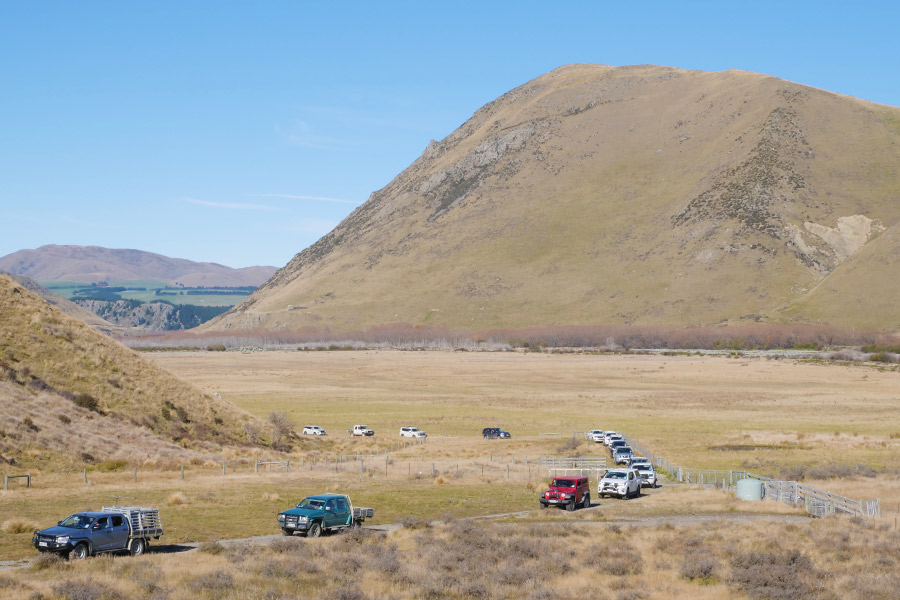
Vehicles make their way through the Canterbury high country
Farming goes hand-in-hand with conservation
Much of the Castle Ridge property is adjacent to the neighbouring Hakatere Conservation Park. Feral deer and pigs can be a threat to native regeneration and biodiversity on both the station and in the park, and targeted hunting helps manage both.
An active predator trapping programme also helps protect ground-nesting birds from smaller pests like possums, mustelids and rats.
Working closely with the Department of Conservation, the Harmers have been doing their bit for biodiversity and flood management by controlling grey willows, gorse and broom that once plagued the river margins, where the effective control of plant pests now enables the river to flow more freely.
Besides the Harmer whānau, Castle Ridge Station is home to 15,000 sheep, 700 black Angus beef cattle and 230 deer and while that might conjure images of crowded paddocks, a deliberately low stocking density gives the Harmer’s animals the space they need to thrive and allows them the flexibility to respond in dry years when the grazing is thin and supplementary feed expensive.
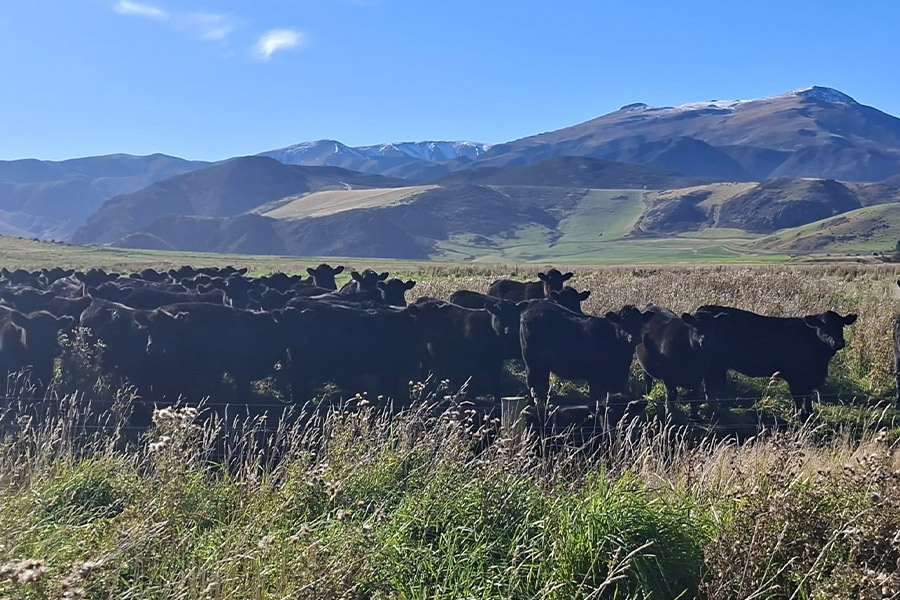
Prime Angus cattle on the Hamers’ high country farm
Using water data to guide farming decisions
Large areas of high-country flats have been investigated for suitable groundwater monitoring sites. Investigation has included digger work as well as ground-penetrating radar to learn more about the exact origins and flow patterns of groundwater in the catchment
The literal ‘high point’ of the farm tour took us to Isolated Hill, which looks down on the Lake Emily and Lake Heron, and on the wetland that will provide the testing ground for their latest ambitious nutrient management project.
As stated earlier, water quality monitoring data is how the Harmers know their mahi is making a difference, and Kerry reels off water-testing data from more than thirty of the farm’s own water-testing sites on feeder streams across the farm, including those above the newly consented ‘constructed’ wetland.
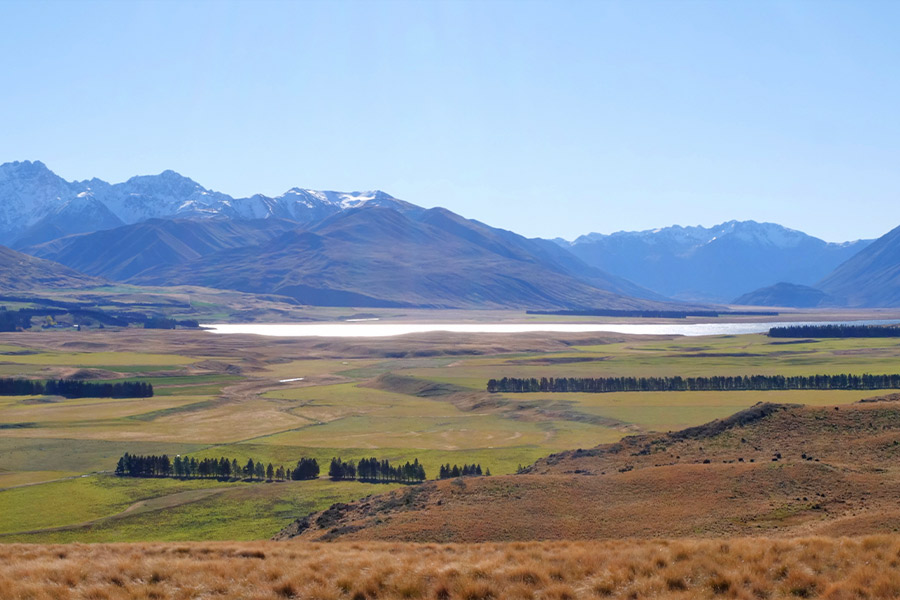
Views across Lake Heron and the upper Rakaia basin
“Real-time water testing is in place to monitor changes, with baseline levels established to help track what does — or doesn’t — work over the next five years, recognising that change takes time in the high country environment,” Kerry said.
Improving water quality through wetlands
It is hoped the new wetland will show how effectively a constructed wetland can remove excess nutrients and hopefully enhance the health of the lakes further down the catchment.
Having lauded the achievements of the Harmers, the Ōtūwharekai Working Group and the Ōtūwharekai Ashburton Lakes Catchment Group, Mark Fitzpatrick, Manager Land and Water at Environment Canterbury, acknowledged the challenges of farming in this iconic and unique environment.
“Our goal of developing faster, simpler consent processes will enable more to be spent on real on-the-ground beneficial changes in future,” he said.
The tour ended with the up-and-coming Harmer generation giving a short talk about their achievements in sheep genetics and the development of a top-class “Golden Fleece”-winning wool clip.
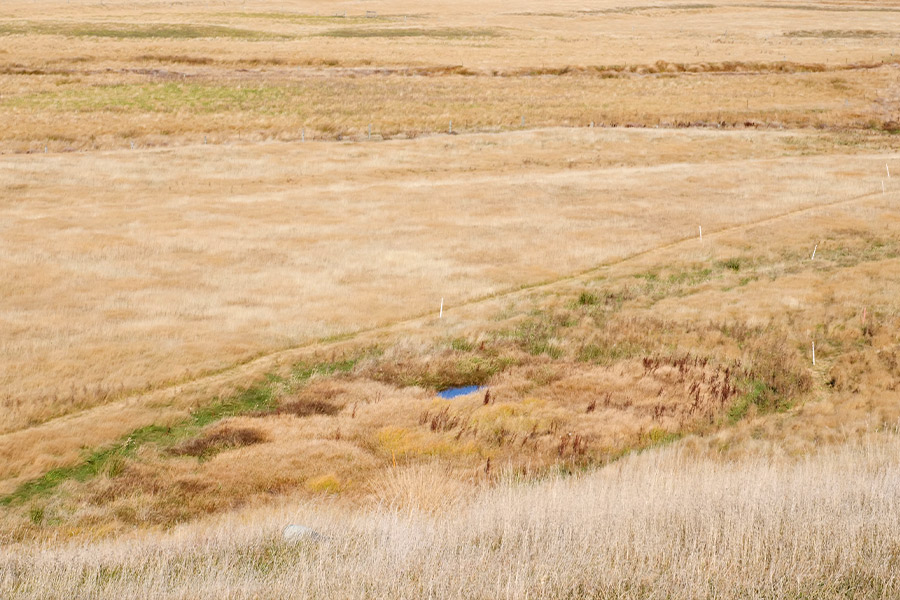
An emerging wetland area on the Hamers high country farm
Breeding for resilience and wool quality
Ben Harmer and his partner Kate spoke about their work to improve stock resilience through selective breeding.
“From an elite mob of 150 sheep, we kept and bred from those that were least susceptible to foot problems on soft and wet high-country ground,” Ben said.
Another of the younger Harmers, Sam, spoke with knowledge beyond her years about how to produce the highest quality wool:
“Our motivation includes huge pride in our wool. a large amount of which goes to Icebreaker, who will accept only the best.
“A 10-year contract with them is testament to our ability to produce wool of a consistent and sustained high quality that is soft-handling, but with enough strength for knitting/weaving premium products.”
She stressed the importance of blade shearing, which is less stressful for the sheep and leaves enough to protect them in the harsh late winter/early spring conditions.
It was genuinely a privilege and an education to meet the Harmers and to hear about how they continue to weather every challenge, and still run a thriving, award-winning business that sets a benchmark for sustainable, best-practice farming.
Farmers' hub
Learn more about sustainable farming and water management in Canterbury