
Fernside students speak up for braided river birds
When a group of Fernside School students learned that the birds living on their local braided river were in trouble, they didn’t just want to learn more. They wanted to help.
What started as classroom learning about the Rakahuri/Ashley River and its threatened birds grew into posters, a film and a petition signed by more than 1,000 people.
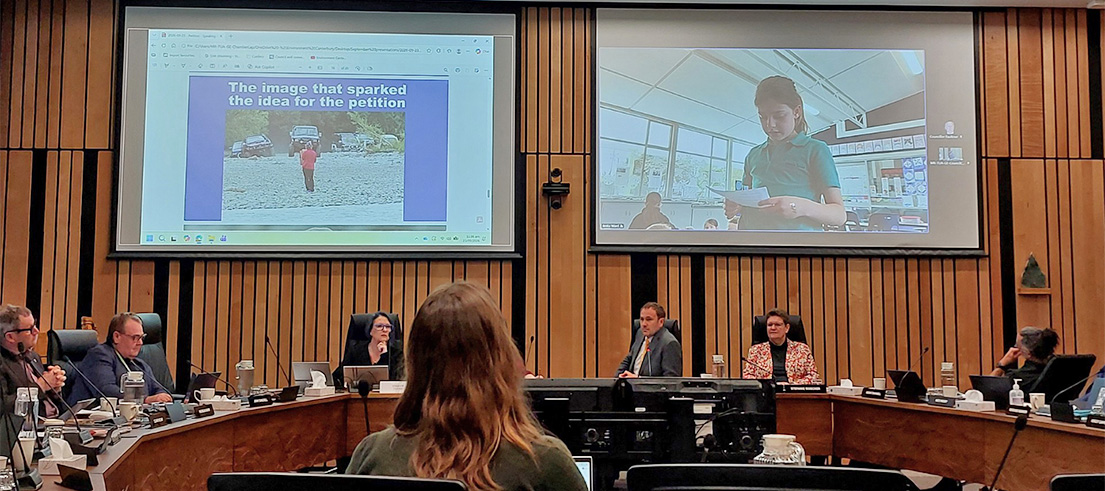
A group of eight Year 2 and 3 students took that message one step further, presenting their petition directly to Environment Canterbury councillors and asking for greater protection for braided river birds.
For the young students, it was the latest step in a journey that shows what can happen when learning turns into action.
From learning to action
The campaign began through the students’ Enviroschools learning, supported by Environment Canterbury Enviroschools facilitator Siobhán Culhane and the Ashley Rakahuri Rivercare Group.
The students explored their local braided river, the wildlife that depends on it and the pressures these species face. They were particularly drawn to the ngutu pare/wrybill, a threatened native bird that nests among the stones on braided riverbeds.
They learned that everyday activities, including dogs roaming through nesting areas and vehicles driving along riverbeds, can disturb birds or damage their well-camouflaged nests.
Rather than stopping at learning about the problem, the students decided to act.
They created posters, made a film about the wrybill that placed second in the Waimakariri Young Environmental Film Makers Competition, and launched the Protect Our Braided River Birds petition.
The petition asks Environment Canterbury and Waimakariri District Council to consider a seasonal bylaw restricting four-wheel-drive vehicles and dogs from the riverbed during the September to January nesting period. It also calls for clearer signage, community education and enforcement.
Around 250 people signed physical copies of the petition, with a further 900 people supporting it online.
Taking their message to Council
Students Lukka, Paige, Jack, McKensie, Alice, Isla, Sienna and Frankie presented the petition to Environment Canterbury councillors alongside their teacher, Anita Ward.
“We have been learning about our local braided river the birds that call it home. During our learning, we discovered that wrybills are in danger and need our help,” the students said.
“We were proud to use our voices to help protect the Rakahuri/Ashley River and its endangered birds.”
Environment Canterbury councillors passed a resolution in response to the presentation. Any further action will be considered as the petition progresses through the Council process.
North Canterbury Councillor Claire McKay, who joined the students during an earlier visit to the Rakahuri/Ashley River to see ngutu pare/wrybill, said she was blown away by the way the students engaged with Enviroschools staff, Siobhán Culhane and Matt Stanford.
“It was lovely to see the students learning about these special birds and the challenges they face,” she said.
“We talked that day about how a petition could be one way for them to make a difference, so it was wonderful to see them follow through. I want to acknowledge the great work they are doing for the birds of the Rakahuri/Ashley River.”
Young people making a difference
Siobhán Culhane said the project demonstrated how Enviroschools learning could help young people turn knowledge into meaningful action.
“What I love about this project is that it shows what's possible when young people are empowered to take action for their environment,” she said.
“The students started by learning about their local river and the birds that call it home, rolled up their sleeves to help care for the environment, and then took the next step by advocating for change.
“They are a great example of what can happen when young people are empowered to identify an issue they care about and supported to take meaningful action.”
For these young river advocates, learning about their local environment was only the beginning.
Their campaign shows that even the smallest voices can carry a powerful message.
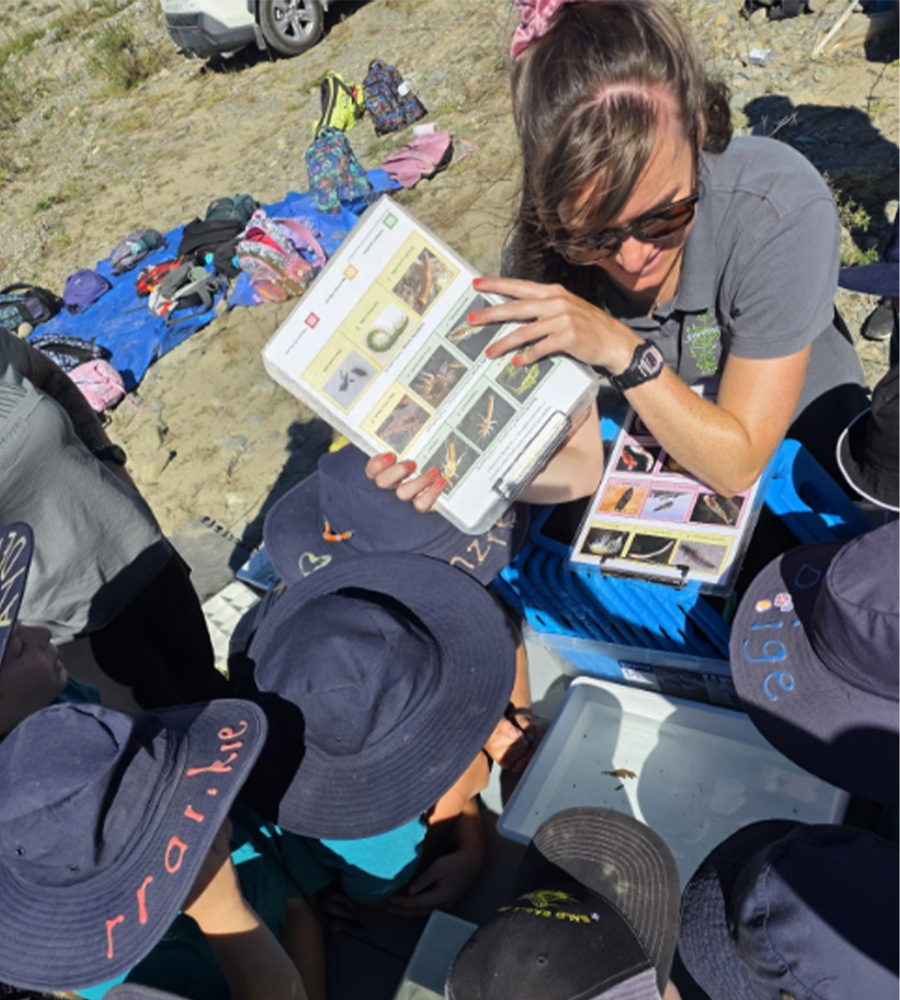
Siobhán Culhane helps Fernside School students identify freshwater life during a visit to the Ashley/Rakahuri River
Help protect braided river birds: Small actions can help keep birds, eggs and chicks safe. Find out how you can make a difference