
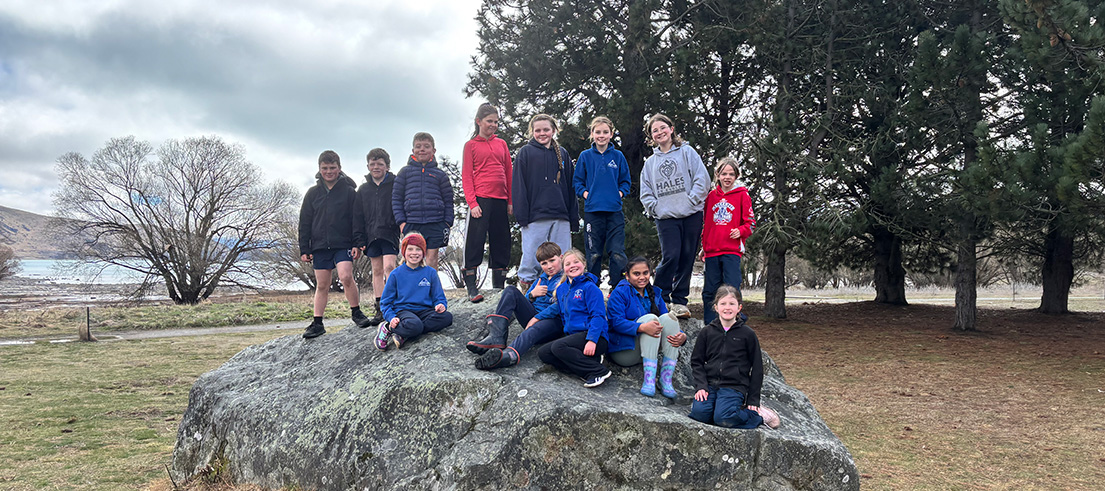
Students become wallaby and wilding pine detectives at Takapō Regional Park
Wallabies and wilding pines - two of Waitaha Canterbury's biggest pest challenges - were the focus of a recent school field trip to Takapō Regional Park.
The field trip, attended by South Canterbury primary school student leaders, was run by Canterbury Regional Council (Environment Canterbury) youth engagement, education and Enviroschools staff, with support from regional biodiversity staff and pest control experts.
Takapō Regional Park is on the eastern shore of Lake Tekapo and has the Two Thumb Range as a backdrop. The park has beautiful views from walking, cycling and running tracks and unique biodiversity that's worth protecting.
Wallabies and wilding pines education
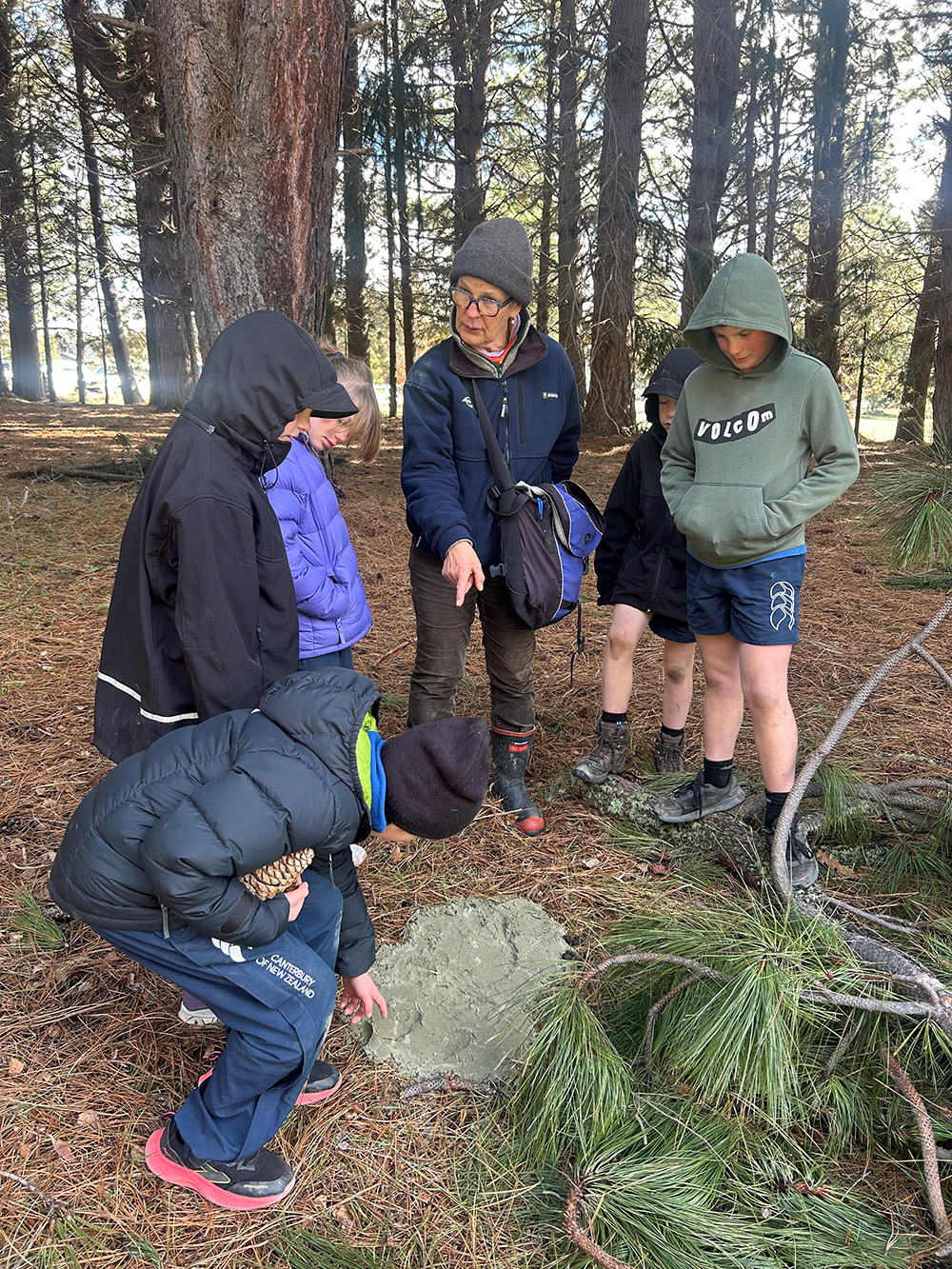
Education advisor and Enviroschools facilitator Debbie Eddington asked students to be 'pest detectives' and hunt for signs of wallabies, rabbits and wilding conifers in the park. She also explained some ways to identify signs of pests, including finding wallaby poo and footprints, rabbit poo and holes, and how to spot different species of wilding conifer cones, including Douglas fir.
Debbie showed students the Report Wallabies web resource, where people can record sightings.
Pest control contractor, Sam from Pestmasters NZ brought his wallaby dogs along. The majority of Sam’s dogs are English foxhounds capable of tracking and catching a wallaby as far as 23km away. The dogs have great stamina and can run over 60km in a single day.
Students also planted native trees with help from biodiversity officer Brad Smith.
There was plenty of other fun on the day, with team building, leadership and problem-solving challenges, like hut building and being led blindfolded through obstacles.
The students met a dog used to track and catch wallabies
The importance of the field trip
Wallabies and wilding pines both pose a significant threat to Canterbury’s unique biodiversity, native habitats and productive landscapes.
Wilding pines spread rapidly, damage native ecosystems, increase wildfire risk, and permanently alter landscapes if left unmanaged. They are an extremely invasive pest plant - their seeds can travel on the wind for many kilometres, and they grow quickly and spread exponentially.
Exotic conifers, including pines, fir and larch, were planted at Takapō Regional Park to control erosion, but have since become a major seed source for wilding pines in the Mackenzie Basin.
Wallabies damage native vegetation and threaten native wildlife. They have no natural predators in Aotearoa and have adapted well. They occupy around 1.5 million hectares of land in the South Island, mostly in South Canterbury.
Education around the threat that wallabies and wilding pines pose is key to ensuring the next generation knows the importance of controlling these pests for years to come.
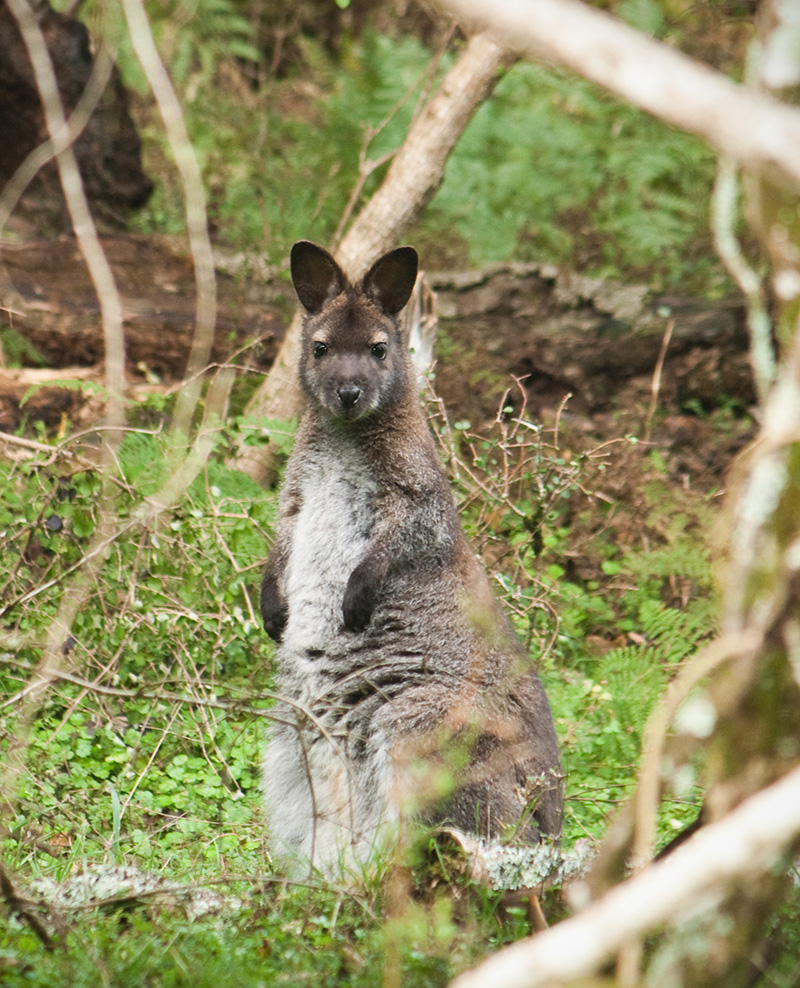
Wallabies and wilding pines cause huge damage to Canterbury's environment.
Positive feedback from the students
The students got a lot out of the trip and had a range of highlights.
Maddie from St Joseph's School in Fairlie said: “I liked learning about putting out tracking tunnels to find out what animals are living in an area.”
Lake Tekapo School student, Chris's favourite activity was the planting. " We got to get dirty with our hands,” he said.
Fairlie Primary School student, Sam, most enjoyed learning about wallabies.
Building huts was the highlight for Twizel Area School student, Luna.
“At the hut building activity we got to explore, be creative and be inventive,” Luna said.
More information
- Learn more about Enviroschools
- Find out more information on wallaby control
- Learn more about our wilding pine programme