
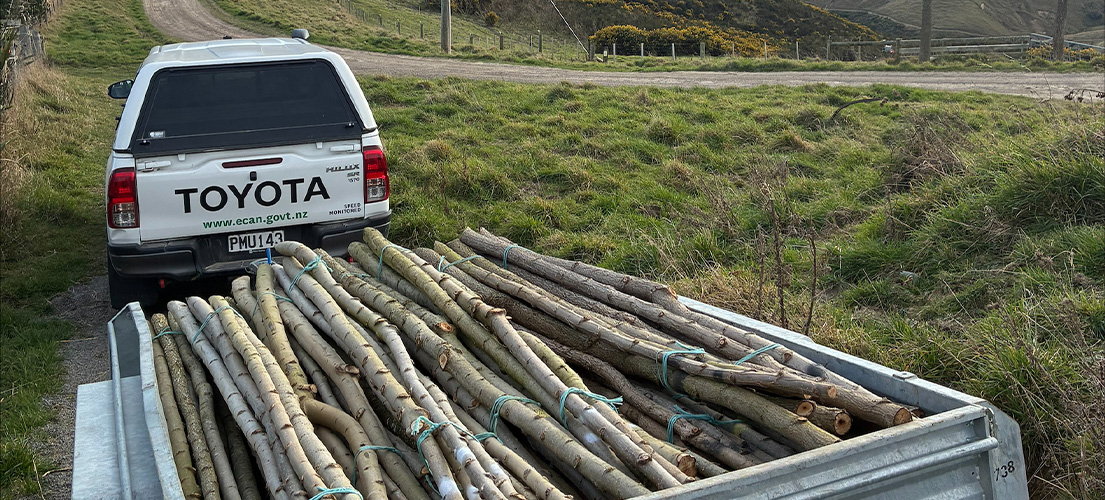
Hundreds of trees planted on Banks Peninsula to combat erosion
Banks Peninsula landowners are experiencing first-hand benefits of Environment Canterbury’s Soil Conservation and Revegetation (SCAR) programme, seeing results from planting poplars.
SCAR in Banks Peninsula
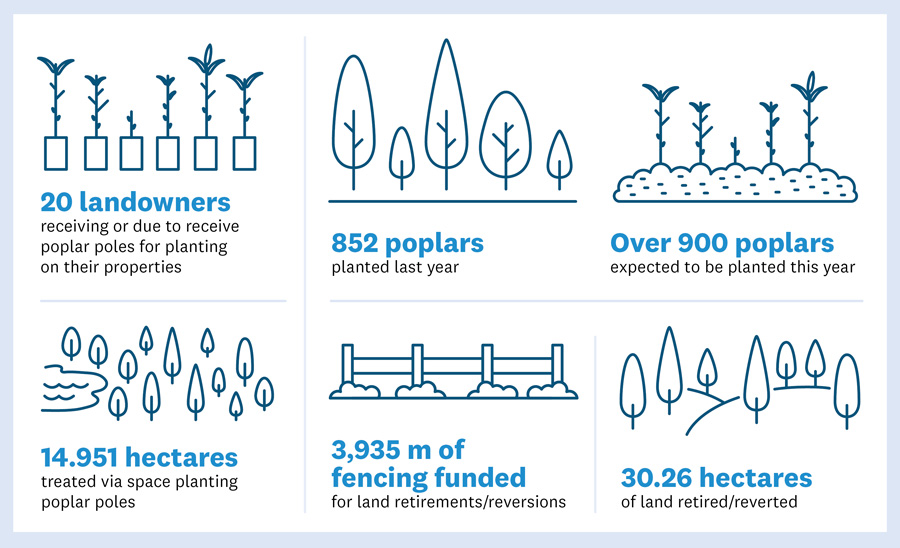
- 20 landowners receiving or due to receive poplar poles
- 852 poplars planted last year
- More than 900 poplars expected to be planted this year
- 14.951 hectares treated through space planting
- 3,935 metres of fencing funded
- 30.26 hectares of land retired or reverted
Why poplars are used for erosion control
Poplars establish quickly and develop extensive root systems, providing effective erosion control while allowing landowners to continue grazing and farming the surrounding land, with poles typically planted at around 10–12 metre spacing in targeted erosion-prone areas.
Native planting offers valuable long-term ecological and biodiversity benefits, but often requires greater establishment protection and, in some situations, retirement of productive land.
Helping farmers tackle hill country erosion
The SCAR programme is helping farmers tackle one of Waitaha Canterbury’s environmental challenges - hill country erosion. Poplar poles have now been planted at multiple properties across Banks Peninsula, and more are set to go into the ground.
By planting strategically placed poplar trees on vulnerable slopes, landowners are protecting productive farmland, reducing sediment runoff into waterways, and building greater resilience to extreme weather events.
Water and land northern team leader Andrew Arps said: “The SCAR programme is a fantastic example of what can be achieved by working alongside landowners to tackle erosion in practical, long-term ways. It’s about providing farmers with the tools to create more resilient, productive and sustainable landscapes for the future.”
What is the SCAR programme?
The programme, launched in 2019, provides funding and support for implementing erosion control measures, including poplar pole planting, fencing of erosion-prone areas, and land-use planning. It is jointly funded by Environment Canterbury, the Ministry for Primary Industries’ Hill Country Erosion Fund, and landowners. Its goals include retaining productive soils, improving water quality, supporting biodiversity and mahinga kai, and strengthening farms’ resilience against climate impacts.
After first having positive impacts in North Canterbury and Kaikōura, the SCAR programme is now gaining momentum In Banks Peninsula.
A key feature of the SCAR programme is the use of specially selected poplar varieties. The trees supplied through the programme are sterile clones, meaning they do not spread through seed and will not become invasive.
The use of these poplars is backed by more than 30 years of research and development by the New Zealand Poplar and Willow Research Trust, which has undertaken extensive selective breeding and genetic improvement work to develop poplar varieties that combine strong erosion-control characteristics with environmental safeguards.
The poplar poles are planted during winter while dormant. Once established, they develop extensive root systems that bind soil together, reducing the risk of slips and erosion.
The trees can provide effective erosion control within four to six years.
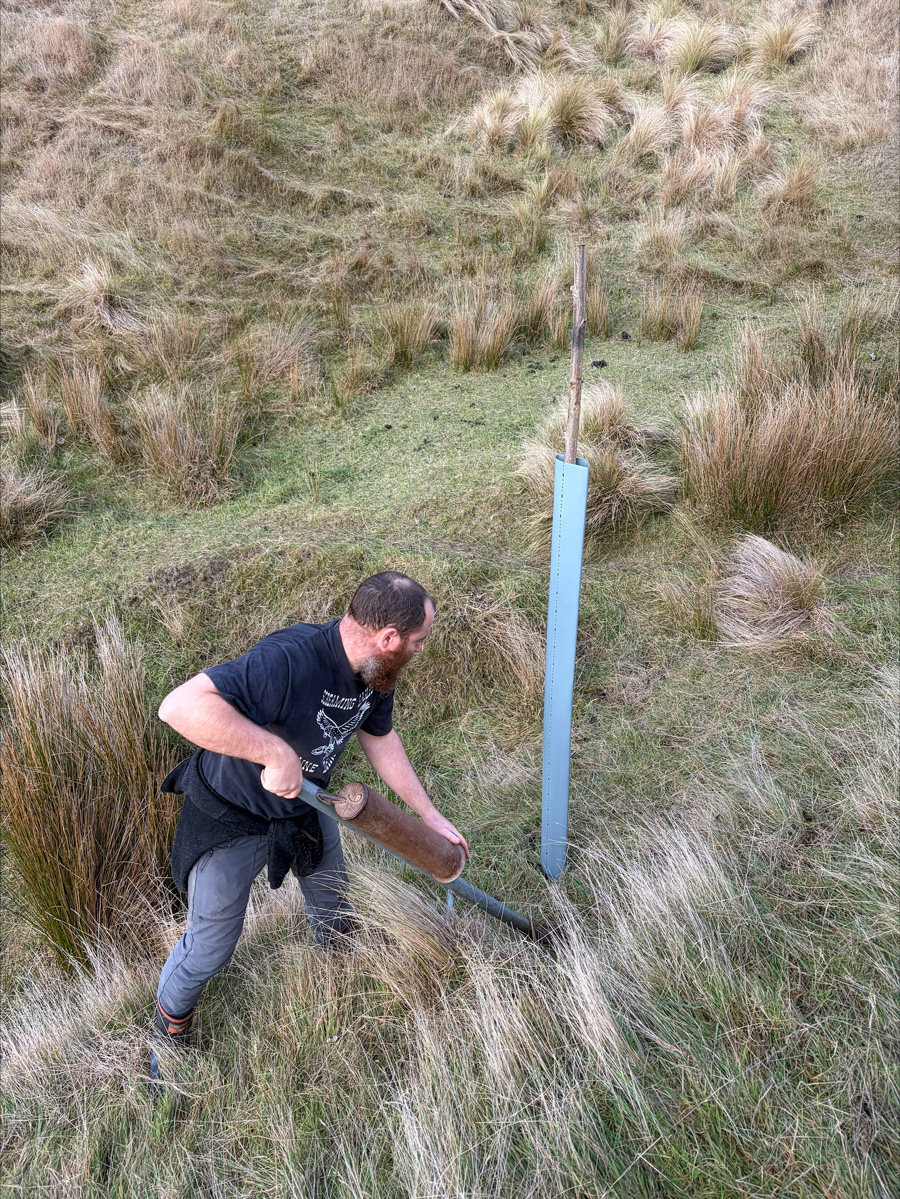
Planting a poplar pole to help stabilise erosion-prone land
SCAR's impact across Canterbury
The benefits of SCAR are already being demonstrated across Canterbury. Since the programme began:
- More than 30,000 trees have been planted on over 200 farms
- More than 1,100 hectares of erosion-prone land with high biodiversity values has been retired and protected
- The programme has supported the establishment of on-farm poplar nurseries and provided assistance for fencing projects that exclude stock from vulnerable areas, enabling native regeneration and habitat restoration.
As the programme continues to expand across Banks Peninsula, the benefits of it are expected to be felt for many years to come.
To find out more about the SCAR programme and if it could benefit your property, visit: Preventing erosion in hill country