
Kaikōura recovery flood protection work progresses
Recovery efforts across Kaikōura's rivers and flood protection network continue, with significant progress already made on priority repairs and a clearer picture emerging of how the district's rivers responded to July's severe flood event.
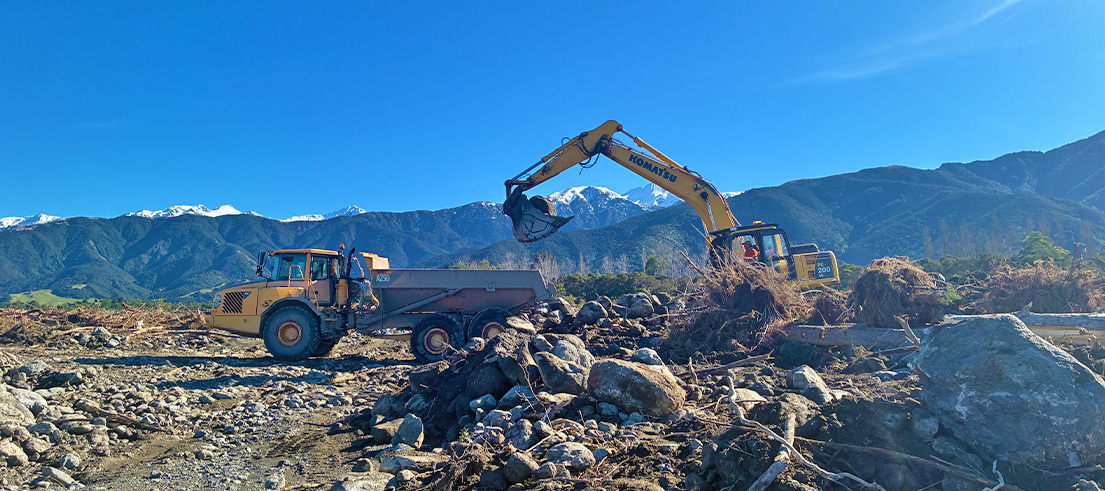
We've completed stopbank repairs at six priority sites on the Kōwhai River, with work continuing to strengthen and protect those repairs using rock sourced from further upstream in the river.
Gravel has been removed from Lukes Creek and Floodgate Creek to improve channel capacity, channel works have been completed at Harnetts Creek, and drain clearing remains underway at Red Swamp Road. Planning is also progressing for further channel improvement work at Stoney Creek.
A clearer picture of gravel build up emerges
Early analysis of the flood's impact is also challenging some initial assumptions.
While there is significant gravel build-up in parts of the Kōwhai Gorge, early investigations suggest the lower river near the stopbanks has changed less than initially expected. LiDAR surveys and ongoing inspections are helping engineers prioritise future work and identify areas where gravel management activity will be needed.
Councillor Ian Mackenzie said July's flood and the Government's proposed rule changes had sparked renewed interest in the role gravel plays in river management.
"Gravel extraction is an important tool, but it's not as simple as taking out as much gravel as possible. Rivers are dynamic systems and removing too much gravel can create problems of its own," Cr Mackenzie said.
"We welcome the Government's review of the rules around gravel extraction. It's a positive step and an opportunity to look more broadly at how policy supports flood resilience."
The importance of investment in flood protection
The flood recovery programme follows one of the most significant river events Kaikōura has experienced in decades.
Initial assessments are helping build a clearer picture of how the flood protection network performed during the event. Since the 1993 flood, ongoing investment has included stopbank upgrades, river and gravel management, erosion protection, maintenance and improved monitoring systems.
While some homes and properties were affected, the assessments indicate the network helped protect key parts of the community. Rainfall also eased at a critical point, after water had begun overtopping the Kōwhai River stopbank.
Another part of the work we do is to advocate for Government co-investment in flood protection because the cost is too much for communities to cover on their own. Through Regional Infrastructure Fund (RIF) and earlier shovel-ready funding, the Government has contributed more than $50 million towards flood resilience and river management projects in Waitaha Canterbury. We are continuing to advocate for long term sustainable funding on behalf of the community.
"Flood resilience infrastructure protects homes, businesses, transport links and nationally significant assets, and continued Government support will be critical to ensuring recovery can be delivered without placing an unsustainable burden on local ratepayers."
We are continuing to advocate for long term sustainable funding on behalf of the community.
Initial assessments are helping build a clearer picture of how the flood protection network performed during the event. Since the 1993 flood, ongoing investment has included stopbank upgrades, river and gravel management, erosion protection, maintenance and improved monitoring systems.
While some homes and properties were affected, the assessments indicate the network helped protect key parts of the community. Rainfall also eased at a critical point, after water had begun overtopping the Kōwhai River stopbank.
Behind the scenes of the response
It's important to know that when an emergency event happens, many organisations, businesses and individuals work together to support affected communities.
Emergency services, local and regional councils, contractors, community groups, utility providers, government agencies and even your neighbours can play a role.
Our role in a flood event is to run the Emergency Coordination Centre (ECC) and monitor river condition, assess risks and support response decisions. Our staff were immediately deployed to Kaikōura to work in emergency management operations, providing real-time information from the district's river systems to support community safety decisions.
Environment Canterbury Rivers Manager David Aires was one of those staff.
"What the community often sees is the visible end of the response, but behind that is a much larger network of hydrologists, scientists, engineers, flood controllers, communication advisors, contractors, emergency managers and support staff all working together around the clock."
One of the moments that has stayed with him came during overnight inspections as rivers across the district were at their peak.
"It's difficult to fully describe the experience of standing beside these rivers in flood. The sound was extraordinary – the constant rumble of large boulders being moved downstream by the force of the water, the sheer energy of the river, and the noise of banks actively eroding away."
"You could hear mature trees losing support and falling into the river, often disappearing into the darkness. Those inspections were a stark reminder of the forces involved during a flood of this magnitude and the respect these river systems demand."
He said the event reinforced the value of long-term investment in flood resilience, river management and local partnerships.
"Flood resilience is not built during a storm. It's built over decades through planning, maintenance, asset renewals, monitoring, engineering and strong local partnerships."
Recovery work will continue over the coming months as teams assess river performance, repair damaged assets and plan future resilience improvements across the district. The streamlined flood recovery gravel extraction process has also been extended until 30 October 2026 to help landowners and contractors remove flood-deposited gravel and support recovery work.