
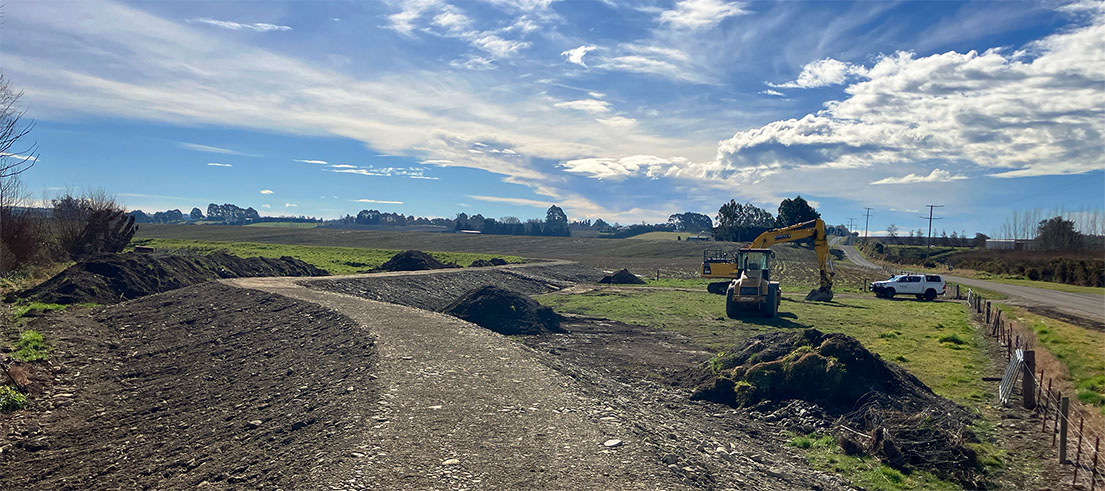
Strong stopbanks, safer communities
When rivers rise, a strong stopbank can stand between the community and the water. To do their job, they need to be designed, built and maintained with technical expertise and maintained by our team.
Just as importantly, they need to be left intact, as even small damage from things like stock, vehicles or planting can have serious consequences during a flood.
Stopbanks are one of the most important tools in our flood protection system. We manage and maintain more than 600 kilometres across the region, helping protect people, homes, infrastructure and productive land worth billions of dollars.
How small damage can cause big damage
You’ll see stopbanks beside flood-prone rivers across Waitaha. They are specially designed structures that help prevent floodwater spreading onto surrounding land.
They are carefully engineered using compacted layers of soil, sand and gravel of different sizes, tightly packed to form a dense, stable barrier. This compacted structure gives the stopbank its strength and ability to withstand water pressure.
Damage that seems minor on the surface can create easy paths for water to flow through the structure. Things like plant roots, or ruts from stock or vehicles can cause weak points. These weak points allow water to seep through during high flows, leading to internal erosion and progressive weakening. Over time, especially during a flood, this can cause cracking, slumping or failure, even if the damage is not visible from the surface.
We’re working from Pareora to Kaikōura
We’re currently working on stopbank projects from Pareora to Kaikōura, supported by co-funding from the Government’s Regional Infrastructure Fund, administered by Kānoa – Regional Economic Development & Investment Unit.
In Washdyke, we’re moving a coastal stopbank inland to protect it from coastal erosion.
We’re also upgrading stopbanks along the following rivers:
- Pareora
- Ōpihi
- Ōrari
- Lower Hinds
- Hakatere Ashburton
- Rangitata
- Kaiapoi
- Ruataniwha Cam
- Waimakariri
- Kōwhai
- Kaikōura
Keep stopbanks strong
No matter how well they are built and maintained, stopbanks are only as strong as their weakest point. They are vulnerable to damage from everyday activities.
The grass cover on a stopbank is a critical protective layer as it prevents erosion and helps maintain the integrity of the compacted core.
Common damage that can weaken stopbanks includes:
- Gouges or ruts caused by vehicle damage
- Grazing impacts from stock which remove grass cover
- Excavations for fences or buildings
- Planting trees or shrubs
- Building structures on or near the stopbank
Damaging a stopbank can reduce its ability to protect people, property and farmland during a flood. If damage occurs, the person or organisation responsible may be required to repair it or cover the cost of repairs under the Flood Protection and Drainage Bylaw.
Learn more about stopbanks