
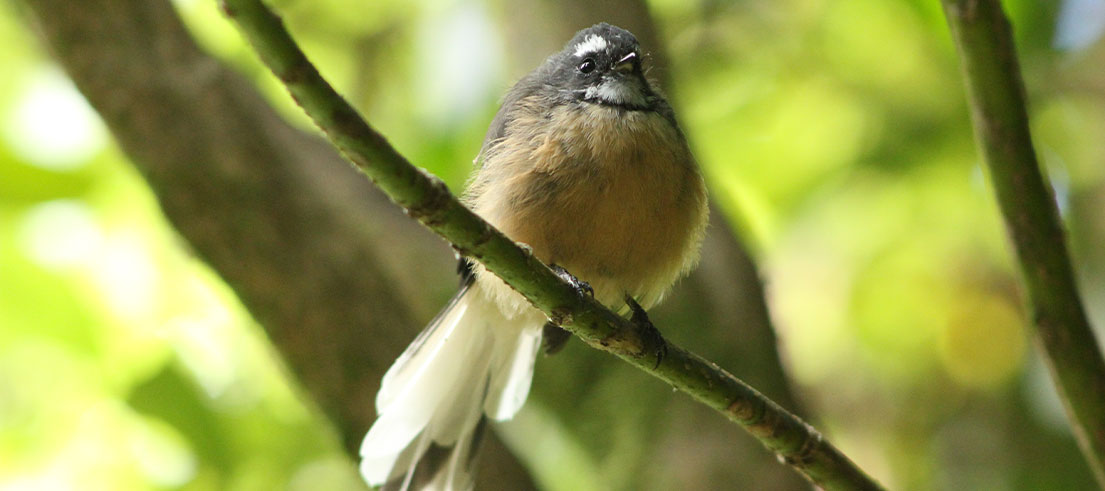
Te Wharau Stream restoration sees Pīwakawaka fantails return
A project to protect and enhance Te Wharau Stream at Orton Bradley Park has helped improve the stream’s water quality and provide a healthy habitat for native birds and fish.
The restoration project received $45,000 from our Christchurch and Banks Peninsula Biodiversity Fund (Bio Fund) in 2024/25. The aims of the project were to improve biodiversity habitat in and around the stream, improve freshwater quality, increase carbon capture and increase survival rates for native flora and fauna.
Te Wharau Stream flows into Whakaraupō Lyttelton Harbour. Improving water quality in the stream means the water flowing into the harbour will be healthier, improving the harbour’s health as well.
The Orton Bradley Park Board is carrying out the project, with support from our staff, Te Hapū o Ngāti Wheke, and the Whaka-Ora Healthy Harbour partnership programme.
Restoring stream habitat at Orton Bradley Park
Orton Bradley Park is a 650-hectare rural property, open 365 days of the year for the public to enjoy. It’s home to over 25km of walking tracks, picnic areas and a range of native wildlife and plants. 450 hectares of the property is leased out and farmed, which helps fund the cost of keeping the park open, and maintaining its precious environment.
The funding received from the Bio Fund has been used to:
- Fence two high value tributaries with forest remnants to prevent stock access and improve water quality
- Establish native riparian plants to stabilise soil, reduce erosion into the stream, and provide a habitat for wildlife, including native birds
- Undertake weed and pest control to allow native flora and fauna to flourish
Visible results of the restoration project
Orton Bradley Park Manager Ian Luxford said the positive impacts of the work the funding has gone towards have been noticeable.
“The stream quality and the clarity of the water in the stream is quite phenomenal. It’s a really healthy stream.”
“The regeneration in the valley has also been phenomenal, and bird life is coming back. Birds like pīwakawaka fantails are a really good indicator species and the number of fantails at the moment is just amazing. Anecdotally, there's a huge amount of improvement in terms of birdlife in the park, which allows regeneration and seed distribution.”
Ian said the funding was “really important” for making the Te Wharau Stream restoration project happen.
“Without the funding, we wouldn't have been able to take those steps,” he said.
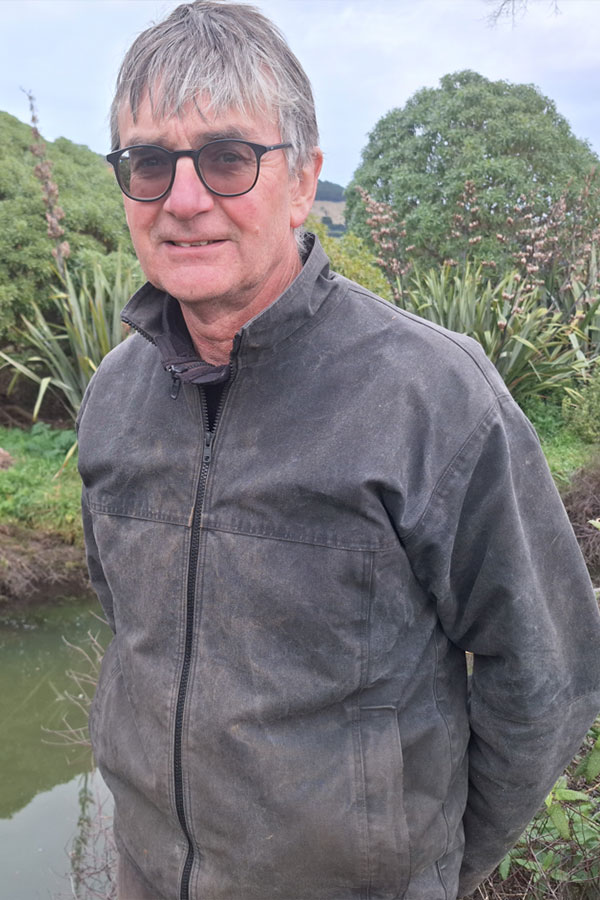
Orton Bradley Park Manager Ian Luxford at Te Wharau Stream
Protecting the taonga of Te Wharau Stream
Biodiversity advisor Martin Rutledge has surveyed native fish in Te Wharau Stream.
“As one of the largest streams in Whakaraupō with a permanent flow and good water quality, Te Wharau Stream supports a good diversity of species – both native fish and stream insects. One special inhabitant is the piripiripohatu torrentfish, a taonga species that is adapted to live in rapids and riffles.” The photo below shows a pregnant female found during surveys in 2024," Martin said.
Gail Gordon of Te Hapu o Ngāti Wheke said: “For Te Hapu o Ngāti Wheke, the collective of waterways which flow into Whakaraupō, such as Te Wharau Stream, are of high significance to us as they strengthen the mauri of the moana and mahinga kai within it.
"Our connection to Whakaraupō centres on our role and responsibility as kaitiaki to protect and sustainably preserve the taonga that has provided for us over generations and protect it for future generations to come.
“Projects like this help restore the health of the land and water, while strengthening the relationship people have with the natural environment. Orton Bradley Park is a treasured part of the harbour landscape, and we are pleased to see investment in its ecological restoration.”
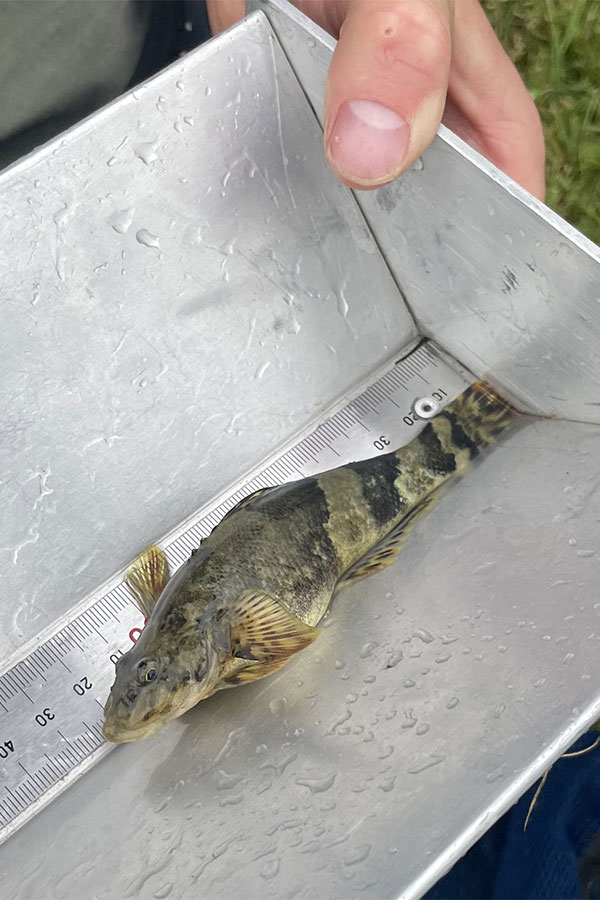
A piripiripohatu torrentfish found during surveys of Te Wharau Stream in 2024
Other projects selected for funding
The Te Wharau Stream restoration project is just one of the many projects selected for funding from our Bio Fund.
For 2024/25 and 2025/26, a total of 14 projects were selected for funding from our Christchurch and Banks Peninsula Biodiversity Fund.
This fund supports community-led projects that protect and restore indigenous biodiversity across Christchurch and Banks Peninsula.