
Years of wilding pine removal at Craigieburn helped limit wildfire damage in 2024. Learn how removing wilding pines early can reduce fire risk.
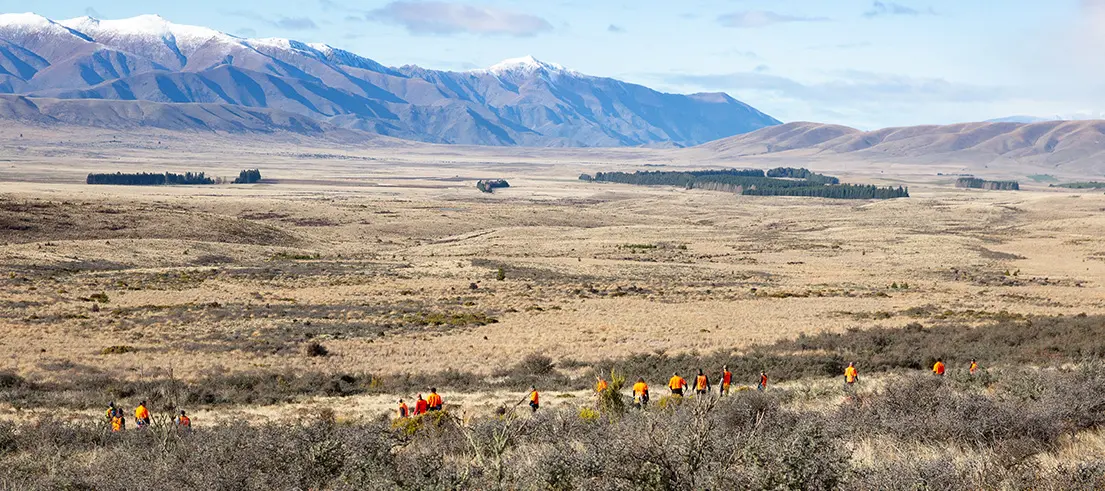
Ten years on: holding the line against wilding pines in Waitaha Canterbury
Ten years ago, Canterbury Regional Council (Environment Canterbury) began control work in partnership with the National Wilding Conifer Control Programme (NWCCP) to tackle the huge threat posed by wilding pines.
Working with landowners, government agencies and community groups, we have since helped protect some of Waitaha Canterbury’s most iconic landscapes from one of New Zealand's biggest biosecurity threats.
From the alpine tussock country of Craigieburn and the limestone landscapes of Castle Hill Basin to Hakatere Ashburton and the Mackenzie Basin, a decade of sustained control has helped keep our high country, braided rivers, and wetlands open and wild.
Why wilding pines are so difficult to control
It hasn’t been easy. Rugged terrain, challenging weather and fluctuating funding all make the job harder.
The wilding pine is also a relentless pest to overcome:
- Each pinecone contains an average of 50 seeds, all of which could create a new tree.
- Seeds can easily carry on the wind and seeds from some species establish up to 40 kilometres away.
- The most prolific wilding pine species in Waitaha, Lodgepole (contorta pine) grows up to three times faster in New Zealand than its native North America.
Learn more about identifying and controlling wilding pine and lodgepole pine in our pest profiles.
A decade of progress across Canterbury
We’ve made good progress. Notable successes over the decade:
At Flock Hill Station in Craigieburn, we’ve controlled infestation from an estimated 5,000–6,000 hectares (more than 9 times the area of Central Christchurch, inside the Four Avenues) to around 1,000–2,000.
In the Hakatere Ashburton area in Mid Canterbury, early action stopped major infestations taking hold, and landowners are increasingly taking on stewardship for ongoing maintenance work.
Large areas of the Godley area in the Mackenzie Basin moved from intensive Environment Canterbury control to landowner-led ongoing management.
Work around Castle Hill Basin has protected limestone landscapes, productive farmland and recreation and tourism destinations loved by trampers, hunters, anglers and mountain bikers from being overrun by these pest trees.
Using technology to improve wilding pine control
Technology is helping. Drones, aerial and satellite imagery and digital mapping tools find infestations faster, risk-based planning targets invasion fronts and seed sources, and research help refine control methods.
Protecting our landscapes for the future
The biggest success is often invisible: a landscape not overrun by wilding pines.
Douglas-fir is an emerging concern across the region. Follow-up control and surveillance remain essential. Even one or two trees can cone and spread their seed, multiplying the problem, within a few years.