
Home heating guidelines for your Clean Air Zone
Many people in Waitaha Canterbury heat their homes by burning solid fuels, such as wood or pellets. There are rules in the Canterbury Air Regional Plan (CARP) guiding the installation of solid fuel burners.
Clean Air Zones are urban areas in Waitaha with a history of poor air quality. There are different home heating rules and different types of burners allowed in different Clean Air Zones. Our eight Clean Air Zones are in Rangiora, Kaiapoi, Christchurch, Ashburton, Washdyke/Timaru, Geraldine, and Waimate.
If you have an existing burner, you can find the age of the burner and when it needs replacing in the Solid Fuel Burner Database. A small number of pellet burners have been issued with a resource consent and can be operated it until this consent expires. If you are unsure whether this applies to you, or want to find out more, please call us on 0800 324 636.
Region-wide (outside of a Clean Air Zone)
Wood burner-use rules for sites that are less than 2ha in size (generally urban areas):
- Use dry, seasoned wood only
- No visible smoke, except for brief periods (specified as 15 minutes at start up and 5 minutes at refuelling)
- Ultra-low emission burners and low-emission burners are allowed into all homes
- Older style burners can be used, but cannot be installed
- No burning of toxic substances/materials
Wood burner-use rules for sites that are greater than 2ha in size (generally rural areas):
- No burning of toxic substances/materials
- Best practice to use dry and seasoned wood
- Best practice to have no visible smoke, except for brief periods (specified as 15 minutes at start up and 5 minutes at refuelling)
For the full rules applicable region-wide, outside a Clean Air Zone, please see rules 7.82 – 7.83 of the Canterbury Air Regional Plan.
Region-wide (inside a Clean Air Zone)
Wood burner-use rules for sites that are less than 2ha in size (generally urban areas):
- Use dry, seasoned wood only
- No visible smoke, except for brief periods (specified as 15 minutes at start up and 5 minutes at refuelling)
- No burning of toxic substances/materials
Heritage buildings
There are exceptions for listed heritage buildings where the heating appliances and chimney were original features (including restored original features). Please contact us to discuss your situation further.
We understand replacing old wood burners with new, cleaner forms of heating can be costly. Find out more about financial assistance to replace your expired or expiring wood burner.
For the full rules applicable region-wide, inside a Clean Air Zone, please see rules 7.84 – 7.88 of the Canterbury Air Regional Plan or see below for an overview of the rules for specific Clean Air Zones.
What are the home heating rules for my zone?
Christchurch Clean Air Zone
Wood burner-use rules for sites that are less than 2ha in size (generally urban areas):
- Ultra-low emission burners are allowed into all homes
- Installation of low-emission burners is not allowed
- Use of existing low-emission burners is allowed for up to 20 years from installation
- Use of open fires or older style burners is not allowed
Wood burner-use rules for sites that are greater than 2ha in size (generally rural areas):
- Ultra-low emission burners and low-emission burners are allowed into all homes
- Older style burners can be used, but cannot be installed
- Open fires installed from 2013 onwards cannot be used
An approved secondary emission reduction device may allow you to use a National Environment Standard compliant burner past its usual 20-year limit.
Download the Christchurch Clean Air Zone home heating rules (PDF file, 232 KB).
For the full rules for the Christchurch Clean Air Zone, please see rules 7.95 – 7.99 of the Canterbury Air Regional Plan.
View the Christchurch Clean Air Zone boundaries (JPG file, 872KB).

Waimate Clean Air Zone
Wood burner-use rules for sites that are less than 2ha in size (generally urban areas):
- Ultra-low emission burners and low-emission burners are allowed into all homes
- Use of open fires is not allowed
- Use of older style burners is not allowed
Wood burner-use rules for sites that are greater than 2ha in size (generally rural areas):
- Ultra-low emission burners and low emission burners are allowed into all homes
- Older style burners can be used, but cannot be installed
An approved secondary emission reduction device may allow you to use a National Environment Standard compliant burner past its usual limit.
Download the Waimate Clean Air Zone home heating rules (PDF file, 261 KB).
View the Waimate Clean Air Zone boundaries (JPG file, 521KB).
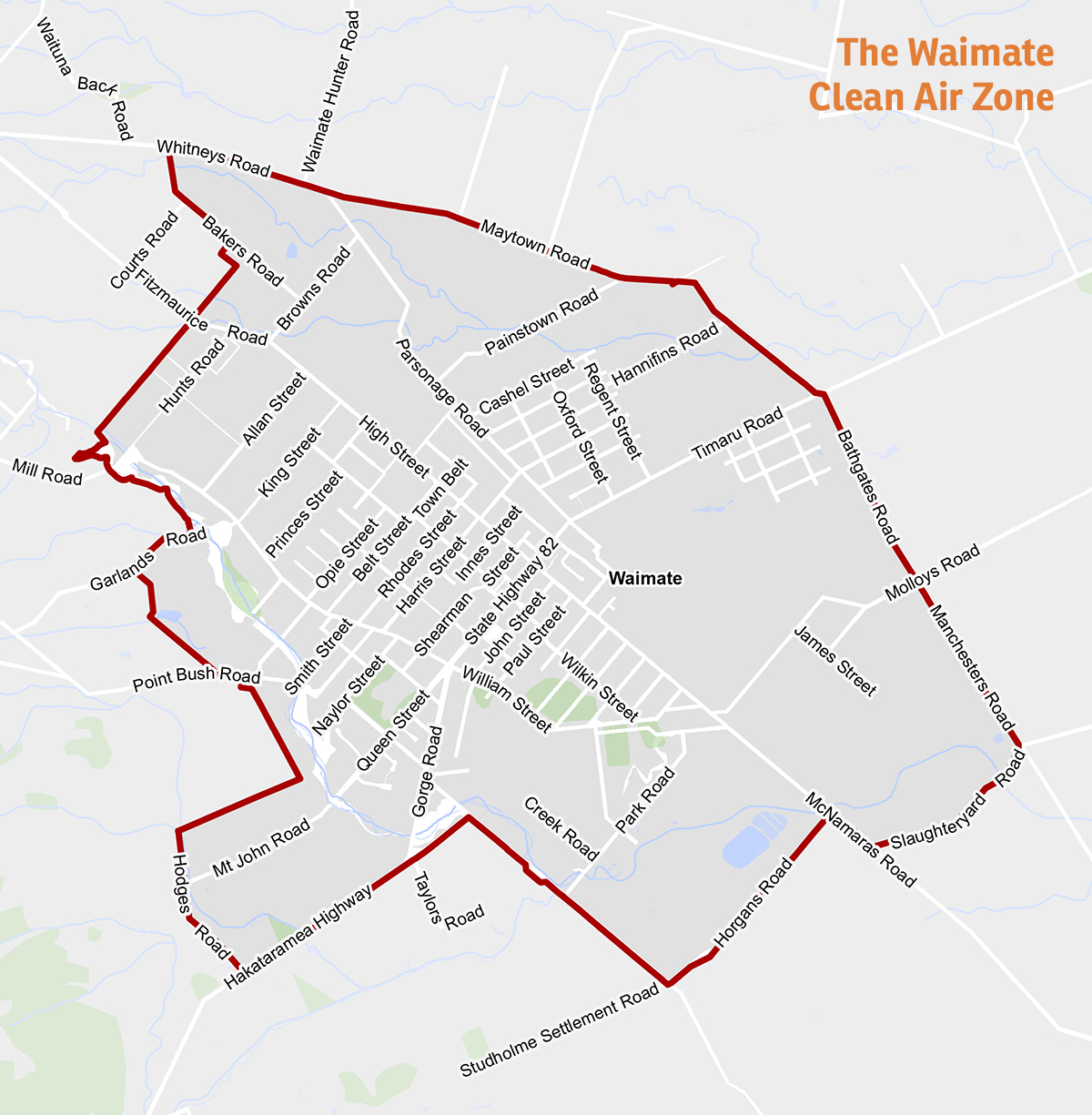
For the full rules for the Waimate Clean Air Zone, please see rules 7.105 – 7.108 of the Canterbury Air Regional Plan.
Geraldine Clean Air Zone
Wood burner-use rules for sites that are less than 2ha in size (generally urban areas):
- Ultra-low emission burners and low-emission burners are allowed into all homes
-
Use of open fires is not allowed
- Use of older style burners is not allowed
Wood burner-use rules for sites that are greater than 2ha in size (generally rural areas):
- ultra-low emission burners and low emission burners are allowed into all homes, including new homes
- older style burner can be used, but cannot be installed
An approved secondary emission reduction device may allow you to use a National Environment Standard compliant burner past its usual limit.
Download the Geraldine Clean Air Zone home heating rules (PDF file, 226KB).
View the Geraldine Clean Air Zone boundaries (JPG file, 550KB).
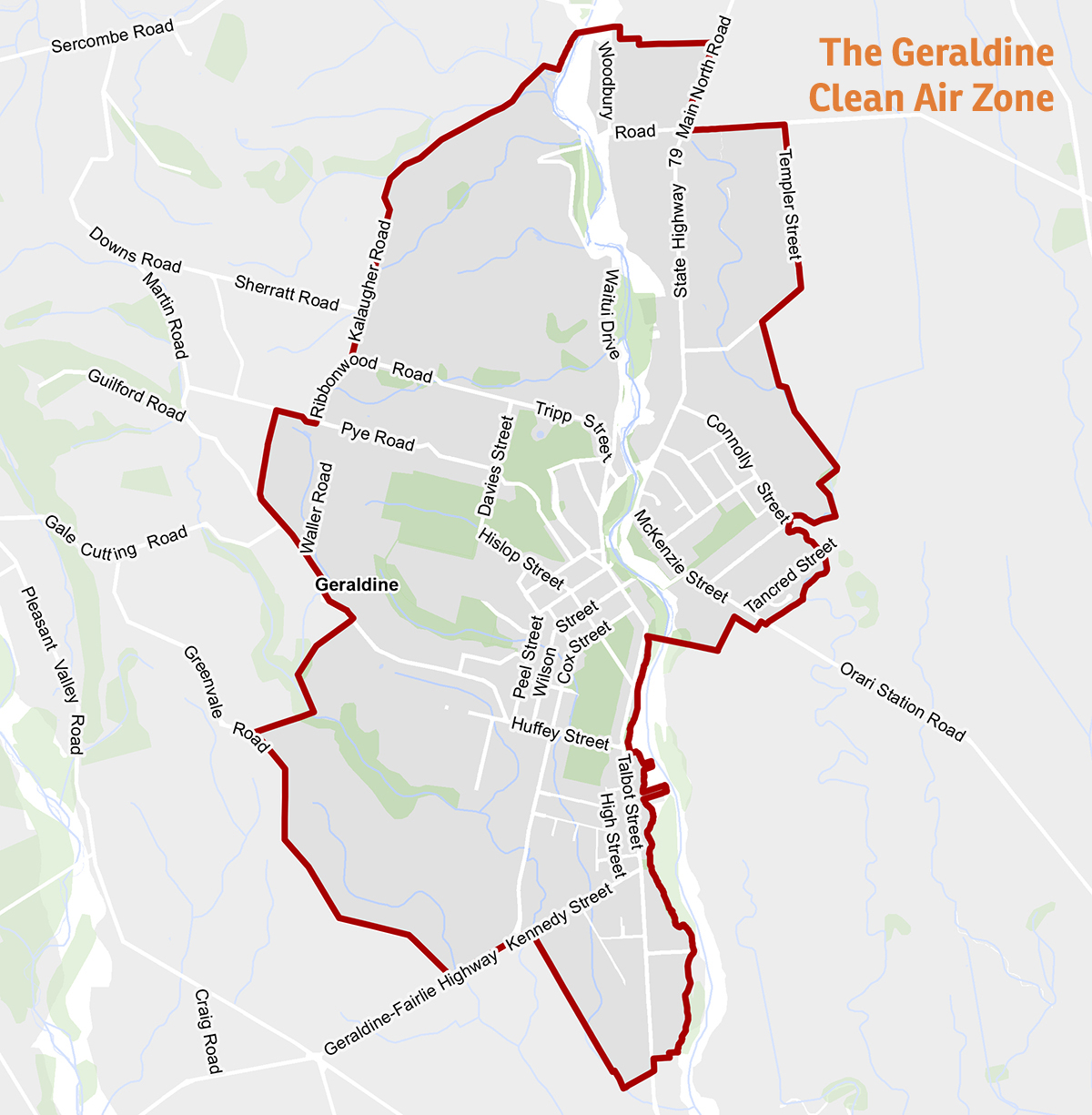
For the full rules for the Geraldine Clean Air Zone, please see rules 7.105 – 7.108 of the Canterbury Air Regional Plan.
Timaru Clean Air Zone
Wood burner-use rules for sites that are less than 2ha in size (generally urban areas):
- Ultra-low emission burners are allowed into all homes
- Installation of low-emission burners is not allowed
- Use of existing low-emission burners is allowed for up to 15 years from installation
- Use of open fires is not allowed
- Use of older style wood burners that are 15 years or older is not allowed
Wood burner-use rules for sites that are greater than 2ha in size (generally rural areas):
- Ultra-low emission burners and low emission burners are allowed into all homes
- Older style burners can be used, but cannot be installed
- Open fires installed from 2013 onwards cannot be used
An approved secondary emission reduction device may allow you to use a National Environment Standard compliant burner past its usual 15-year limit.
Download the Timaru Clean Air Zone home heating rules (PDF file, 240KB).
View the Timaru Clean Air Zone boundaries (JPG file, 795KB).
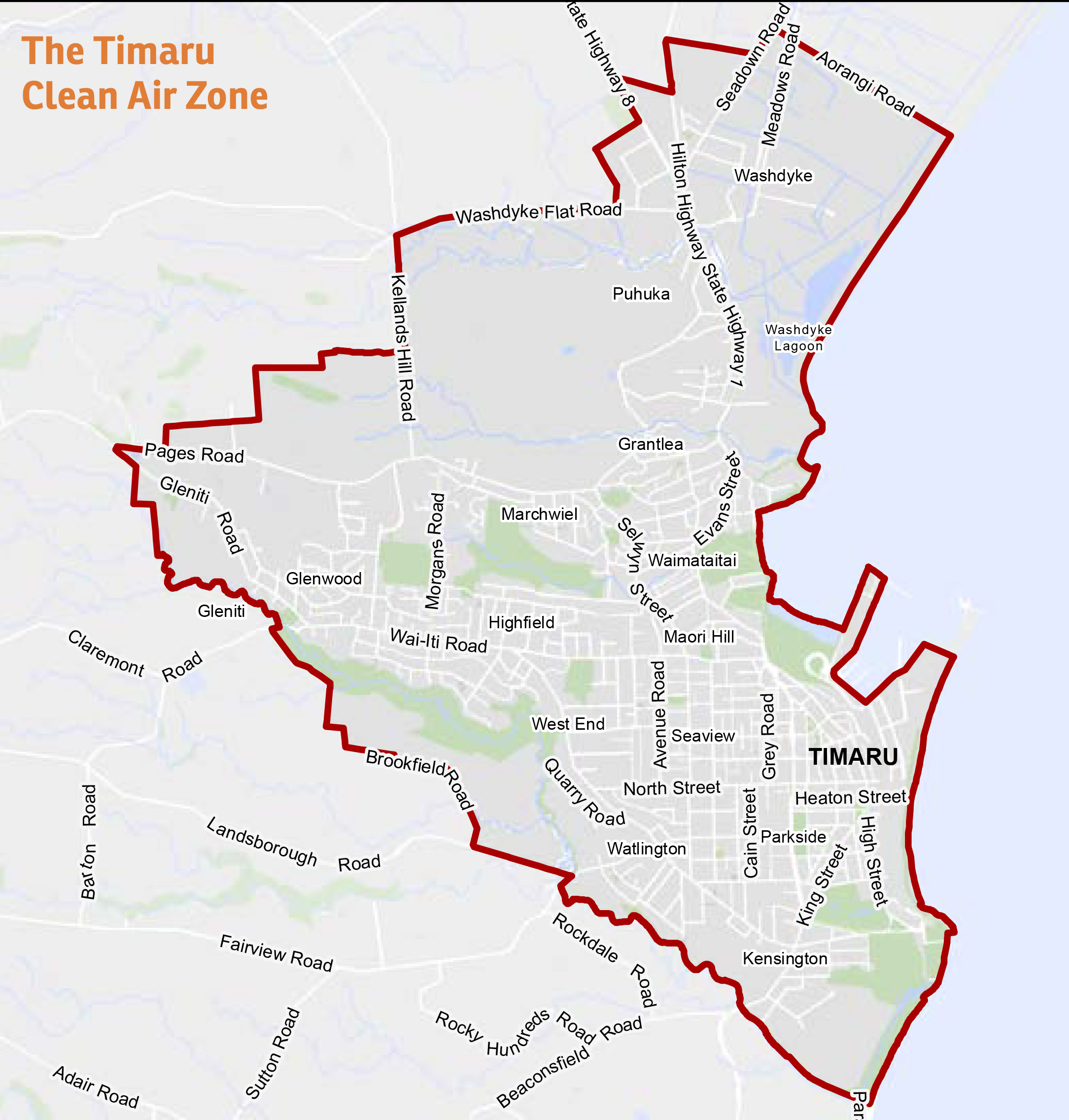
For the full rules for the Timaru Clean Air Zone, please see rules 7.100 – 7.104 of the Canterbury Air Regional Plan.
Ashburton Clean Air Zone
Wood burner-use rules for sites that are less than 2ha in size (generally urban areas):
- Ultra-low emission burners are allowed into all homes
- Installation of low-emission burners is not allowed
- Use of existing low-emission burners is allowed for up to 20 years from installation
- Use of open fires or older style burners is not allowed
Wood burner-use rules for sites that are greater than 2ha in size (generally rural areas):
- Ultra-low emission burners and low emission burners are allowed into all homes
- Older style burners can be used, but cannot be installed
- Open fires installed from 2013 onwards cannot be used
An approved secondary emission reduction device may allow you to use a National Environment Standard compliant burner past its usual 20-year limit.
Download the Ashburton Clean Air Zone home heating rules (PDF file, 278KB).
View the Ashburton Clean Air Zone boundaries (JPG file, 0.98MB).
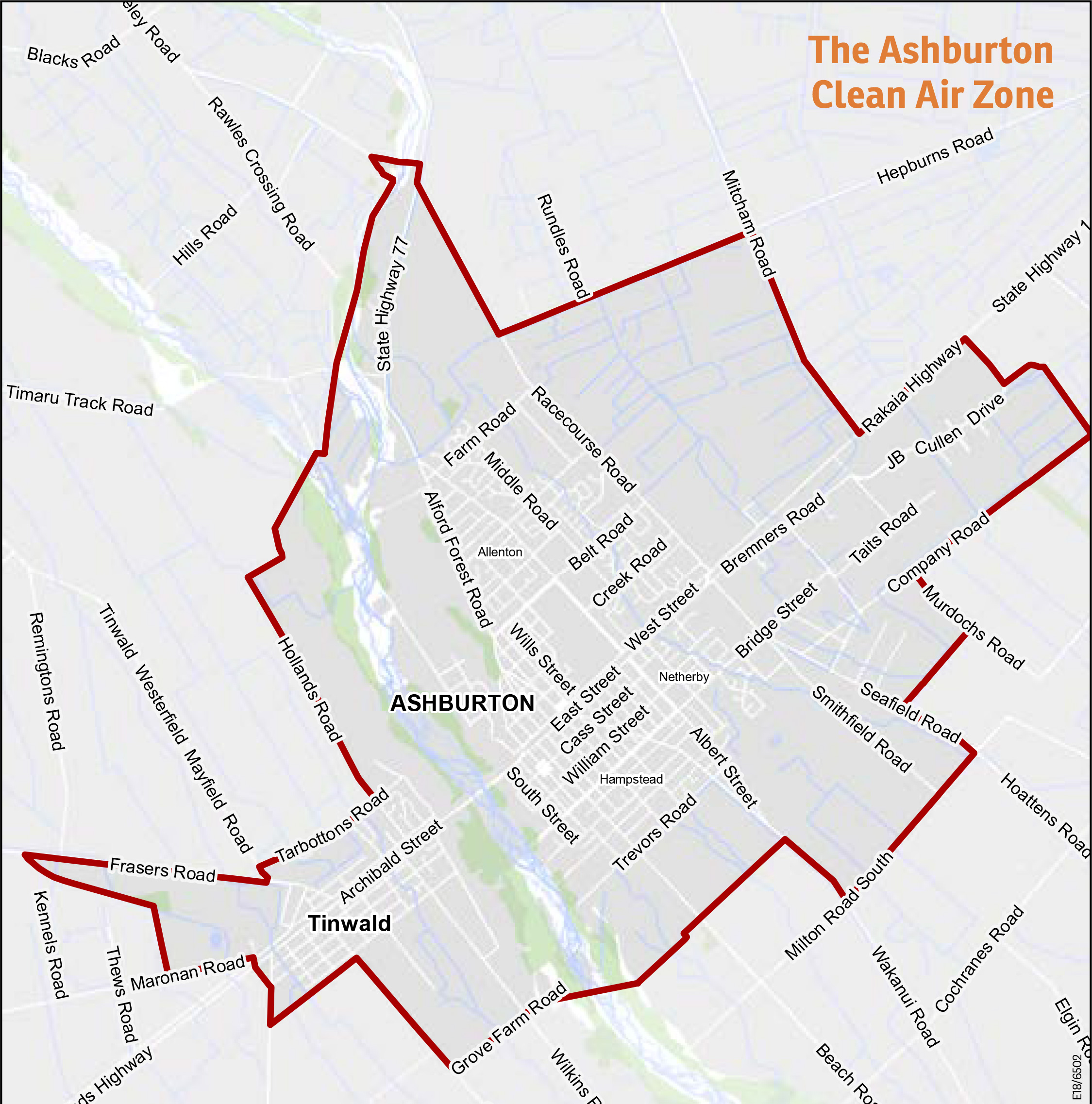
For the full rules for the Ashburton Clean Air Zone, please see rules 7.90 – 7.94 of the Canterbury Air Regional Plan.
Rangiora Clean Air Zone
Wood burner-use rules for sites that are less than 2ha in size (generally urban areas):
- Ultra-low emission burners are allowed into all homes
- Installation of low-emission burners is not allowed
- Use of existing low-emission burners is allowed for up to 20 years from installation
- Use of open fires or older style burners is not allowed
Wood burner-use rules for sites that are greater than 2ha in size (usually rural areas):
- Ultra-low emission burners and low-emission burners are allowed into all homes
- Older style burners can be used, but cannot be installed
- Open fires installed from 2013 onwards cannot be used
An approved secondary emission reduction device may allow you to use a National Environment Standard compliant burner past its usual 20-year limit.
Download the Rangiora Clean Air Zone home heating rules (PDF file, 273KB).
View the Rangiora Clean Air Zone boundaries (PDF file, 0.91MB).
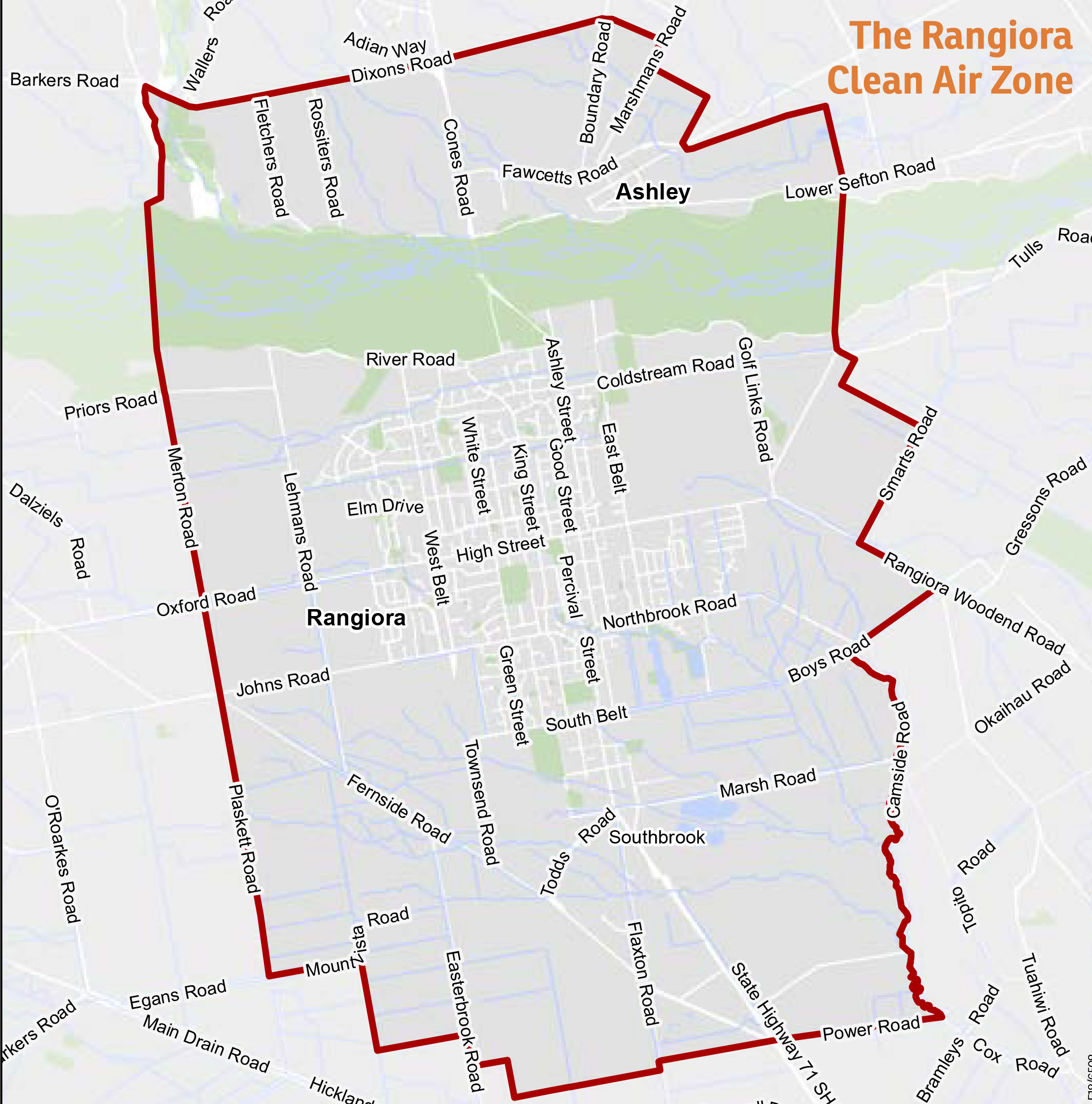
For the full rules for the Rangiora Clean Air Zone, please see rules 7.90 – 7.94 of the Canterbury Air Regional Plan.
Kaiapoi Clean Air Zone
Wood burner-use rules for sites that are less than 2ha in size (generally urban areas):
- Ultra-low emission burners are allowed into all homes
- Installation of low-emission burners is not allowed
- Use of existing low-emission burners is allowed for up to 20 years from installation
- Use of open fires or older style burners is not allowed
Wood burner-use rules for sites that are greater than 2ha in size (generally rural areas):
- Ultra-low emission burners and low-emission burners are allowed into all homes
- Older style burners can be used, but cannot be installed
- Open fires installed from 2013 onwards cannot be used
An approved secondary emission reduction device may allow you to use a National Environment Standard compliant burner past its usual 20-year limit.
Download the Kaiapoi Clean Air Zone home heating rules (PDF file, 275KB).
View the Kaiapoi Clean Air Zone boundaries (JPG file, 0.96MB).
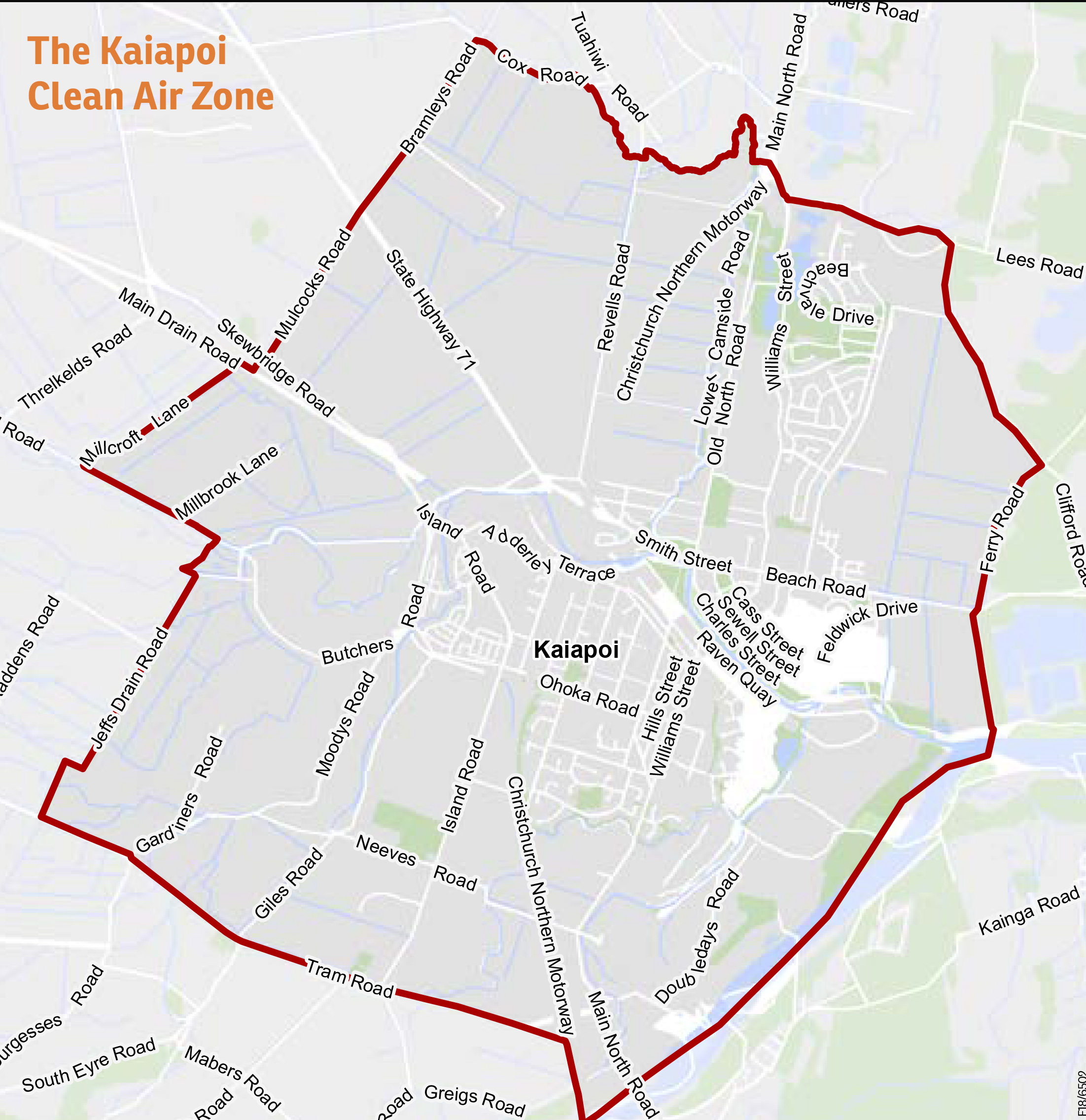
For the full rules for the Kaiapoi Clean Air Zone, please see rules 7.90 – 7.94 of the Canterbury Air Regional Plan.
Tips for better burning: The type of burner, the fuel used, and the technique used to light and stoke the fire all make a difference in reducing emissions. Visit Warmer Cheaper for tips on making the most of your burner.