
Outdoor burning
Outdoor burning can be a nuisance for neighbours and add to poor air quality. This page explains what you can and can't burn based on your property size, the conditions you must meet, and how to burn safely and efficiently.
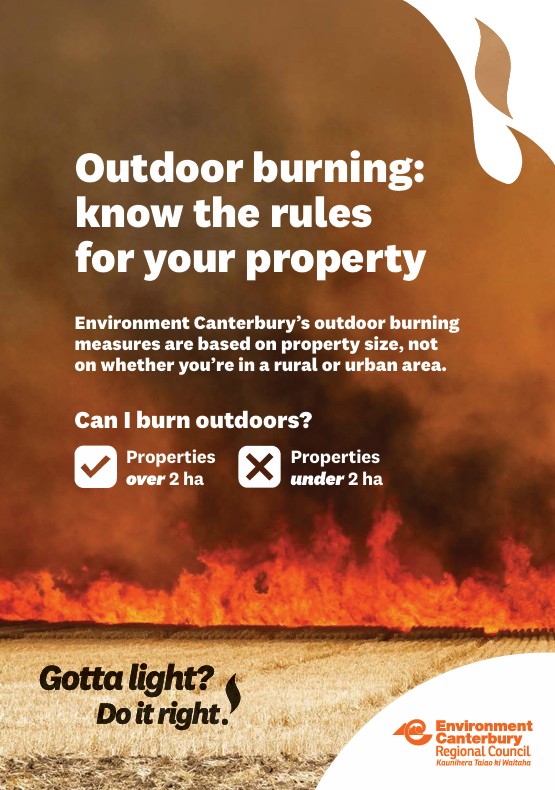
The Canterbury Air Regional Plan's outdoor burning measures are based on property size, not on whether you're in a rural or urban area. The Canterbury Air Regional Plan allows some outdoor burning, but we encourage alternatives such as composting, mulching, using kerbside collection services or visiting a transfer station.
Can I burn on my property?
- Outdoor burning is not permitted, even in a rural area. A $300 fine and enforcement costs may apply
- Outdoor cooking is allowed (BBQs, pizza ovens, hāngī, umu) if smoke doesn't cross your boundary
- Dispose of green waste via mulching, composting or a transfer station instead
- A resource consent is needed to burn green waste
- Exceptions apply for firefighting training, NZ Defence Force functions, biosecurity reasons and community events
- You can burn dry vegetation (excluding standing crop residue), paper, cardboard or untreated wood
- Consider mulching lawn clippings and leaves instead - It enriches soil and plant life
- Take rubbish to a collection or transfer site - Check with your local council
- Compost leaves, food scraps, grass cuttings and organic manure
- All burning must still meet the conditions listed below
Conditions for outdoor burning
Location
- Burning is 100+ metres upwind and 50+ metres in any other direction from neighbours
- Burning is not within 100m of a national grid power line or substation (unless you have permission from the owner)
-
If you are in a Clean-Air Zone:
- Kaiapoi, Christchurch, Timaru: burning is only allowed from 1 September to 30 April
- In all other Clean Air Zones, outdoor burning is prohibited during June, July and August
- Burning is also prohibited across all Clean Air Zones during May, except in the Geraldine, Ashburton, Waimate and Rangiora Clean Air Zones, where burning is allowed between 8am and 4pm
Smoke
- Smoke is not blown towards a township
- Smoke does not cause a nuisance beyond your property boundary
Materials
- The material being burnt is from your property and/or only one of your neighbour's properties
- The material being burnt is dry moisture content must be less than 25 per cent
- Liquid fire accelerant used does not exceed 10 litres
Safety
- A smoke management plan is completed if the burn will last 3+ days or for any crop residue burning. Download the Smoke Management Plan template (PDF file, 102KB)
- Check Fire and Emergency New Zealand fire season restrictions before lighting a fire.
- Never leave a fire unattended.
Tips for an efficient burn
- Choose the right weather – cloudy days are best for burning as they usually have light winds that disperse the smoke
- Small piles are better than one large one – they burn faster with less smoke
- Remove as much dirt as possible before piling debris as stumps filled with dirt will cause a lot of smoke
- Make sure air can flow under the pile. It will burn hotter with less smoke. Remove any soot or ash that is upsetting airflow
- Finish burning before night-time - cool temperatures make smoke sink and evening breezes take it to low-lying areas, creating a hazard and a nuisance
- After your outdoor burn, ensure the fire is completely extinguished. Don’t assume the fire is out, even if only ash remains. Rake or spread out the ashes and douse them with water.
Banned materials
- Treated and hazardous materials: Painted or treated wood, paint and other surface coating materials, tar and bitumen, asbestos-containing materials, chemicals, pharmaceuticals
- Plastics, rubber and manufactured materials: Plastic, rubber, wire coated with any material, electronic equipment, batteries
- Metals and containers that have held hazardous materials
- Waste and other prohibited materials: Household rubbish, used or waste oil, wet material and garden waste
More outdoor burning information
Crop residue and stubble burning
Before burning, ensure you're following these five "must-dos" for a safe, efficient and nuisance-free burn:
- Check it's alright to light: Visit checkitsalright.nz and use the three-step tool to find out if you can light your fire, what the fire risk is, and what you should do to stay safe.
- Complete a smoke management plan: This is a legal requirement. The plan covers things such as the material that is being burnt, the weather forecast and who may be affected.
- Understand the Canterbury Air Regional Plan (CARP): The CARP lays out the rules and regulations for burning. It's especially important to understand section 7 of the plan.
- Read the guide on stubble burning (PDF file, 1MB): Fire and Emergency New Zealand's guide gives advice on things such as firebreaks, weather, the right way to light, and insurance.
- Check you're not burning in a buffer zone: Burning in buffer zones around Ashburton or Timaru require resource consent. More information follows:
Crop residue buffer zones
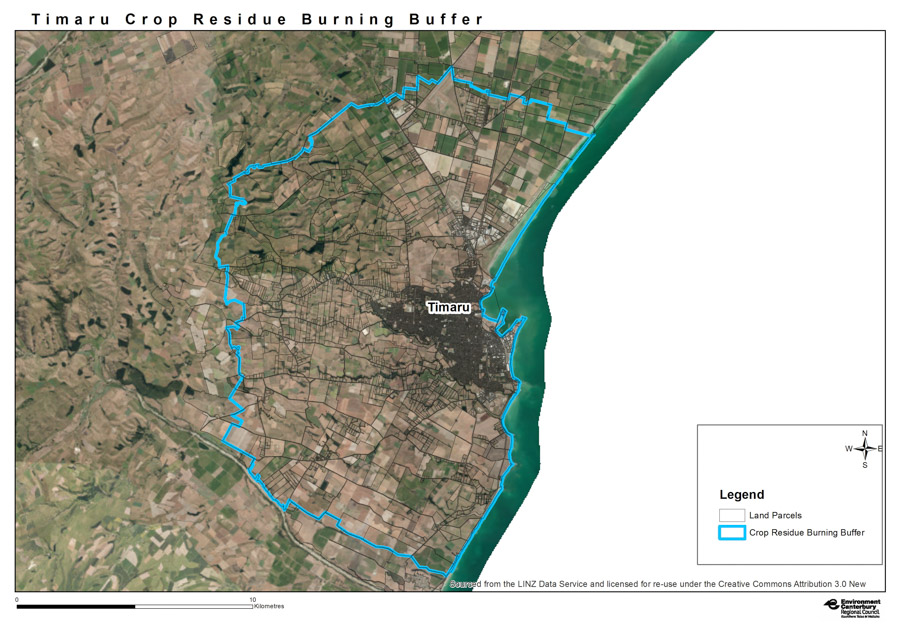
There are two designated crop residue burning buffer zones in the Canterbury Air Regional Plan: Timaru and Ashburton. Inside these zones, anyone wanting to carry out crop residue burning must have resource consent.
We know crop residue burning is important for many arable farmers, so the creation of these buffer zones give farmers certainty they can do it, provided conditions are met.
The following two aerial images show the properties that lie inside the buffer zones.
If you are unsure, contact us on 0800 329 276.
Timaru Crop Residue Buffer Zone
Ashburton Crop Residue Buffer Zone

Smoke management plans
Smoke management plans are required for any crop residue burning and for any outdoor burns that last for three or more days.
We provide a Smoke Management Plan template (PDF file, 102KB) that can be filled out digitally or printed out and filled out by hand. It covers everything in Schedule 3 of the Canterbury Air Regional Plan.
You can use an alternative format if you wish, provided all the required content is covered and provided it can be shown to Environment Canterbury on request.
Hill and high country
Hill and high country is land with a slope of more than 20 degrees and/or land that is more than 600 metres above sea level. Burning vegetation in the Canterbury hill and high country is allowed provided certain conditions are met.
You must give Environment Canterbury at least 20 working days’ notice before burning. To do this:
- Complete the online hill and high country burning form
Hill and high country burning conditions
- burning must not occur within five metres of the bed of a river (if the wetted bed is more than two metres wide)
- burning must not occur within five metres of a lake or any wetland boundary, where the wetland is more than 0.5 hectares)
- within the area to be burnt:
- the extent of bare ground shall be less than 20 percent and;
- the slope of the land shall be less than 35 degrees and;
- the land to be burnt must be less than 900 metres above sea level
- vegetation in the area to be burnt must not have been burnt within the last ten years
- burning must be carried out between 1 June and 31 October
- the burnt area must be either
- spelled from grazing for a minimum of six months following burning or;
- sown with pasture seed within six months of burning or;
- planted with trees within one year of burning.
Failure to notify us prior to burning vegetation in the hill and high country may result in enforcement action. It also pays to check if you need a fire permit from your district or your local Fire and Emergency New Zealand Principal Rural Fire Officer. If your burn does not comply with our hill and high country burning conditions, you'll need a resource consent.