Identify the current situation
The Enviroschools Action Learning Cycle (ALC) begins with identifying the current situation. For pest education, this involves immersing ākonga (students) in the topic, building background knowledge, and developing an understanding of pests in Waitaha Canterbury.
Activities and resources are organised into key questions to support students to explore, observe and understand their local pest situation.
Key learnings and questions
Where have we come from and what do we know now?
Build an understanding of what students already know, and begin developing shared knowledge about pests.
- Assess and record ākonga knowledge in this initial Pest Storm Activity (PDF file, 452KB). You will return to your ‘pest storm’ throughout your inquiry to add new insights and knowledge.
- Use the What am I Activity (PDF file, 356KB) to assess prior knowledge and begin learning about different pests.
- Investigate what makes a pest a pest through this What is a Pest Activity (PDF file, 380KB).
- Explore key terms, vocabulary and concepts using the Exotic, Endemic, Invasive Activity (PDF file, 414KB), which supports understanding of the language used in pest education.
- Build understanding of plant pests in Canterbury and how they are managed by Environment Canterbury in our Plant Pests Activity (PDF file, 433KB). Identify the plant pests in this Farm Biosecurity Poster (PDF file, 2MB).
What can we observe?
Build a picture of what is currently living in your school environment.
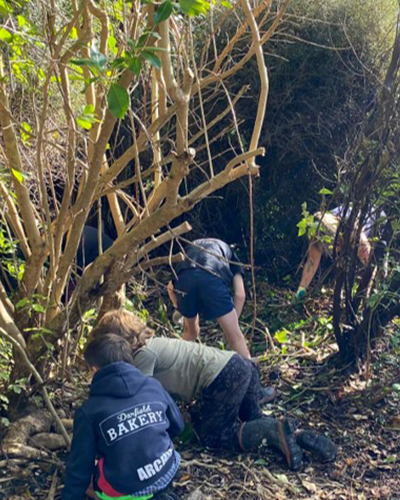
Students conduct a bioblitz in the bush
What can we learn?
Develop an understanding of pest species and their impacts in Aotearoa New Zealand.
- Pest species are identified in national and/or regional pest management plans. In Canterbury, pests are listed in the Canterbury Regional Pest Management Plan.
- Use the Tāhūrangi journal search to find articles such as Catching Mustelids and The Great Rat Catching Competition for younger students.
- Search for further information on pests in the National Library of New Zealand
- Search for biosecurity or pests in the Science Learning Hub to find: case studies, articles, videos and teacher PLD opportunities.
- Explore teaching resources from the Department of Conservation (DOC). They have a myriad of teaching resources for learning in nature including resources on plant pests/weeds, and predator control in New Zealand.
- Use the downloadable activity booklet from ZEALANDIA for a class trip into the bush.
- Access teaching plans from the Predator Free NZ Trust website.
- Download the Weedbusters Activity Booklet (PDF file, 1,004KB).
- Learn about pest and disease threats at the border through MPI’s Biosecurity New Zealand.
- Watch the Fight for the Wild by RNZ documentary series exploring the idea of a Predator Free 2050 in Aotearoa. There are four 45-minute episodes.
- Find information on marine pests in Aotearoa/New Zealand waters on NIWA’s Marine Biosecurity Porthole.
- Use the Good to Go education module which is a three-part education module on marine pests, aimed at years 5–8. Back up your learning with our Marine Pests in Canterbury video, and play our snakes and ladders style Sabella and macrocystis board game (PDF file, 1MB).
- Watch the Managing Wilding Conifers (10:18m), Working Together to Fight Wilding Conifers in the MacKenzie basin (3:24m), and Drone vs Wilding Pines (2:03m) videos to learn about the devastating impact of wilding pines.
- Learn about the impact that wallabies have in South Canterbury in the Towards Zero: A United Approach to New Zealand's Pest Wallaby Programme video, or spot the wallabies hiding in this Where's Wallaby poster (PDF file, 99KB).
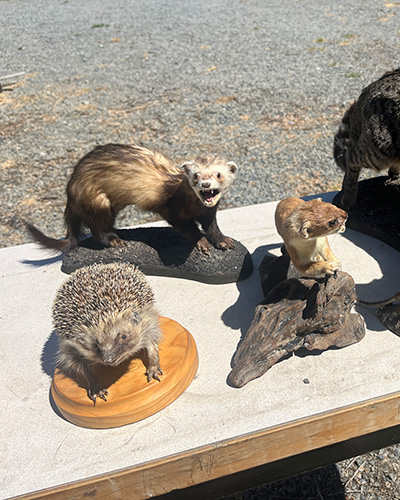
Rangiora High School Enviroschools pest workshop stuffed animals
What different cultural perspectives are there?
Explore how different perspectives shape our understanding of the environment.
What can we measure?
Explore ways to measure and understand what is happening in the environment.
Environmental DNA is genetic material that is shed by organisms as they move in, though, and around their environment.
Use Wilderlab eDNA sampling kits to collect and analyse environmental data in a user-friendly way.
What students will learn
Through these activities, students will:
- build an understanding of what pests are and why they matter
- investigate what species are present in their local environment
- learn about the impacts of pests in Waitaha Canterbury
- develop skills in observation, data collection and inquiry
- explore different cultural perspectives on the environment.
Share with us
We would love to know about your pest control projects. Please email us your photos or let us know about your plans.
The next step: Explore alternatives
Explore real-world examples and ideas to help you imagine what a healthier, more biodiverse future could look like in your school or community.
Environment Canterbury © 2026
Retrieved: 6:32am, Tue 28 Jul 2026
ecan.govt.nz/get-involved/youth-engagement-and-education/our-education-programmes/pest-education-programme/identify-the-current-situation