
Support learners to take action that demonstrates care for people, place, and biodiversity. This may involve working collaboratively, building partnerships, contributing to community wellbeing, and recognising the shared responsibility we all have in supporting healthy ecosystems.
Take action
Kaitiakitanga, manaakitanga, and collective responsibility
Key learning questions
What actions will bring about the changes we want?
Take practical action to reduce pests and improve biodiversity in your school or community.
- Start trapping pests in your school's grounds with guidance from Kids Greening Taupō. Pay attention to these health and safety tips before you get started.
- Make your garden safe for wildlife with guidance from the Predator Free NZ Trust.
- Create a lizard friendly garden (PDF file, 9MB) in your backyard, and place a hedgehog-proof fence around it.
- Make a wetā motel using hollowed out untreated wooden blocks or bamboo.
- Discs of untreated wood simulate the fallen logs found in native forests. Place discs around your school to create habitat for insects.
- Increase biodiversity at your school with seed bombs. Mix 3-parts clay-soil to 1-part native seeds, add water then roll into balls. Allow to harden over a few days before distributing.
- Increase awareness of pest weeds by playing this Weedbusters Snakes and Ladders Game (PDF file, 671KB) with classmates.
Which plans or designs could work best?
- Use this Enviroschools Design Planner (PDF file, 146KB) to design your project.
- Break down the vision for your project into individual steps with the help of this Enviroschools Action Planner (PDF file, 149KB).
What do we need to take action?
Do you want to take action, but don’t have the right gear? Or do you need funds to get your project off the ground?
Contact us, we’d love to help. Email our team and we’ll do our best to connect you with organisations that lend equipment or provide funding opportunities and grants.
Who else do we need to get involved?
- Contact your local Predator Free group for advice, support and opportunities to get involved.
- Take part in citizen science by contributing to the NZ Garden Bird Survey each winter. You can also browse their resources for creating a bird-friendly haven in your school, year-round.
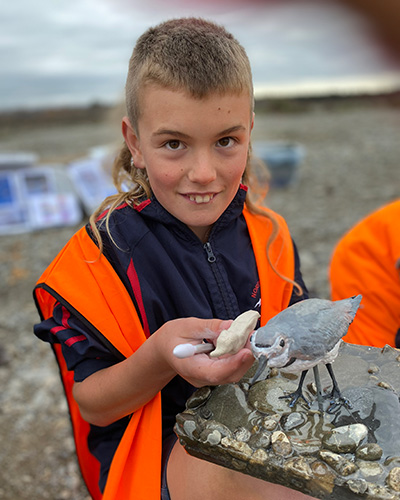
Jesse from Tihiraki North Loburn School creates a clay wrybill to raise awareness of the risks to wrybills nesting on the Ashley-Rakahuri riverbed
What students will learn
Through these activities, learners will:
- turn ideas into practical actions that support biodiversity
- explore different ways to manage pests and create habitats for native species
- develop planning and project management skills
- learn how communities, organisations and volunteers work together to protect the environment
- understand the resources, equipment and support needed to deliver environmental projects
- contribute to citizen science and environmental monitoring
- build confidence in taking action and making a positive difference in their local environment.